Algeria
Algeria at a Glance
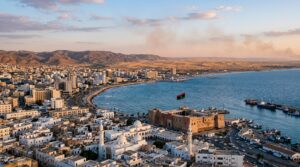
Algeria anchors the northern edge of Africa, where the Mediterranean coastline gives way — abruptly, almost violently — to the Sahara, the largest hot desert on Earth. Officially the People’s Democratic Republic of Algeria, the country is governed from Algiers, a tiered white city that climbs from the harbor in layers of Ottoman-era plaster and French colonial stone. The population stands at approximately 47.4 million, spread across a land area of 2,381,741 km² — larger than all of Western Europe combined, though the vast majority of Algerians live within 200 kilometers of the northern coast.
Beyond its sheer size, the country is known for three things that rarely appear in the same sentence: world-class natural gas reserves that make it a critical energy supplier to Europe, a war of independence (1954–1962) that reshaped 20th-century thinking about colonialism and resistance, and the ancient Saharan city of Ghardaïa, a UNESCO-listed settlement whose honeycomb architecture has influenced architects from Le Corbusier onward. Raï music — raw, electric, born in the port city of Oran — adds a fourth claim. Travelers who assume the country is simply desert and history tend to be surprised by how much the north looks, smells, and sounds like the Mediterranean it borders.
Geography & Climate
Algeria sits in North Africa, sharing land borders with Tunisia and Libya to the east, Niger, Mali, and Mauritania to the south, and Morocco and Western Sahara to the west — making it the largest country on the continent at 2,381,741 square kilometers. The northern edge meets the Mediterranean Sea, giving the country a narrow coastal strip before the terrain rises into the Tell Atlas mountains. Further south, the Atlas Saharan range marks the boundary before the land opens into the vast Sahara, which covers roughly 90 percent of Algeria’s total area. The Ahaggar Mountains in the deep south reach above 2,900 meters, their dark volcanic rock radiating stored heat long after sunset — a dry, mineral warmth that settles over the plateau well past midnight.
The north follows a Mediterranean pattern: mild, wet winters from November through March and hot, dry summers where coastal cities like Algiers regularly exceed 35 °C. The interior high plateaus experience harsher swings, with freezing winters and scorching summers. The Saharan south is hyperarid year-round, receiving fewer than 25 millimeters of rain annually in most areas.
Drought is the most consistent natural hazard, particularly across the steppe and pre-Saharan zones, where desertification has accelerated in recent decades. Flash flooding can affect northern valleys during intense winter rainfall events.
A Brief History of Algeria
Long before European contact, the territory now called Algeria was home to Berber (Amazigh) kingdoms — most notably Numidia, whose king Jugurtha fought a prolonged war against Rome in the second century BCE. The region later passed through Roman, Vandal, Byzantine, and Arab hands; the Arab conquests of the seventh century brought Islam, which reshaped language, law, and daily life across North Africa. By the sixteenth century, the Ottoman Empire controlled much of the Algerian coast, and Algiers became a significant Mediterranean port, known for its corsair fleets and complex relationship with European powers.
France invaded in 1830, beginning a colonial presence that would last 132 years. The occupation was brutal in its early decades — General Thomas-Robert Bugeaud’s campaigns displaced and killed large numbers of the indigenous population — and French settlers, known as pieds-noirs, came to dominate political and economic life. Algerian resistance never fully disappeared, and by 1954 the Front de Libération Nationale (FLN) launched an armed uprising that became one of the twentieth century’s most consequential anticolonial wars. Algeria won independence on July 5, 1962, after negotiations that produced the Évian Accords.
The post-independence decades were turbulent. Ahmed Ben Bella became the first president but was ousted in a 1965 coup led by Houari Boumédiène, who steered Algeria toward state socialism. A brief democratic opening in the early 1990s collapsed into a devastating civil conflict between the government and Islamist groups, leaving an estimated 100,000–200,000 dead. Algeria has been governed under a presidential system since, with the military remaining a powerful institutional force.
Culture, Religion & Daily Life
## Culture, Religion & Daily Life
Islam is the faith of roughly 99% of Algeria’s 47.4 million people, with Sunni Islam of the Maliki school the dominant practice. Christianity and other traditions account for a small minority, concentrated largely among Kabyle Berber communities and sub-Saharan migrants in urban centers.
Arabic — both Modern Standard and the everyday Algerian dialect known as Darija — is the official and most widely spoken language. Tamazight, the Berber language family, holds co-official status and is spoken by millions, particularly among the Amazigh, Kabyle, and Tuareg communities of the north and Saharan south. Linguists count around a dozen distinct Berber varieties across the country, alongside French, which remains common in government, business, and higher education.
On a Friday afternoon in any Algerian city, the call to prayer from a neighborhood mosque draws men in pressed djellabas through narrow streets that smell of cumin and fresh-baked khobz bread. After prayer, families gather for a long midday meal — often a slow-cooked lamb or chicken couscous — before the afternoon quiets. The country marks Independence Day on July 5, commemorating the end of French colonial rule in 1962, with public celebrations, concerts, and flag displays that fill city squares well into the evening.
Economy & Industry
## Economy & Industry
Algeria’s economy runs on hydrocarbons. Oil and natural gas account for roughly 85% of export revenues, with state-owned Sonatrach operating as one of Africa’s largest energy companies — its pipelines carry Algerian gas north into Italy and Spain. The Algerian dinar (د.ج) trades at approximately 135 to the dollar in 2025, though the parallel market rate diverges noticeably. GDP sits around $230 billion, making Algeria one of the continent’s larger economies by raw size.
Beyond energy, agriculture employs a significant share of the 47.4 million population, with wheat, dates, and olives among the main outputs. The Souf region’s date palms produce Deglet Nour, a premium variety exported to Europe. Manufacturing remains underdeveloped relative to Algeria’s resource wealth, though the government has pushed import-substitution policies to grow domestic production of vehicles, steel, and pharmaceuticals.
Algeria is a member of the African Continental Free Trade Area (AfCFTA) and the Arab Maghreb Union, though regional integration has moved slowly in practice. The most consequential forward-looking story is energy transition: Algeria is investing in solar capacity in its southern Saharan zones, where sunlight is intense and land is abundant, aiming to diversify electricity generation and eventually export renewable energy alongside fossil fuels.
People & Demographics
## People & Demographics
Algeria’s population stands at approximately 47.4 million, spread across a country that is mostly Sahara Desert, giving the habitable northern strip a density that feels far higher than the national average of around 20 people per square kilometer. The median age is roughly 29, making Algeria a young country — the majority of the population is under 35, with a relatively small elderly cohort by global standards.
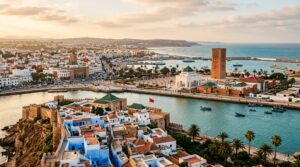
Around three-quarters of Algerians live in urban areas. Algiers, the capital, holds an estimated 3.5 to 4 million people in the city proper, with the greater metro area considerably larger; Oran, on the northwestern coast, is the second city at roughly 1.5 million. The largest diaspora communities are concentrated in France, where several million people of Algerian origin live, particularly in Paris and Marseille. Life expectancy sits at approximately 77 years. Literacy is estimated at around 81 percent nationally, though the rate is meaningfully higher among younger generations.
Government & Political System
## Government & Political System
Algeria is a presidential republic, with executive power concentrated in the head of state. The current president holds broad constitutional authority, including command of the armed forces and the power to appoint the prime minister and cabinet. Algiers, the capital, serves as the seat of all three branches of government — the presidency, the parliament, and the Supreme Court — and is home to the country’s main administrative ministries.
The legislature is bicameral, consisting of the National People’s Assembly (lower house) and the Council of the Nation (upper house). Power has shifted in recent years through a combination of mass protest and managed transition: the Hirak movement of 2019 prompted the resignation of longtime president Abdelaziz Bouteflika after two decades in office, followed by a presidential election later that year. Constitutional amendments approved in 2020 adjusted presidential term limits and expanded some executive powers, changes that remain a subject of ongoing public debate.
Famous People from Algeria
Algeria has produced an outsized share of globally recognized figures relative to its international profile — Nobel laureates, World Cup footballers, Olympic champions, and writers whose work shaped 20th-century French literature and philosophy.
- Albert Camus (1913–1960) — Algerian-born French author and philosopher who won the 1957 Nobel Prize in Literature, best known for The Stranger and The Myth of Sisyphus.
- Assia Djebar (1936–2015) — novelist, filmmaker, and the first Algerian elected to the Académie française, whose fiction gave sustained literary voice to Algerian women’s experiences under colonialism and independence.
- Zinedine Zidane (born 1972) — regarded as one of the greatest footballers of all time, winner of the 1998 FIFA World Cup with France and three UEFA Champions League titles as Real Madrid head coach, of Algerian Kabyle descent.
- Isabelle Adjani (born 1955) — French actress of Algerian and German heritage, five-time César Award winner and two-time Cannes Best Actress honoree, internationally known for Possession (1981) and The Story of Adele H. (1975).
- Hassiba Boulmerka (born 1968) — middle-distance runner who became the first African woman to win an Olympic gold medal in track, claiming the 1500 m title at the 1992 Barcelona Games.
- Kateb Yacine (1929–1989) — playwright and novelist whose 1956 novel Nedjma is considered the foundational text of modern Algerian literature, written in French as a deliberate act of cultural reclamation.
- Matoub Lounès (1956–1998) — Kabyle singer-songwriter and activist whose music became the defining soundtrack of Berber cultural resistance; his assassination in 1998 sparked widespread unrest across the Kabylie region.
Food & Cuisine
## Food & Cuisine
Couscous is the backbone of Algerian cooking, steamed until each grain is separate and light, then piled with lamb, chickpeas, and root vegetables in a saffron-tinted broth. Alongside it, chakhchoukha — torn flatbread soaked in a slow-cooked stew of tomatoes, merguez, and chickpeas — is a Friday-lunch staple across the interior. On the coast, chermoula-marinated fish, bright with coriander and cumin, reflects centuries of Mediterranean influence. Harira, a thick soup of tomatoes, lentils, and lamb, fills the streets with the smell of warm spice every evening during Ramadan, when it breaks the fast at sundown.
Street stalls in Algiers sell bourek, crisp fried pastry cylinders stuffed with minced meat, egg, and parsley — eaten standing, still hot from the oil. To drink, mint tea poured from a height into small glasses is the universal social ritual, sweetened heavily and served in rounds. The Saharan south diverges noticeably: date-based dishes and taguella, a thick unleavened bread baked directly in desert sand, replace the wheat-heavy northern table, reflecting Tuareg and Amazigh traditions that predate the Arab culinary influence.
Sports & Recreation
## Sports & Recreation
Football is Algeria’s dominant sport, followed passionately from packed cafés in Algiers to dusty pitches in the Saharan south. The senior men’s national team, known as the Desert Warriors (Les Fennecs in French), claimed the Africa Cup of Nations title in 2019, defeating Senegal 1–0 in the final with a goal from Baghdad Bounedjah after just 2 minutes — one of the fastest in AFCON final history. The squad’s run through that tournament, unbeaten across all seven matches, remains the high point of Algerian football.
Athletics runs a close second in national prestige. Mezziane Morceli — better known as Noureddine Morceli — dominated middle-distance running in the early 1990s, setting multiple world records in the 1500 meters and winning gold at the 1996 Atlanta Olympics. Algeria has won approximately five Olympic gold medals in total, with athletics accounting for most of them. Boxing also draws a dedicated following, and Algerian boxers have reached Olympic podiums across several Games.
Music & The Arts
## Music & The Arts
Raï is Algeria’s defining popular genre — a gritty, emotionally direct fusion of Bedouin folk melody, Spanish guitar, and synthesizer that emerged from Oran in the 1970s. Khaled, often called Cheb Khaled, remains its most globally recognised voice; his 1992 album Khaled brought the genre to French and international mainstream audiences, and he still performs to sold-out crowds across Europe and the Arab world. Traditional Algerian music runs deeper still: the oud anchors classical Andalusian-Algerian forms like malouf and chaabi, while Tuareg communities of the southern Sahara produce the electric desert blues of artists like Imarhan, whose droning, hypnotic guitar carries the imzad fiddle’s ancient resonance into contemporary sound.
In literature, Assia Djebar — novelist, filmmaker, and the first Algerian elected to the Académie française — gave the country a permanent place in world letters; her novel Fantasia: An Algerian Cavalcade remains taught across universities globally. Algerian cinema gained international traction through Mohammed Lakhdar-Hamina’s Chronicle of the Years of Fire, which won the Palme d’Or at Cannes in 1975. In craft, Tuareg silverwork — geometric amulets and finely engraved crosses from the Tamanrasset region — is collected worldwide for its precise, unhurried craftsmanship.
Wildlife & Natural Wonders
## Wildlife & Natural Wonders
Algeria is not a Big Five destination — lions and elephants have been absent from the country for well over a century — but the Saharan and Atlas ecosystems support wildlife that few visitors expect. Ahaggar National Park, a vast plateau of volcanic rock in the deep south, shelters the Barbary sheep (aoudad), a sure-footed ungulate that navigates sheer cliff faces with ease. Further north, Taza National Park in Kabylie protects one of the last Algerian populations of the Barbary macaque, a tailless primate whose alarm calls echo through cedar and oak forest.
The Erg Chebbi-adjacent Grand Erg Oriental — a sea of orange sand dunes stretching toward the Tunisian border, some cresting 100 meters — is Algeria’s most arresting natural spectacle, particularly at dawn when the light rakes across the ridgelines. Algeria has seven UNESCO World Heritage sites, though none are currently designated for natural values; all are cultural. Desertification driven by climate shifts and overgrazing is the dominant conservation pressure, steadily pushing the Sahara’s edge northward into once-productive steppe and farmland.
Top Things to See in Algeria
Algeria suits travelers drawn to deep history, dramatic desert landscapes, and a Mediterranean coastline — often all within a single trip. The country rewards patience: distances are vast, bureaucracy is real, and the payoff is extraordinary.
- Djémila (Sétif Province) — A remarkably preserved Roman city perched at 900 meters, its forum, temples, and triumphal arch largely intact after two millennia. Visit in spring (March–May) when wildflowers fill the ruins and the mountain air is cool; budget three to four hours on site.
- Timgad (Batna Province) — Founded by Emperor Trajan in 100 CE, Timgad’s grid-plan streets and 3,500-seat theater make it one of North Africa’s finest Roman sites. A UNESCO World Heritage Site best reached by car from Batna city, roughly 35 km away; half a day is enough.
- Tassili n’Ajjer National Park (Illizi Province) — A sandstone plateau in the Sahara holding thousands of prehistoric rock paintings, some dating back 12,000 years, depicting cattle, giraffes, and human figures in a now-dry landscape. Visits require a licensed guide and are most comfortable October through March; multi-day treks are the norm.
- Hoggar Mountains / Tamanrasset — The volcanic massif of the Hoggar rises to 2,918 meters at Mount Tahat, Algeria’s highest peak, with rock formations that cast long purple shadows at dusk. Tamanrasset is the gateway town; November to February is the practical window before heat becomes punishing.
- Casbah of Algiers (Algiers) — The old Ottoman-era medina cascading down to the harbor, a UNESCO site of narrow whitewashed lanes, hammams, and the 17th-century Ketchaoua Mosque. It is walkable from central Algiers; mornings are quieter and the smell of fresh bread from street stalls is strongest before 9 a.m.
- Tipaza (Tipaza Province) — A coastal archaeological park where Phoenician, Roman, and early Christian ruins sit directly above the Mediterranean, the sea visible through broken columns. Located about 70 km west of Algiers by road; two to three hours covers the main circuit.
- Béjaïa and the Corniche Kabyle (Béjaïa Province) — A stretch of cliff-backed coves and clear turquoise water along the Kabylie coast, with Béjaïa city offering a functioning port and decent
Visa & Travel Tips
## Visa & Travel Tips
Algeria does not offer visa-on-arrival or an e-visa portal for most nationalities — the standard route is an application through an Algerian embassy or consulate before travel. US and UK citizens both require advance visas, and most EU passport holders do as well; citizens of some Arab League and African Union member states may have different arrangements. Policies shift without much notice, so confirm current requirements with the Algerian embassy in your country several weeks before departure. The main international gateway is Houari Boumediene Airport (ALG) in Algiers, served by Air Algérie, Air France, Turkish Airlines, and several Gulf carriers.
The Algerian dinar (د.ج) is not freely convertible, so bring sufficient euros or US dollars in cash to exchange at official bureaux de change — street exchange is illegal and carries real risk. Cards are accepted at larger hotels and some supermarkets in Algiers, but cash dominates outside the capital, and ATMs can be unreliable for foreign cards. Mobile money platforms like M-Pesa or MTN MoMo have no footprint here. Check your government’s official travel advisory before visiting, particularly for border regions and the deep south. Algeria runs on UTC+01:00 year-round; dial in with country code +213. Power sockets are Type C and Type F — a standard European two-pin adapter covers most situations. Getting a local SIM or eSIM sorted early will make navigating all of this considerably easier.
Staying Connected: Internet & eSIM in Algeria
Algeria’s mobile network runs on three main operators: Mobilis (the state-owned incumbent), Djezzy (owned by Veon), and Ooredoo Algeria. All three offer 4G LTE across Algiers, Oran, Constantine, and most northern cities. Coverage thins considerably once you move into the Saharan south — the Hoggar highlands and towns like Tamanrasset have patchy signal at best, and 5G remains unavailable nationwide as of 2024.
The traditional route is a local SIM from an operator kiosk at Houari Boumediene International Airport or any licensed retailer in the city. You’ll need your passport for mandatory registration; activation typically takes 15–30 minutes. Starter SIMs cost around 200–500 د.ج (approximately $1.50–$3.75 USD), with data bundles sold separately. The modern alternative is an eSIM: purchase and activate a plan before your flight, skip the queue entirely, and arrive connected. Most iPhone XS and later models support eSIM, as do recent Samsung Galaxy and Google Pixel flagships. Hotel and café Wi-Fi is reliably available in Algiers and Oran, though speeds vary.