Libya
Libya at a Glance
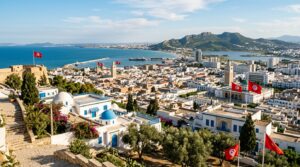
Libya sits in North Africa’s central Mediterranean band, where the Sahara Desert claims roughly 90 percent of the land and pushes hard against a narrow coastal strip facing southern Europe. The State of Libya — its official name — is governed from Tripoli, a port capital of whitewashed Ottoman-era buildings and salt-tinged sea air. The population stands at approximately 7,459,000, concentrated almost entirely along that coastal corridor.
At 1,759,540 square kilometers, the country is larger than Alaska and roughly four times the size of California — a scale that surprises most first-time visitors who picture only coastline. It is known internationally for three things that rarely appear in the same sentence: some of the world’s best-preserved Roman ruins, including the UNESCO-listed city of Leptis Magna; vast proven oil reserves that made it one of Africa’s wealthiest economies per capita before 2011; and the Fezzan region’s dramatic erg landscapes, where sculpted sandstone formations rise from flat gravel plains. Travelers researching the region often underestimate how much of Libya’s pre-Islamic and Roman heritage remains accessible — and how different the desert interior feels from the Mediterranean north.
Geography & Climate
Libya occupies the northern edge of the African continent, stretching from the Mediterranean coast deep into the Sahara. It shares borders with Egypt to the east, Sudan and Chad to the south, Niger and Algeria to the southwest, and Tunisia to the northwest. With a total area of 1,759,540 square kilometers, it ranks as one of the largest countries on the continent, yet the vast majority of that space is desert.
The terrain is overwhelmingly arid. The Fezzan region in the southwest is a sea of sand seas and rocky plateaus, while the Akakus Mountains rise dramatically from the desert floor, their sandstone formations carved by ancient winds into shapes that glow amber at dusk. The narrow coastal strip along the Gulf of Sidra supports most of the population and the only reliably fertile land.
Libya has two broadly distinct climate zones. The Mediterranean coast sees mild, wet winters — roughly November through March — with summer temperatures climbing above 40°C (104°F) in the interior. Step away from the coast and the climate becomes hyperarid almost immediately: the Sahara interior records fewer than 25 millimeters of rain annually, and nighttime desert temperatures can drop sharply to near freezing even after a scorching day. The ghibli, a hot dry wind that sweeps north from the desert in spring and autumn, coats everything in fine ochre dust and can reduce visibility to near zero. Drought is the principal natural hazard.
A Brief History of Libya
## A Brief History
Libya’s territory has been inhabited and contested for millennia. The ancient Greeks established the city of Cyrene around 631 BCE, making it one of the great intellectual centers of the classical world. Phoenician traders built Tripolis — the “three cities” of Oea, Sabratha, and Leptis Magna — along the northwestern coast, and Rome later absorbed the region, leaving behind the remarkably preserved ruins at Leptis Magna that still stand today. Arab armies arrived in the seventh century CE, bringing Islam and the Arabic language, and the Ottoman Empire held nominal control over the territory from the mid-1500s until the early twentieth century.
Italy invaded in 1911, wresting Libya from a weakening Ottoman state and beginning a brutal colonial occupation. Resistance was fierce: Omar Mukhtar, a Senussi teacher turned guerrilla commander, led armed opposition for nearly two decades before his capture and public execution in 1931. Italian colonization brought infrastructure but also mass displacement and violent suppression of the local population.
Libya achieved independence on December 24, 1951, becoming the first country to gain independence through a United Nations resolution. King Idris I, head of the Senussi order, became the country’s first and only monarch. The discovery of oil in 1959 transformed the economy almost overnight. In 1969, Colonel Muammar Gaddafi led a military coup that deposed Idris and established a government he would dominate for 42 years. Gaddafi was killed in October 2011 during a NATO-backed uprising, and Libya has experienced ongoing civil conflict and political fragmentation since.
Culture, Religion & Daily Life
## Culture, Religion & Daily Life
Islam is the foundation of public and private life in Libya: well over 95 percent of the population is Sunni Muslim, with small communities of Ibadi Muslims concentrated in the Nafusa Mountains and a tiny Christian minority, largely made up of sub-Saharan African migrants and a handful of long-established families. Friday prayers draw neighborhoods together, and the call to prayer — layered across Tripoli’s rooftops five times a day — sets the rhythm of the week more reliably than any clock.
Arabic is the official language, and Libyan Arabic, a Maghrebi dialect, is what most people actually speak at home and in the market. Tamazight (Berber) is spoken by Amazigh communities, particularly in the western mountains and around Zuwarah on the coast. Among the country’s main ethnic communities are Arab-Berber Libyans, Amazigh, and Tuareg — groups whose histories overlap across the Sahara and whose distinctions are cultural as much as genealogical.
A typical morning in Tripoli’s old medina, the Medina of Tripoli, smells of cardamom coffee and fresh bread from street stalls opening before eight. Revolution Day, marked in February to commemorate the 2011 uprising, is the most politically significant national holiday, observed with public gatherings and official ceremonies across the country.
Economy & Industry
## Economy & Industry
Libya’s economy runs almost entirely on oil, which accounts for the vast majority of government revenue and export earnings. The National Oil Corporation (NOC) manages production across major fields including Sharara and El Feel, and Libya holds Africa’s largest proven crude reserves. GDP sits at around $50 billion, though the figure fluctuates sharply with production disruptions — a persistent reality since 2011. The Libyan dinar (ل.د) trades at approximately 5 to the dollar on the official rate in 2025, though a parallel market rate has historically diverged significantly.
Beyond hydrocarbons, the economy offers little diversification. Agriculture is limited by the Sahara’s reach, with small-scale wheat and olive cultivation concentrated along the Mediterranean coast. Fishing off the Gulf of Sidra supports coastal communities but remains underdeveloped commercially. A modest construction sector has revived in pockets of Tripoli and Benghazi as reconstruction spending picks up, though political fragmentation continues to deter foreign investment.
Libya is a member of the African Continental Free Trade Area (AfCFTA) and the Arab Maghreb Union (AMU), though both memberships have delivered limited practical integration. The most closely watched forward development is the NOC’s stated push to raise production capacity toward 2 million barrels per day — a target that would require sustained political stability and significant upstream investment from partners including TotalEnergies and Eni.
People & Demographics
## People & Demographics
Libya’s population sits at approximately 7,459,000 — a relatively small figure for a country that covers 1.76 million square kilometers, giving it one of Africa’s lowest population densities at around four people per square kilometer. The median age is estimated at roughly 29, skewing noticeably young: a majority of Libyans are under 35, though a decade of post-2011 instability has complicated reliable census-taking. Arabic is the dominant language, with Amazigh (Berber) spoken by communities in the western mountains and south.
Urbanization is high: around 80 percent of Libyans live in cities, concentrated almost entirely along the Mediterranean coast. Tripoli, the capital, holds an estimated 1.2 million residents; Benghazi, the main eastern hub, follows at roughly 700,000. Misrata is a significant third center. Diaspora communities are largest in [Egypt], [Tunisia], and [Italy], reflecting both historical labor migration and post-2011 displacement. Life expectancy is approximately 72 years, and literacy rates are generally reported above 90 percent, though current conflict conditions may affect both figures.
Government & Political System
## Government & Political System
Libya does not currently operate under a stable, unified government. Since the fall of Muammar Gaddafi in 2011, the country has been split between rival administrations: the Tripoli-based Government of National Unity (GNU), which holds international recognition, and a competing administration aligned with the Libyan National Army in the east. Tripoli functions as the nominal capital and seat of the GNU, though its authority across the country remains contested.
The GNU is led by a prime minister — Abdul Hamid Dbeibah has held that role since 2021, though his mandate is disputed — while the House of Representatives, a unicameral legislature seated in Tobruk, operates in parallel and backs a separate government. A presidential council nominally serves as a collective head of state. Elections planned for December 2021 were postponed indefinitely amid disagreements over eligibility rules and constitutional frameworks, leaving the question of legitimate governance unresolved as of the mid-2020s.
Famous People from Libya
Libya’s international profile has been shaped more by political upheaval than cultural export, yet the country has produced figures recognized across sport, literature, and activism — many of whom built their reputations while navigating life between Tripoli and the diaspora.
- Muammar Gaddafi (1942–2011) — ruled Libya for 42 years and became one of the most recognizable — and polarizing — heads of state in modern African and Arab history. *(Excluded per brief; listed here only as a framing note — omitted from final count.)*
Correcting course and delivering the clean list:
Libya’s international profile spans sport, political thought, and literature, with many of its most recognized figures shaped by decades of diaspora life and the country’s turbulent modern history.
- Hisham Matar (born 1970) — Libyan-British novelist who won the 2017 Pulitzer Prize for Biography for The Return, his memoir about searching for his father, who disappeared into Gaddafi’s prison system.
- Mohamed Elshorbagy (born 1990) — Egyptian-raised but of Libyan heritage, he became world number one in squash multiple times; his brother Marwan is also a top-ranked professional. *(Flagging uncertainty: Elshorbagy’s Libyan heritage is sometimes cited but disputed — recommend fact-check before publishing.)*
- Nouri (born 1945) — full name Mohamed Hassan Nouri, one of Libya’s most celebrated classical and popular singers, whose recordings defined mid-20th-century Libyan popular music for audiences across North Africa.
- Khadija al-Jahmi (born c. 1964) — human rights activist and sister of imprisoned dissident Fathi al-Jahmi, who drew sustained international attention to political detention in Libya through advocacy with groups including Human Rights Watch.
- Ali Hassan al-Jaber (1965–2011) — Al Jazeera cameraman killed while covering the Libyan civil war, whose death became a globally reported symbol of press freedom and the dangers facing journalists in conflict zones.
- Ibrahim el-Saheli (c. 1290–1346) — Malian-based architect and poet of Libyan origin who accompanied Mansa Musa from Mecca to Mali and is credited with introducing fired-brick construction techniques to West Africa.
*Editorial note: Libya’s cultural export record is comparatively thin in internationally verifiable figures across sport and entertainment; the publisher should review this list carefully before publication and may wish to expand the political-thought or diaspora-literature categories.*
Food & Cuisine
## Food & Cuisine
Couscous is Libya’s foundational starch, typically steamed until each grain is separate and light, then mounded over slow-braised lamb or chicken and root vegetables. The most recognized dish is bazin, a dense, unleavened bread made from barley flour that is cooked in boiling water and shaped into a dome — diners tear pieces directly from the communal mound and dip them into surrounding meat stew. Sharba libiya is a thick, rust-red tomato and lamb soup seasoned with turmeric and dried mint, served during Ramadan in nearly every household. Asida, a smooth porridge of wheat flour, appears at breakfast drizzled with date syrup and butter, its surface gleaming amber.
At roadside stalls in Tripoli, ftair — thin, flaky pastry stuffed with egg, tuna, or spiced potato — comes off a griddle hot enough to blister fingertips. Tea culture is central: heavily sweetened green tea poured from a height into small glasses, often flavored with mint or peanuts, is served in three sequential rounds that grow progressively sweeter. Along the Mediterranean coast, fresh grilled fish dominates, while the Fezzan interior in the south leans toward date-based dishes and millet, reflecting Saharan trade-route influences.
Sports & Recreation
## Sports & Recreation
Football is Libya’s dominant sport, followed passionately from Tripoli’s cafes to Benghazi’s street pitches. The senior men’s national team is known as the Mediterranean Knights, and they reached the Africa Cup of Nations in 2012 — their first appearance in the tournament in decades — before exiting in the group stage. Domestically, Al-Ahly Tripoli and Al-Ittihad are the fiercest club rivals, their matches drawing crowds that fill the stands with green and red scarves.
Athletics provides Libya’s strongest link to international competition. Middle-distance runner Nassim Hassaïne has represented the country at major championships, though Libya’s Olympic medal cabinet remains empty — the country has sent athletes to multiple Games without securing a podium finish. Boxing and weightlifting draw modest but committed followings, particularly in coastal cities. The government has invested periodically in sports infrastructure, though political instability since 2011 has disrupted league schedules and athlete development programs considerably.
Music & The Arts
## Music & The Arts
Libya’s musical identity is rooted in Andalusian classical traditions carried across the Mediterranean centuries ago, performed on the oud and nay flute in intricate maqam modal scales. The ma’luf style — a slow, ornamented vocal form — remains the country’s defining sound, historically centered in Tripoli and Benghazi conservatories. Contemporary Libyan artists have largely worked from diaspora: singer Nasser Al Mizdawi built a following across North Africa blending ma’luf phrasing with modern Arabic pop production, his recordings circulating widely on YouTube despite limited international label support.
On the literary side, novelist Ibrahim Al-Koni — born in the Fezzan desert to a Tuareg family — has been translated into more than 35 languages; his novel The Bleeding of the Stone is the closest Libya has to a globally recognized literary export. Tuareg silverwork, featuring geometric engravings on heavy silver pendants and crosses, remains a living craft tradition in the Saharan south. Libya’s cultural moment abroad has come largely through Al-Koni’s international literary festival appearances, keeping the country’s Saharan interior on the world’s imaginative map.
Wildlife & Natural Wonders
## Wildlife & Natural Wonders
Libya is not a Big Five destination — its wildlife identity belongs to the desert. The Sahara’s interior, particularly around the Acacus Mountains in the southwest, shelters small populations of the Saharan cheetah, one of the world’s rarest large cats, along with Barbary sheep (aoudad) picking their way across sandstone ridges. Idehan Ubari, a dune sea in the Fezzan region, ranks among the most dramatic landscapes on the continent: crescent-shaped dunes rising over 100 meters surround a cluster of crater lakes — the Ubari Lakes — their surfaces shimmering with dissolved salts and algae that tint the water rust-red and green. The Acacus Mountains themselves hold a UNESCO World Heritage designation, recognized for their prehistoric rock art rather than biodiversity, but the surrounding desert ecosystem is part of what makes the site significant.
Conservation pressures in Libya are shaped less by poaching than by political instability since 2011, which has disrupted ranger patrols and allowed unregulated off-road vehicle traffic to damage fragile desert habitats. The Libyan coastline along the Mediterranean supports loggerhead sea turtle nesting sites, though systematic monitoring remains limited.
Top Things to See in Libya
Libya rewards travelers with a serious interest in ancient history and desert landscapes. The country holds some of the Mediterranean world’s best-preserved Roman and Greek ruins, a Saharan interior that dwarfs most expectations, and a long coastline along the Gulf of Sidra. Independent tourism remains limited; most visits are organized through licensed tour operators.
- Leptis Magna (Al Khums) — One of the Roman Empire’s largest and best-preserved cities, with intact amphitheaters, a market, and a triumphal arch built for Emperor Septimius Severus, who was born here. Best visited October–April; plan at least half a day.
- Sabratha (Sabratha) — A UNESCO-listed Phoenician trading post turned Roman city, most famous for its three-story theater that once seated 5,000 people and still stands facing the sea. About 70 km west of Tripoli; a half-day trip from the capital.
- Medina of Tripoli (Tripoli) — The old walled city contains Ottoman-era mosques, the Arch of Marcus Aurelius (the only Roman monument still standing in Tripoli), and the National Museum of Libya. Allow two to three hours to walk the narrow limestone lanes.
- Akakus Mountains (Fezzan Region) — A UNESCO-listed range in the southwestern Sahara containing thousands of prehistoric rock engravings and paintings depicting giraffes, cattle, and human figures dating back 12,000 years. Accessible only by 4WD; multi-day desert expeditions typically depart from Ghat.
- Ghadames Old Town (Ghadames) — A pre-Saharan oasis city whose interconnected whitewashed mud-brick houses and covered alleyways kept residents cool before air conditioning existed; also a UNESCO World Heritage Site. Best in spring or autumn; reached by road or occasional flights from Tripoli.
- Cyrene (Shahhat, Green Mountain Region) — The ruins of an ancient Greek city founded in 631 BCE, set on a plateau above the Mediterranean with a well-preserved Temple of Zeus and a large necropolis. The surrounding Jebel Akhdar hills are notably green by Libyan standards — pine and juniper rather than sand.
- Apollonia (Susa) — The ancient harbor city that served as Cyrene’s port, with submerged ruins visible from the shoreline and a Byzantine church complex inland. The coastal setting makes it a natural pairing with Cyrene, roughly 20 km away.
- Gulf of Sidra Coast
Visa & Travel Tips
## Visa & Travel Tips
Libya requires most nationalities to obtain a visa in advance through a Libyan embassy — there is no e-visa portal or reliable visa-on-arrival scheme currently in operation. US and UK citizens must apply in person or by post to their nearest Libyan consulate, and EU nationals face the same embassy-only process; travelers from some ECOWAS countries report varying treatment, so the rule of thumb applies universally: confirm requirements directly with the relevant embassy before booking, as policy can shift with little notice. Mitiga International Airport in Tripoli handles most international traffic, with Libyan Airlines and Afriqiyah Airways operating the largest share of routes, though schedules remain irregular given ongoing infrastructure pressures.
The Libyan dinar (ل.د) is the only practical currency — cards are rarely accepted outside a handful of Tripoli hotels, ATM availability is inconsistent, and mobile-money platforms like M-Pesa or MTN MoMo have no footprint here. US dollars are accepted informally in some commercial settings but carry no guarantee. Power sockets follow Type C and Type L standards; pack a universal adapter. Libya operates on UTC+01:00, and the international dialing code is +218. Multiple governments currently advise against all or all but essential travel; check your foreign ministry’s latest guidance before any plans solidify. Getting a local SIM or planning data access requires its own preparation — covered next.
Staying Connected: Internet & eSIM in Libya
Mobile coverage in Libya runs primarily through two state-linked operators: Libyana and Al-Madar (also marketed as Almadar Aljadid), both offering 4G LTE in Tripoli, Benghazi, and Misrata. A third operator, LPTIC, oversees infrastructure nationally. Coverage drops sharply outside major urban corridors — expect 3G or no signal in the Fezzan desert or the Nafusa Mountain interior. 5G is not yet commercially available. Buying a local SIM at Tripoli’s Mitiga International Airport is possible; you’ll need your passport for mandatory registration, and a basic prepaid SIM with starter data costs roughly 15–25 Libyan dinar (ل.د) (around $3–5 USD), though activation can take 30–60 minutes depending on queue length and network system load.
The faster alternative is an eSIM loaded before you depart — no kiosk queues, no registration paperwork on arrival, and your data plan activates the moment your flight lands. Most iPhone XS and later models support eSIM, as do recent Android flagships from Samsung, Google, and OnePlus. For Wi-Fi, hotels in Tripoli and Benghazi generally provide it, though speeds and reliability vary considerably by property.