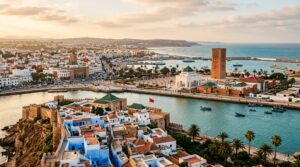
Tunisia
Tunisia at a Glance
Tunisia sits at Africa’s northeastern tip, where the Sahara Desert meets the Mediterranean Sea — a position that has made it a crossroads of civilizations for more than three millennia. The official name is simply Tunisia; the capital is Tunis, a city of layered medinas and French-colonial boulevards, home to roughly 11,972,169 people spread across a country of 163,610 km² — slightly smaller than the state of Georgia.
What the country is genuinely known for takes some unpacking. The ancient city of Carthage, now a UNESCO World Heritage suburb of Tunis, was once Rome’s most formidable rival. The Chott el-Djerid salt lake, shimmering white and disorienting under midday sun, doubles as a landscape so alien it stood in for Tatooine in the original Star Wars films. And Tunisia produces some of the world’s finest olive oil — around 1.8 million tonnes of olives annually, though export figures vary by season. Travelers who assume the country is simply a beach destination, arriving at Tunis-Carthage International Airport with nothing but a resort booking, tend to miss the Roman amphitheater at El Jem, one of the largest and best-preserved in the world.
Geography & Climate
Tunisia sits at Africa’s northeastern tip, where the continent reaches closest to Europe — Sicily lies just 150 kilometers across the Strait of Sicily. It borders Algeria to the west and Libya to the southeast, and its 1,300-kilometer Mediterranean coastline defines much of its character. Total area is 163,610 square kilometers, making it one of the smaller North African states.
The terrain shifts dramatically from north to south. The Tell Atlas mountains in the northwest, including Jebel Chambi — Tunisia’s highest peak at 1,544 meters — give way to the central plateau of the High Tell, then to the chotts, the vast salt flats that shimmer like standing water under the midday sun. Below that lies the northern Sahara, which covers roughly a third of the country. The Chott el-Jerid, a dry salt lake larger than some European countries, sits at the transition between steppe and desert.
Tunisia has two broad climate zones. The north is Mediterranean: mild, wet winters from October through March and dry summers where temperatures in Tunis regularly reach 35°C. Further south the climate turns arid; Tozeur can see summer highs above 45°C, and nights in the desert drop sharply — a 20°C swing is common. Drought is the primary natural hazard, particularly affecting agricultural output in the interior.
A Brief History of Tunisia
## A Brief History
Tunisia’s territory has been home to some of the ancient world’s most consequential civilizations. Carthage, founded by Phoenician settlers around the ninth century BCE near present-day Tunis, grew into a Mediterranean superpower that challenged Rome in the Punic Wars. Rome eventually destroyed Carthage in 146 BCE and rebuilt the region as a prosperous province. Arab armies arrived in the seventh century CE, bringing Islam and reshaping the culture permanently; the Aghlabid dynasty later made Kairouan one of the Islamic world’s great centers of learning.
France established a protectorate over Tunisia in 1881, nominally preserving the Husainid beys as rulers while French administrators controlled policy, land, and commerce. Resistance grew steadily through the early twentieth century, coalescing around the Neo-Destour party, founded in 1934 by Habib Bourguiba. Bourguiba’s combination of mass organizing and strategic negotiation pushed France toward a settlement, and Tunisia became independent on March 20, 1956 — one of the earliest North African countries to do so.
Bourguiba governed as president for three decades, modernizing civil law, expanding education, and banning polygamy — reforms that remain significant today. He was removed in a bloodless coup by Zine El Abidine Ben Ali in 1987. Ben Ali’s 23-year rule ended when street protests, sparked by Mohamed Bouazizi’s self-immolation in Sidi Bouzid in December 2010, ignited the Arab Spring. Tunisia subsequently drafted a new constitution in 2014, widely praised as a democratic milestone, though political turbulence has continued into the 2020s.
Culture, Religion & Daily Life
## Culture, Religion & Daily Life
Islam is the faith of around 99% of Tunisia’s 11,972,169 people, almost entirely Sunni Muslim following the Maliki school; small Christian and Jewish communities, some of the latter centered on the island of Djerba, make up the remainder. Arabic is the official language, with Tunisian Arabic (Darija) the everyday vernacular — a dialect thick with Berber, French, and Italian loanwords that can surprise even fluent Modern Standard Arabic speakers. Tamazight, the Berber language spoken mainly in the south and northwest, maintains a quiet presence alongside French, which remains the dominant language of business and higher education.
Tunisia’s population includes Arab, Amazigh (Berber), and mixed Arab-Amazigh communities, identities that often overlap fluidly rather than dividing cleanly along social lines. On any weekday morning in the medina of Tunis, the smell of fresh khobz bread from a wood-fired oven drifts past men playing cards outside a café, small glasses of mint tea already sweating on the table — an unremarkable scene that anchors daily social life.
The Revolution Anniversary, marked each January 14th, commemorates the 2011 departure of President Ben Ali and carries genuine civic weight. Eid al-Adha, falling in the Islamic lunar calendar’s month of Dhu al-Hijjah, is the year’s most significant family holiday, when households across the country share a meal of slow-cooked lamb.
Economy & Industry
## Economy & Industry
Tunisia runs on a mixed economy with a GDP of around $46 billion, spread across a population of roughly 11.9 million. The Tunisian dinar (د.ت) trades at approximately 3.1 to the dollar in 2025, though the rate has fluctuated under sustained inflation pressure. Phosphate mining anchors the industrial base — Tunisia holds some of the world’s largest reserves, and the state-owned Groupe Chimique Tunisien processes them into fertilizers exported across Europe and Asia. Manufacturing, particularly automotive components and textiles assembled for European markets, adds a second pillar, with the Sfax industrial corridor producing much of the output.
Tourism is the sector most visitors associate with Tunisia: the medina of Tunis, the Roman ruins at Dougga, and the Saharan hotels near Douz collectively draw millions of arrivals annually, contributing roughly 8–9% of GDP in strong years. Agriculture — olive oil above all — rounds out the export picture; Tunisia consistently ranks among the world’s top five olive oil producers, with the Zouari family cooperatives in the Sahel region among the recognized names in the trade.
Tunisia is a signatory to the African Continental Free Trade Area (AfCFTA), which opens preferential access to continental markets. The fastest-growing area right now is renewable energy: the TuNur solar export project, designed to pipe electricity via undersea cable to Europe, has attracted renewed investment interest and could reshape the country’s energy revenue profile within the decade.
People & Demographics
Tunisia’s population stands at approximately 11,972,169, spread across a country roughly the size of Georgia (the U.S. state), giving a density of around 77 people per square kilometer. The median age is somewhere in the low-to-mid 30s — relatively mature for North Africa — reflecting a demographic transition that has slowed birth rates considerably over the past two decades. Around 70 percent of Tunisians live in urban areas. Tunis, the capital, holds an estimated 2.5 million people in its greater metropolitan area; Sfax, the commercial hub of the south, is the next largest city with a population of roughly 600,000–700,000.
Tunisia has a notable diaspora concentrated primarily in France, Italy, and Germany, with smaller communities across the Gulf states. Life expectancy is approximately 76–77 years, among the higher figures on the continent. Literacy runs around 82–85 percent for adults, with a meaningful gap between men and women that has been narrowing steadily since the 1990s.
Government & Political System
## Government & Political System
Tunisia operates as a presidential republic, with executive power concentrated in the presidency following the 2022 constitution, which significantly expanded presidential authority. The current president holds both head of state and head of government functions, with a prime minister serving in a subordinate role. Tunis, the capital, houses the presidency, parliament, and principal ministries within a compact administrative core centered on Avenue Habib Bourguiba.
The legislature shifted from a bicameral to a largely unicameral structure under the 2022 reforms, with a National Council of Regions and Districts added as a second chamber alongside the Assembly of the Representatives of the People — though real legislative weight sits with the president. Tunisia’s political trajectory since the 2011 revolution has moved through multiparty parliamentary democracy before the current president suspended parliament in 2021 and pushed through the revised constitution via referendum; observers describe the period as a significant concentration of executive power.
Famous People from Tunisia
Tunisia’s 3,000-year layering of Phoenician, Roman, Arab, Ottoman, and French influence has produced writers, athletes, and thinkers whose work registers well beyond North Africa — in Nobel lecture halls, Olympic stadiums, and global cinema.
- Ibn Khaldun (1332–1406) — Tunis-born historian and sociologist whose Muqaddimah is considered one of the earliest works of historiography and social science, still cited in university curricula worldwide.
- Claudia Cardinale (b. 1938) — Tunis-born Italian actress whose roles in The Leopard, 8½, and Once Upon a Time in the West made her one of the defining faces of European cinema in the 1960s.
- Habib Bourguiba (1903–2000) — founding president of independent Tunisia and architect of the 1956 Personal Status Code, which abolished polygamy and granted women rights unmatched elsewhere in the Arab world at the time.
- Hichem Arfa (b. 1971) — classical violinist and former director of the Paris Opera Ballet Orchestra, widely regarded as one of the foremost Arab classical musicians performing internationally today.
- Dhafer Youssef (b. 1967) — oud player and vocalist whose genre-crossing albums, including Digital Prophecy, brought Sufi-inflected jazz to audiences across Europe, North America, and Asia.
- Ons Jabeur (b. 1994) — tennis player who reached the Wimbledon and US Open finals in 2022, becoming the first Arab and African woman to reach a Grand Slam singles final in the Open Era.
- Tahar Haddad (1899–1935) — labor organizer and author of Our Women in Islamic Law and Society, a landmark early-20th-century argument for Tunisian women’s emancipation that influenced Bourguiba’s later legal reforms.
Food & Cuisine
## Food & Cuisine
Couscous is Tunisia’s foundational starch, steamed until each grain is separate and light, then ladled over lamb, chicken, or vegetables and finished with a brick-red broth spiked with harissa. That harissa — a paste of dried chilis, garlic, and caraway — is the country’s defining flavor, showing up in nearly every savory dish. Lablabi is a working-class chickpea soup served over torn stale bread with a raw egg cracked in at the table; brik is a paper-thin pastry folded around tuna, egg, and capers, then fried until the outside shatters. Ojja, a spiced tomato-and-pepper stew finished with eggs and merguez sausage, is a weekend breakfast staple in Tunis households. For street food, bambalouni — hot doughnuts dusted with powdered sugar and sold from roadside fryers near the Tunis medina — are the snack most visitors encounter first. Mint tea, poured from a height to build a froth and sweetened heavily with pine nuts floating on top, closes almost every meal. Coastal cities like Sfax lean heavily on grilled fish and seafood, while the southern interior around Douz favors date-based sweets and slow-cooked camel meat.
Sports & Recreation
## Sports & Recreation
Football is Tunisia’s dominant sport, and the national men’s team — nicknamed the Eagles of Carthage — has one of the continent’s stronger records at the Africa Cup of Nations, winning the tournament in 2004 on home soil. That victory, played out before roaring crowds at the Stade de Radès in Tunis, remains the peak of Tunisian football history. Club side Espérance Sportive de Tunis has won the CAF Champions League multiple times, making it one of the most decorated clubs in African football.
Athletics and handball hold genuine cultural weight alongside football, but it’s distance running where Tunisia has punched internationally. Oussama Mellouli is the country’s most decorated Olympian, winning gold in the 1500m freestyle at Beijing 2008 and again in open-water swimming at London 2012 — a rare double across two disciplines. Tunisia has won around six Olympic medals in total, spread across athletics, swimming, and combat sports.
Music & The Arts
## Music & The Arts
Tunisia’s contemporary music scene is anchored in malouf, a classical Andalusian form carried to North Africa by musicians expelled from Spain in 1492, built around the oud, the goblet-shaped darbouka drum, and the nay flute. Alongside it, a younger generation is pushing raï and electronic-inflected fusion outward: Tunisian-born producer and vocalist Emel Mathlouthi — whose song Kelmti Horra (“My Word Is Free”) became an anthem of the 2011 revolution — continues to tour internationally, blending Arabic poetry with ambient soundscapes.
On the literary side, novelist Albert Memmi, born in Tunis’s medina, wrote The Colonizer and the Colonized (1957), a text still assigned in postcolonial studies courses worldwide. Craft traditions run deep in the coastal town of Nabeul, where hand-painted ceramic tiles — geometric patterns in cobalt, ochre, and white — have been produced for centuries. Tunisia’s cultural reach in film crystallized when director Ablatif Kechiche won the Palme d’Or at Cannes in 2013 for Blue Is the Warmest Colour, putting Tunisian-French cinema on the global map.
Wildlife & Natural Wonders
## Wildlife & Natural Wonders
Tunisia isn’t Big Five territory, but its wildlife reflects the meeting point of Mediterranean scrubland and Saharan desert. Jebel Chambi National Park, the country’s highest point at around 1,544 meters, shelters the Barbary macaque — North Africa’s only native primate, increasingly rare across its range. Further south, Bou-Hedma National Park protects a relict acacia savanna ecosystem and hosts reintroduced herds of scimitar-horned oryx, a species extinct in the wild elsewhere until recent rewilding programs brought it back to the region.
The natural wonder most visitors don’t anticipate is Chott el-Djerid, a vast salt lake near Tozeur that stretches roughly 5,000 square kilometers. In the dry season its surface turns white and mirror-flat, shimmering with heat mirages that blur the horizon completely. Tunisia holds no strictly natural UNESCO World Heritage Sites — its listed sites are cultural — though the lake and surrounding desert landscape carry their own geological weight. Desertification and habitat fragmentation along the northern Tell Atlas remain the most pressing conservation pressures, squeezing wildlife corridors that once connected populations across the Maghreb.
Top Things to See in Tunisia
Tunisia suits travelers who want history, beach, and desert in a single trip. The country packs Roman ruins, Saharan dunes, whitewashed medinas, and Mediterranean coastline into a compact area — most of it reachable within a few hours by road or train from Tunis.
- Medina of Tunis (Tunis) — A UNESCO-listed medieval quarter of around 700 monuments, including the 9th-century Zitouna Mosque, where the call to prayer echoes off stone archways and the air carries cumin and jasmine from the souks. Best visited in spring or fall; allow half a day minimum.
- Carthage (Greater Tunis) — The archaeological remains of the ancient Phoenician and Roman city, spread across a hillside suburb of Tunis, including the Antonine Baths — once among the largest in the Roman world. Reachable by TGM commuter train from central Tunis in about 30 minutes.
- El Djem Amphitheatre (El Djem) — A remarkably intact Roman colosseum, the third-largest ever built, rising improbably from a small inland town. Visiting at midday in summer is brutal; aim for morning, and budget 1–2 hours.
- Sidi Bou Said (Greater Tunis) — A clifftop village of blue-shuttered whitewashed houses above the Gulf of Tunis, closely associated with artists including Paul Klee and August Macke. A half-day trip from Tunis on the same TGM line as Carthage.
- Dougga (Téboursouk region) — Tunisia’s best-preserved Roman town, set on a hillside with a near-complete Capitol temple, theater, and baths still standing against a backdrop of rolling farmland. About 110 km southwest of Tunis; most visitors come on a day trip by car.
- Chott el-Djerid (Central Tunisia) — A vast salt lake — roughly the size of Lebanon — that shimmers with mirages and turns pink and orange at dusk during the dry season. Best seen October through April; the road across it connects Tozeur to Kebili.
- Tozeur and the Saharan Dunes (Southwest Tunisia) — The gateway to Tunisia’s Sahara, with camel treks and 4×4 excursions into the Nefta and Douz dune fields. Fly into Tozeur-Nefta International Airport or drive from Tunis (about
Visa & Travel Tips
## Visa & Travel Tips
Tunisia grants visa-free entry to citizens of the US, UK, and most EU countries for stays up to 90 days; nationals of several ECOWAS member states may also enter without a prior visa, though conditions vary by passport. There is no widely available e-visa system as of 2024 — most visitors either arrive without pre-arrangement or obtain a visa through a Tunisian embassy beforehand. Visa policy shifts regularly, so confirm current requirements with your nearest Tunisian embassy or consulate before booking.
The two main international gateways are Tunis-Carthage International Airport and Enfidha-Hammamet International Airport, served by carriers including Tunisair, Transavia, and Ryanair. The Tunisian dinar (د.ت) is a controlled currency — you cannot import or export it, so exchange money on arrival at airport bureaux or bank branches. ATMs are reliable in Tunis, Sfax, and resort areas like Sousse, though less so in rural regions; cards are accepted at larger hotels and some restaurants, but carry cash for markets and smaller establishments. US dollars are not generally accepted for day-to-day transactions. Mobile money platforms like M-Pesa or MTN MoMo have no footprint here. Tunisia runs on UTC+01:00 year-round, the international dialing code is +216, and sockets use Type C or Type E plugs. Check your government’s official travel advisory for current safety guidance before departure. Getting a local SIM or eSIM sorted early will make navigating all of this considerably easier.
Staying Connected: Internet & eSIM in Tunisia
Tunisia has solid mobile infrastructure by North African standards. Three main operators share the market: Ooredoo Tunisia, Orange Tunisia, and Tunisie Télécom. All three offer 4G LTE across the major cities — Tunis, Sfax, and Sousse — and along the main coastal corridor. 5G remains limited to pilot zones in greater Tunis as of 2024. Rural coverage, particularly in the interior governorates and around the Saharan south near Douz, thins out noticeably; expect 3G or edge service outside towns.
The traditional route is picking up a prepaid SIM at Tunis-Carthage International Airport. Kiosks from all three carriers are landside in arrivals. You’ll need your passport for mandatory registration; activation typically takes 10–20 minutes. A starter SIM with a data bundle runs roughly 10–15 Tunisian dinar (د.ت) — around $3–5 USD — depending on the operator and package. An eSIM sidesteps the queue entirely: purchase and install before departure, and your data plan is live the moment the plane lands. Most iPhone XS and later models support eSIM, as do recent Samsung Galaxy and Google Pixel flagships. Hotel and café Wi-Fi is reliable in Tunis, Hammamet, and Djerba, though speeds vary.