Culture · History · Art · Travel
Africa Facts — culture, history, art, travel

Africa explained — 54 countries, 1.4 billion people, one continent. An independent reference for African geography, culture, history and travel. Every country profile is researched, every fact sourced, every image original. Publishing weekly since 2014.
Featured country profiles





















































Why africa-facts.org?
Every article is built on verifiable data from institutions such as the UN, World Bank, African Union, and peer-reviewed academic sources. Claims are traceable, not decorative.
Africa is 54 countries, thousands of languages, and vastly different histories and economies. This site treats that diversity seriously rather than flattening it into a single narrative.
Content is shaped around what journalists, students, and travellers actually need to know — context, scale, and nuance — not keyword lists or surface-level trivia.
AI tools assist with research and drafting; human editorial judgment determines what gets published and how it is framed. That combination is a feature, not a shortcut.
Africa: where the human story begins
From the oldest human bones to the first planned cities, Africa’s record of firsts reshapes how we understand civilization.
Anatomically modern human remains found at Omo, Ethiopia, date to 195,000 years ago — the earliest confirmed evidence of our species.
Finely crafted harpoon points and a dagger unearthed at Katanda, northeastern Congo, place organized fishing expeditions deep in the Stone Age.
Bomvu Ridge’s hematite mine, active before 43,000 BCE, yielded 300,000 artifacts including stone tools — evidence of large-scale, systematic extraction.
The Ishango bone, found near Lake Edward, Congo, bears notched mathematical markings dating back roughly 25,000 years.
Evidence from Egypt’s Western Desert shows people cultivating barley, wheat, lentils, and dates around 12,000 years ago, among the earliest farming on record.
A mummified infant from Uan Muhuggiag, southwestern Libya, dates to roughly 9,000 years ago — 1,000 years before Egyptian mummification practice began.
Standing 481 feet tall and assembled from 2.3 million limestone and granite blocks — some weighing 100 tons — it remains an unmatched feat of ancient engineering.
Built in ancient Egypt, Kahun was rectangular, walled, and deliberately zoned into wealthy and worker quarters — urban planning roughly 4,000 years ago.
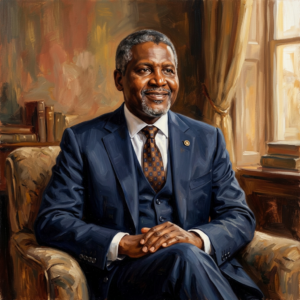
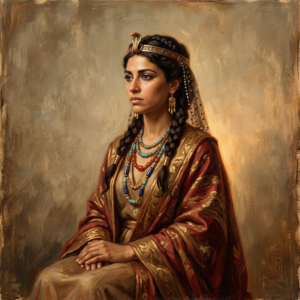
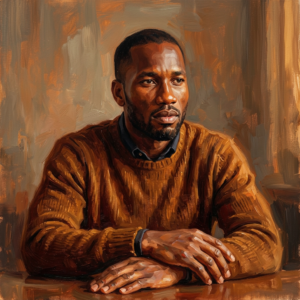
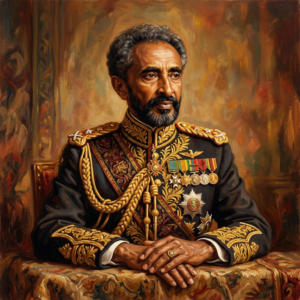
The Africans who shaped the world
Ten people whose lives — across millennia, fields, and continents — left a mark on Africa and on the wider world.