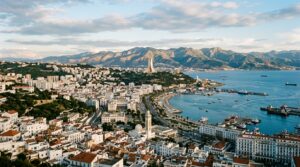
Sudan
Sudan at a Glance
Sudan sits in northeastern Africa where the Blue Nile and White Nile converge at Khartoum, making the capital one of the most geographically dramatic cities on the continent. Officially simply Sudan, the country holds a population of around 51,662,000 people and covers approximately 1,886,068 km² — larger than the combined area of France, Germany, Spain, and Italy, which gives some sense of the distances involved in crossing it.
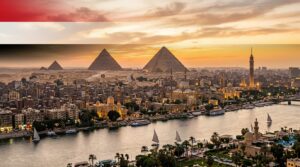
The country is home to more ancient pyramids than Egypt: the Nubian pyramids at Meroë, built by the Kushite kingdoms, number in the hundreds and sit largely unenclosed on open desert. Sudan is also a significant producer of sesame seeds and gum arabic — the latter an ingredient in everything from soft drinks to pharmaceuticals — and its camel markets, particularly at Omdurman across the river from Khartoum, are among the largest in the region. Sudanese music, rooted in the tonal traditions of the Nile Valley, has produced internationally recognized artists including Mohammed Wardi. Visitors who arrive expecting a single landscape are consistently surprised: the terrain shifts from the Nubian Desert in the north to the lush Dinder National Park in the southeast, a range few countries of any size can match.
Geography & Climate
Sudan sits in northeastern Africa, sharing borders with Egypt to the north, Libya and Chad to the west, the Central African Republic and South Sudan to the south, and Ethiopia and Eritrea to the east. At roughly 1,886,068 square kilometers, it is the third-largest country on the continent after Algeria and the Democratic Republic of Congo.
The terrain shifts dramatically from north to south. The Nubian Desert dominates the north — a landscape of bare rock and wind-sculpted sand where afternoon temperatures can exceed 45 °C (113 °F) and nights drop sharply enough to require a jacket. The Nile River, splitting into the Blue and White Nile before converging at Khartoum, is the country’s defining geographic spine. Further south, the land grades into the clay plains of the Gezira and, eventually, the greener Sahel fringe near the South Sudan border.
Sudan has two broad climate zones. The north is hyper-arid year-round; the central and southern regions experience a single rainy season running roughly July–September, when the Inter-Tropical Convergence Zone pushes moisture northward. Annual rainfall in Khartoum averages around 160 mm, falling almost entirely in those months. Drought is a recurring hazard across the Sahel belt, and seasonal flooding along the Nile can displace communities in low-lying areas near Khartoum each August.
A Brief History of Sudan
## A Brief History
Sudan’s territory has been home to powerful states for millennia. The Kingdom of Kush, centered at Meroe along the Nile, rivaled ancient Egypt in influence and outlasted it by centuries, finally collapsing around 350 CE. Later, the Funj Sultanate ruled much of the region from its capital at Sennar from the early 16th century, controlling trans-Saharan trade routes and spreading Islam across the northern Nile Valley.
European colonization arrived indirectly. Egypt, itself under British influence, conquered Sudan in the 1820s under Muhammad Ali. Following the Mahdist Revolution — a mass uprising led by Muhammad Ahmad, who declared himself the Mahdi in 1881 — Egyptian and British forces were expelled for over a decade. Britain reasserted control after the Battle of Omdurman in 1898, establishing the Anglo-Egyptian Condominium, a joint administration that functioned in practice as British rule. The colonial period deepened the divide between the Arab-Muslim north and the predominantly African, Christian and animist south — a fracture that would define Sudan’s modern history.
Sudan gained independence on January 1, 1956, becoming the first sub-Saharan African country to do so in the postwar era, though the transition was shaped more by negotiation between Egyptian and British interests than by a single liberation movement. The decades that followed were turbulent: a series of military coups, two prolonged civil wars between north and south, and the presidency of Omar al-Bashir, who ruled from 1989 until a popular uprising removed him in 2019. South Sudan seceded in 2011 following a referendum, and Sudan’s political future remains unsettled.
Culture, Religion & Daily Life
## Culture, Religion & Daily Life
Islam shapes the rhythm of daily life for the vast majority of Sudanese — around 97% of the population identifies as Muslim, predominantly Sunni, with small Christian communities (mainly Catholic and Anglican) concentrated in the south and in Khartoum’s urban neighborhoods. Traditional beliefs persist in some rural areas, often woven alongside Islam rather than standing apart from it.
Arabic is the official language and the lingua franca of commerce and education, though English holds co-official status. Sudan is linguistically dense: estimates suggest over 70 indigenous languages are spoken across the country, including Nobiin in the north, Beja along the Red Sea coast, and Nuer and Dinka in the south. The Sudanese Arabs, Beja, and Fur are among the largest ethnic communities, each carrying distinct cultural traditions.
On any given Friday morning in Omdurman — Khartoum’s historic twin city — the air carries the scent of frankincense as worshippers spill out of mosques after Jumu’ah prayers, and tea sellers set up charcoal braziers along the roadside, pouring spiced shai into small glasses. Independence Day, celebrated on January 1st, marks Sudan’s 1956 independence from Anglo-Egyptian rule and draws public gatherings, music, and national reflection across the country.
Economy & Industry
## Economy & Industry
Sudan’s economy has endured decades of sanctions, conflict, and the 2011 secession of South Sudan, which took roughly 75 percent of the country’s oil reserves with it. GDP sits at around $30–40 billion, though estimates vary considerably given ongoing instability. The Sudanese pound (ج.س) has faced severe depreciation; in 2025 the exchange rate runs approximately 500–600 pounds to the dollar, though parallel market rates have at times diverged sharply from official figures.
Agriculture now anchors the economy, employing the majority of the workforce. Sudan is one of the world’s largest producers of gum arabic — the resin tapped from acacia trees and used globally in food processing and pharmaceuticals — with the Gum Arabic Company handling much of its export. Gold mining has grown significantly since oil revenues collapsed; the Sudan Gold Refinery processes output from artisanal and industrial operations alike, making gold the country’s top hard-currency earner. Sesame, livestock, and sorghum round out the main export categories.
Sudan is a member of the Common Market for Eastern and Southern Africa (COMESA) and has signed on to the African Continental Free Trade Area (AfCFTA). A forward-looking priority is rehabilitating the Port Sudan corridor, which has become the country’s critical economic lifeline — and a focus of international development interest — following the conflict that erupted in Khartoum in 2023.
People & Demographics
## People & Demographics
Sudan’s population stands at approximately 51,662,000, spread across a country roughly one-third the size of the United States, yielding a density of around 26 people per square kilometer — though the distribution is deeply uneven, with the Nile Valley and Khartoum region far more densely settled than the arid west and east. The median age is estimated at around 19–20 years, making Sudan a notably young country; roughly 40 percent of the population is under 15.
Urbanization sits at approximately 35–37 percent, with Khartoum and its twin cities Omdurman and Khartoum North forming a single metropolitan sprawl of around 6–7 million people; Port Sudan on the Red Sea coast is the next significant urban center. Large Sudanese diaspora communities have settled in Egypt, Saudi Arabia, the United Arab Emirates, and across Europe, particularly in the United Kingdom. Life expectancy is around 65–67 years, according to recent estimates, and literacy runs approximately 60–65 percent, with a notable gap between men and women.
Government & Political System
## Government & Political System
Sudan’s formal status has been in flux since the 2019 popular uprising that removed long-ruling president Omar al-Bashir after nearly three decades in power. What followed was a fragile civilian-military partnership, itself upended in October 2021 when the military dissolved the transitional government. Since April 2023, the country has been engulfed in armed conflict between the Sudanese Armed Forces and the Rapid Support Forces paramilitary group, leaving governance deeply contested and institutional authority severely disrupted.
Before the 2023 conflict, Sudan was structured as a presidential republic, with Khartoum serving as the national capital and administrative center — home to federal ministries and the central bank. The transitional framework had envisioned a bicameral legislature, the Transitional Legislative Council, though it was never fully constituted. No functioning elected government currently holds consolidated authority; international bodies and regional mediators, including the African Union, continue efforts to broker a return to civilian rule. For context on neighboring political transitions, see [Egypt] and [South Sudan].
Famous People from Sudan
Sudan has produced globally recognized figures across literature, sport, activism, and music — shaped by the country’s position at the crossroads of sub-Saharan Africa and the Arab world, and by decades of political upheaval that pushed many of its most prominent voices onto the international stage.
- Tayeb Salih (1929–2009) — Sudanese novelist whose 1966 work Season of Migration to the North is considered one of the most important Arabic-language novels of the 20th century and was named the most significant Arabic novel of the century by the Arab Literary Academy in 2001.
- Manute Bol (1962–2010) — NBA player standing 7 ft 7 in (2.31 m) who became one of the tallest athletes in professional basketball history and later a prominent humanitarian advocate for South Sudanese refugees.
- Leila Aboulela (born 1964) — Sudanese fiction writer based in the UK whose novel Minaret (2005) brought her international literary recognition and whose work consistently explores Muslim identity and diaspora experience.
- Hawa Abdi (1947–2020) — Physician and activist who ran a self-built camp sheltering around 90,000 displaced Somalis near Mogadishu, earning her a Nobel Peace Prize nomination and the title “the Daring Heroine of Somalia” from Time magazine.
- Sinkane (born 1983) — Sudanese-American musician Ahmed Gallab, who records under the name Sinkane, blends Afrobeat, funk, and indie rock and has toured internationally with artists including Yeasayer and Of Montreal.
- Salva Kiir Mayardit is excluded per instructions; instead: John Garang (1945–2005) — Founder and leader of the Sudan People’s Liberation Movement whose decades-long campaign for southern autonomy reshaped the political map of northeast Africa and laid the groundwork for South Sudan’s eventual independence.
Food & Cuisine
## Food & Cuisine
Sorghum is Sudan’s foundational grain, pressed into kisra, a paper-thin, slightly sour flatbread that arrives rolled or folded alongside nearly every meal. It typically accompanies ful medames, slow-cooked fava beans finished with cumin, lemon, and a drizzle of sesame oil — a dish eaten from Khartoum breakfast tables to rural villages alike. Kajaik is a pungent dried-fish stew common in Nile communities, while moukhbaza, a thick banana-paste dish, appears in the south where plantains grow. Street stalls across Khartoum sell tamiya — Sudan’s version of falafel, made from fava beans and deep-fried to a crackled dark-green crust — for the equivalent of a few cents, wrapped in newspaper or flatbread.
The north, shaped by Arab and Egyptian influence, leans heavily on legumes, dried meats, and date-based sweets. Southern regions, closer to what is now [South Sudan], favor fresh river fish and leafy stews. The defining drink is karkadeh, a deep-crimson hibiscus tea served cold in summer and hot in winter, tart enough to make the eyes water, sold in glass bottles at nearly every roadside kiosk.
Sports & Recreation
## Sports & Recreation
Football is Sudan’s dominant sport, and the national men’s team — known as the Nile Crocodiles — has a modest but real continental history. Sudan won the Africa Cup of Nations in 1970, hosted on home soil in Khartoum, making them one of the earlier champions of the tournament. The squad has qualified for AFCON intermittently since, though consistent progression beyond the group stage has proved difficult in recent decades.
Beyond football, traditional wrestling (nuba wrestling, practiced by the Nuba people of South Kordofan) carries deep cultural weight — bouts are communal events accompanied by drumming and attended by entire villages. Sudan’s most internationally recognized athlete is middle-distance runner Abubaker Kaki, who won the 800 meters at the 2008 World Indoor Championships in Valencia and was once ranked among the world’s best. At the Olympics, Sudan has sent athletes across multiple Games but has won no medals to date, with track and field remaining its most competitive discipline.
Music & The Arts
## Music & The Arts
Sudan’s contemporary music scene is anchored in a style called sudanese pop fused with traditional merdoum rhythms — percussion-heavy, call-and-response vocal arrangements that trace back to Nile Valley ceremonies. Mohamed Mounir is frequently cited as a bridge figure, though the Sudanese artist drawing the most international attention recently is Alsarah, a Brooklyn-based singer-songwriter whose East African retro-pop project Alsarah & the Nubatones — particularly the album Manara — has toured European festival circuits and reframed Sudanese identity for global audiences. The oud sits at the center of classical Sudanese music, played in a distinctly Nile-inflected tuning that differs noticeably from its Egyptian or Lebanese cousins.
Sudan’s most internationally recognized literary figure is Tayeb Salih, whose novel Season of Migration to the North remains a cornerstone of postcolonial Arabic literature. Visual tradition leans heavily on nubian geometric murals — bold ochre, white, and terracotta patterns painted on mudbrick facades in villages near Wadi Halfa. The Khartoum International Film Festival has worked, in fits and starts, to give Sudanese cinema a regional platform comparable to what FESPACO provides for Francophone West Africa.
Wildlife & Natural Wonders
## Wildlife & Natural Wonders
Sudan is not a Big Five destination, but the Dinder National Park — a UNESCO Biosphere Reserve straddling the Blue Nile region — shelters one of the country’s most recognizable large mammals: the roan antelope, whose rust-red coat and swept-back horns make it unmistakable in the dry woodland. Radom National Park, near the Central African Republic border, supports populations of elephants and African buffalo in terrain that shifts from savanna to dense gallery forest. The Red Sea coast adds a different register entirely: coral reefs off Port Sudan rank among the least-dived in the region, drawing hammerhead sharks in numbers that have surprised marine biologists.
Sudan’s most striking non-park natural wonder is the Meroe Island stretch of the Nile, where the river narrows through sandstone outcrops and the light turns the water a deep copper-green at dusk — though the area is better known for its archaeological sites than its ecology. Sudan holds no UNESCO-designated natural World Heritage Sites, only cultural ones. Desertification driven by the expanding Sahara is the dominant conservation pressure, compressing wildlife corridors and straining water sources that savanna species depend on year-round.
Top Things to See in Sudan
Sudan rewards travelers who come for history above all else — the country holds more ancient pyramids than Egypt, and its desert landscapes frame ruins that most visitors to Africa never reach. Wildlife, Nile scenery, and a compact but walkable capital round out a trip that suits the historically curious rather than the resort-bound.
- Meroë Pyramids (Nubian Desert, Nile State) — The royal cemetery of the ancient Kushite kingdom, with over 200 steep-sided pyramids rising from red sand dunes; Sudan’s single most recognized archaeological site. Best visited October–February when temperatures are bearable; most travelers reach it by road from Khartoum, around 200 km north.
- Jebel Barkal and the Napatan Pyramids (Karima, Northern State) — A flat-topped sandstone mesa considered sacred by both ancient Egyptians and Kushites, flanked by a second pyramid field and the ruins of several temples. Allow a full day; Karima is reachable by overnight train from Khartoum or by the desert road.
- National Museum of Sudan (Khartoum) — The country’s principal archaeological collection, housing rescued Nubian temples, royal statuary, and artifacts spanning 5,000 years of civilization along the Nile. Entry costs approximately $3 (750 SDG); a thorough visit takes two to three hours.
- Omdurman Souq and Khalifa’s House Museum (Omdurman) — The sprawling market across the White Nile from Khartoum is Sudan’s largest, selling everything from spices to hand-tooled leather; the adjacent Khalifa’s House preserves the Mahdist state’s nineteenth-century history. Friday afternoons bring the Whirling Dervishes ceremony at the Hamed al-Nil tomb nearby — one of the more arresting public rituals in the region.
- Sanganeb Marine National Park (Red Sea, near Port Sudan) — An atoll reef roughly 25 km offshore that ranks among the Red Sea’s least-dived sites, with steep coral walls, hammerhead sharks, and near-zero visibility problems. Dive operators in Port Sudan run day trips; the season runs year-round, though October–April offers the calmest seas.
- Suakin (Red Sea State) — A coral-block island city that served as the region’s main Ottoman port; the crumbling architecture is slowly being restored in partnership with Turkish contractors. Reachable by road from Port Sudan in under an hour; the late-afternoon light turns the ruins a
Visa & Travel Tips
## Visa & Travel Tips
Sudan requires most visitors to obtain a visa in advance through an embassy; there is no functioning e-visa system or visa-on-arrival for the majority of nationalities as of 2024. US, UK, and EU passport holders must apply at a Sudanese diplomatic mission before travel, while citizens of some Arab League states enjoy easier entry arrangements. Visa rules shift with political conditions, so confirm requirements with your nearest Sudanese embassy well before booking. Khartoum’s Khartoum International Airport (KRT) is the primary international gateway, served by carriers including EgyptAir, Ethiopian Airlines, and FlyDubai.
The Sudanese pound (ج.س) is the only practical currency for daily transactions — card payments are rarely accepted outside a handful of Khartoum hotels, and international cards generally do not work in local ATMs due to banking sanctions. Carry US dollars as a backup and exchange through authorized bureaus; mobile money services like M-Pesa are not widely established here. The security situation across parts of Sudan remains serious, particularly outside Khartoum; check your government’s official travel advisory before and during your trip. Sudan runs on UTC+03:00, and the international dialling code is +249. Power sockets use Type C and D plugs, so bring a universal adapter. Getting a local SIM or eSIM sorted early will prove essential — which leads directly into what connectivity actually looks like on the ground.
Staying Connected: Internet & eSIM in Sudan
Sudan’s mobile landscape is dominated by three main operators: Zain Sudan, MTN Sudan, and Sudani (Sudan Telecom). All three offer 4G LTE in Khartoum and major cities like Omdurman and Port Sudan; 5G has not yet launched commercially. Rural and desert regions — which cover most of the country’s landmass — drop quickly to 3G or edge connectivity, so download anything essential before leaving the capital.
Buying a local SIM at Khartoum International Airport is straightforward: bring your passport, expect a brief registration process, and budget around 249 ج.س for a starter SIM with a basic data bundle. Activation typically takes 30–60 minutes once registered. The faster alternative is an eSIM — load a plan through a provider like Datamax before your flight departs, and your data connection is live the moment you land, with no queues and no surprise roaming charges. Most iPhone XS and later models support eSIM, as do recent Android flagships from Samsung, Google, and Xiaomi. Hotel lobbies and cafés in Khartoum and Port Sudan generally offer Wi-Fi, though speeds and reliability vary considerably.