Namibia
Namibia at a Glance
The Republic of Namibia occupies a vast stretch of southwestern Africa, covering 825,615 square kilometres of some of the most dramatic and least-populated terrain on the continent. Bordered by South Africa to the south, Botswana to the east, Zambia and Zimbabwe to the northeast, and Angola to the north, Namibia also holds a long Atlantic coastline that stretches for more than 1,500 kilometres. With a population of just over 3,022,401 people spread across this enormous landscape, it ranks among the most sparsely populated countries on Earth — a fact that gives the country an almost otherworldly sense of space and silence.
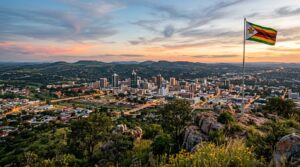
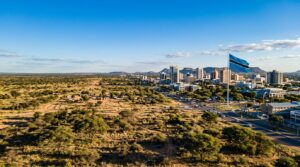
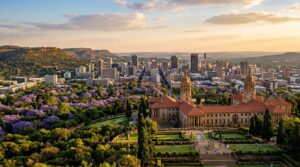
The capital city, Windhoek, sits at the heart of the country on a high inland plateau and serves as the political, economic, and cultural hub of the nation. It is a surprisingly cosmopolitan city, where colonial German architecture stands alongside modern office towers and vibrant local markets. The official ISO country code is NA, and the country uses both the Namibian dollar and the South African rand as legal tender, the two currencies pegged at parity.
Namibia is officially multilingual, recognising Afrikaans, German, English, Herero, Khoekhoe, Kwangali, Lozi, Ndonga, and Tswana among its languages. English serves as the primary language of government and education. The country is celebrated internationally for its extraordinary conservation record, its ancient desert landscapes, and a political stability that has made it one of Africa’s most admired democracies since independence.
Geography & Climate
Namibia’s geography is defined by extremes. The country is divided into several distinct ecological zones, each with its own character. Along the Atlantic coast runs the Namib Desert, one of the oldest deserts in the world and the source of the country’s name. Stretching inland from the shoreline, this hyper-arid zone is characterised by towering sand dunes, gravel plains, and fog-shrouded coastlines where the cold Benguela Current meets the hot desert air. The dunes around Sossusvlei, some reaching over 300 metres in height, are among the tallest in the world.
Moving eastward, the landscape rises onto the Central Plateau, a highland region averaging around 1,000 to 2,000 metres above sea level where Windhoek is located. This plateau gives way to the Kalahari semi-desert in the east and the densely vegetated Caprivi Strip — now officially called the Zambezi Region — in the far northeast, a narrow finger of land that reaches toward the Zambezi River and supports a completely different ecosystem of floodplains and woodland. The Kunene and Orange rivers mark the northern and southern borders respectively.
Climatically, Namibia is one of the driest countries in sub-Saharan Africa. Rainfall is highly seasonal, concentrated between November and April, and decreases sharply from north to south and from east to west. The coast is cool and frequently shrouded in fog, while the interior can experience scorching summer temperatures exceeding 40°C. Winter nights on the plateau can drop below freezing. This climatic diversity, challenging as it is for agriculture, creates the conditions for some of the world’s most spectacular desert and savanna ecosystems.
A Brief History of Namibia
Human habitation in what is now Namibia stretches back tens of thousands of years. The San people, one of the oldest human populations on Earth, left their mark across the landscape in the form of rock engravings and paintings, most famously at Twyfelfontein in the Kunene Region, a UNESCO World Heritage Site. Later migrations brought Bantu-speaking groups including the Ovambo, Herero, and Kavango peoples, who established complex pastoral and agricultural societies across the north and centre of the territory.
European contact began in earnest in the late fifteenth century when Portuguese navigators sailed along the coast, but sustained colonial interest came much later. Germany declared the territory German South West Africa in 1884 during the Scramble for Africa, establishing a settler colony that would become the site of one of history’s earliest genocides. Between 1904 and 1908, German colonial forces systematically exterminated the Herero and Nama peoples following uprisings against land dispossession. Estimates suggest that up to 80 percent of the Herero population and 50 percent of the Nama population perished through direct killing, forced labour, and deliberate starvation in concentration camps. Germany formally acknowledged these events as genocide in 2021.
During World War One, South African forces seized the territory, and after the war it was administered by South Africa under a League of Nations mandate. South Africa subsequently applied its apartheid system to the territory, renaming it South West Africa and suppressing indigenous political movements. The South West Africa People’s Organisation, known as SWAPO, launched an armed liberation struggle in 1966 that would last more than two decades. After prolonged international pressure, UN-supervised elections were held in 1989, and Namibia achieved full independence on 21 March 1990, becoming one of the last African countries to shed colonial rule. Sam Nujoma became the country’s first president.
Culture, Religion & Daily Life
Namibian culture is a layered tapestry woven from the traditions of more than a dozen ethnic groups, shaped further by over a century of German and South African colonial influence. The result is a society that is simultaneously deeply African and distinctly multicultural. In Windhoek, it is entirely normal to encounter a Lutheran church built in Wilhelmine German style standing a few blocks from a traditional Herero women’s market stall, where vendors wear the distinctive Victorian-influenced dress — the ohorokova — that has become a symbol of Herero cultural identity and resilience.
Christianity is the dominant religion, practised by the large majority of Namibians across denominations including Lutheran, Catholic, Dutch Reformed, and various Pentecostal and evangelical churches. Indigenous spiritual beliefs and practices coexist with Christianity in many communities, particularly in rural areas, where ancestral veneration and traditional healing remain important parts of daily life. The San communities of the Kalahari maintain some of the most intact indigenous spiritual traditions on the continent, including trance healing dances that have been practised for millennia.
Daily life in Namibia varies enormously between urban and rural settings. In cities like Windhoek, Swakopmund, and Walvis Bay, residents navigate a modern economy with shopping centres, universities, and a growing tech sector. In the rural north, where the majority of the population lives, communal farming, cattle herding, and subsistence agriculture remain central to existence. Family and community ties are exceptionally strong across all ethnic groups, and communal celebrations — births, weddings, and funerals — are major social events that can draw hundreds of participants.
Economy & Industry
Namibia’s economy is one of the more developed in sub-Saharan Africa, though it is characterised by significant inequality — one of the highest Gini coefficients in the world — reflecting the enduring legacy of colonial land and wealth distribution. The country is classified as an upper-middle-income economy by the World Bank, with a GDP driven primarily by mining, fishing, agriculture, and a growing tourism sector.
Mining is the backbone of the formal economy. Namibia is one of the world’s leading producers of diamonds, extracting gem-quality stones both from onshore alluvial deposits and through sophisticated offshore marine mining operations along the Atlantic coast. Uranium is another critical export, with the Rössing and Husab mines ranking among the largest open-pit uranium mines on the planet. Zinc, gold, copper, and rare earth elements also contribute significantly to export earnings. The discovery of substantial offshore oil and gas reserves in the Orange Basin has generated enormous international interest and promises to reshape the economy in the coming decade.
The fishing industry, anchored at Walvis Bay, is one of the most productive in Africa thanks to the cold, nutrient-rich Benguela Current. Hake, pilchard, and horse mackerel are the primary commercial species. Agriculture, while constrained by aridity, supports a large portion of the rural population through subsistence farming and commercial livestock ranching. Tourism has emerged as a major employer and foreign exchange earner, with Namibia’s wilderness areas, adventure tourism offerings, and luxury safari lodges attracting visitors from across the globe.
People & Demographics
Namibia’s population of approximately 3,022,401 is spread across one of the largest land areas of any country in Africa, producing an average population density of fewer than four people per square kilometre. The Ovambo people form the largest ethnic group, comprising roughly half the total population and concentrated primarily in the north. Other significant groups include the Kavango, Herero, Damara, Nama, Caprivian, San, Baster, and Tswana peoples, each with distinct languages, traditions, and historical territories.
White Namibians of German, Afrikaner, and English descent make up a small but economically influential minority. The Baster community, descendants of mixed Khoikhoi and Dutch settler unions who migrated north from the Cape Colony in the nineteenth century, have maintained a distinct cultural identity centred on the town of Rehoboth. Namibia’s population is young, with a median age of around 21 years, and is increasingly urbanising, with Windhoek growing rapidly as rural residents seek economic opportunities in the capital.
Government & Political System
Namibia is a constitutional republic with a multi-party democratic system. The President serves as both head of state and head of government, elected by popular vote for a maximum of two five-year terms. The Parliament consists of two chambers: the National Assembly, which holds primary legislative authority, and the National Council, which represents regional interests. The constitution, adopted at independence in 1990, is widely regarded as one of the most progressive in Africa, enshrining fundamental rights, an independent judiciary, and explicit protections against discrimination.
SWAPO, the liberation movement that led the independence struggle, has governed Namibia continuously since 1990 and commands substantial electoral majorities. Despite this dominance, Namibia maintains a functioning opposition, a free press, and independent courts that have demonstrated their willingness to rule against the government. The country consistently ranks among the top performers in African governance and press freedom indices. Netumbo Nandi-Ndaitwah made history in 2024 when she was elected as Namibia’s first female president, marking a significant milestone in the country’s democratic journey.
Famous People from Namibia
Despite its small population, Namibia has produced individuals of remarkable global significance. Sam Nujoma, the founding father of the nation, led SWAPO through decades of exile and armed struggle before becoming the country’s first president in 1990. Revered as the “Father of the Namibian Nation,” he served three terms and remains a towering figure in African liberation history. His successor, Hifikepunye Pohamba, won the Mo Ibrahim Prize for Achievement in African Leadership in 2014, one of the most prestigious governance awards on the continent.
In the world of athletics, Frankie Fredericks became one of Namibia’s most celebrated international figures. A four-time Olympic silver medallist in the 100 metres and 200 metres at the 1992 and 1996 Games, Fredericks was for many years the fastest man in Africa and a genuine global sprinting icon. His achievements inspired generations of young Namibian athletes and put the country on the world sporting map at a time when the nation was barely two years old.
Namibia has also produced figures of note in the arts and activism. Doreen Sioka has been a prominent voice for human rights and gender equality. In music, the late Jackson Kaujeua was a beloved singer-songwriter whose work became the soundtrack of the independence movement. More recently, long-distance runner Helalia Johannes has earned international recognition, winning major marathon events including the Tokyo Marathon. These individuals collectively reflect the breadth of Namibian talent and the country’s outsized contribution to global culture and sport relative to its population size.
Food & Cuisine
Namibian cuisine is hearty, meat-forward, and deeply rooted in the pastoral traditions of its people. Beef, goat, and game meat form the centrepiece of most traditional meals. Braai — the southern African tradition of open-fire grilling — is not merely a cooking method in Namibia but a social institution, practised at weekends, celebrations, and casual gatherings across all communities and income levels. Oryx, kudu, springbok, and warthog are commonly available and widely eaten, both at home and in restaurants catering to tourists.
Oshifima, a stiff porridge made from pearl millet, is the staple food of the Ovambo people and one of the most widely consumed dishes in the country. It is typically served with a relish of spinach, dried fish, or meat stew. Kapana is Windhoek’s beloved street food tradition — informally grilled beef sold by vendors in the Katutura township, seasoned with spices and served with fat cakes and chilli sauce. It is one of the most authentic and affordable culinary experiences the capital offers.
The German colonial legacy is unmistakable in Namibian food culture, particularly in towns like Swakopmund and Lüderitz, where bakeries sell fresh Brötchen, restaurants serve Eisbein and Sauerbraten, and beer halls pour locally brewed lager made according to the German Reinheitsgebot purity law. Namibian Breweries produces Windhoek Lager, an internationally recognised beer that has become something of a national symbol. Seafood, particularly fresh oysters from Lüderitz and hake from Walvis Bay, rounds out a cuisine that is far more diverse than its desert setting might suggest.
Sports & Recreation
Football is the most widely played sport in Namibia at the grassroots level, with local leagues active across the country and the national team — the Brave Warriors — competing in African Cup of Nations qualifiers. Rugby union commands a passionate following, particularly among Afrikaner and mixed-race communities, and the Namibian national team has qualified for multiple Rugby World Cups, competing against the world’s elite nations with considerable pride if not always comparable resources.
Athletics has produced Namibia’s greatest international sporting achievements, with Frankie Fredericks setting the standard that subsequent generations have aspired to match. The country’s wide open spaces and dramatic landscapes have also made it a destination for adventure sports, including ultramarathon running, sandboarding on the dunes of the Namib, skydiving over the desert, and sea kayaking along the Skeleton Coast. The Namibian wilderness provides a natural gymnasium that draws both local enthusiasts and international adventurers seeking experiences unavailable anywhere else on Earth.
Music & The Arts
Music in Namibia is as diverse as its people. Traditional music varies dramatically by ethnic group: the San use complex vocal polyphony and hand-clapping rhythms in their healing ceremonies; the Ovambo have rich traditions of communal singing and the playing of the omakola and other indigenous instruments; the Herero maintain ceremonial music tied to cattle culture and ancestral rituals. These traditions continue to be practised and, increasingly, recorded and preserved for future generations.
Contemporary Namibian music blends these indigenous roots with influences from South African kwaito, American hip-hop, reggae, and gospel. A vibrant local music scene has emerged in Windhoek, with artists performing in venues across the city and releasing music that speaks to modern Namibian identity. The visual arts are equally dynamic, with painters, sculptors, and photographers drawing on the country’s extraordinary landscapes and complex history for inspiration. The National Art Gallery of Namibia in Windhoek serves as the primary institutional home for the country’s visual arts heritage and contemporary output.
Wildlife & Natural Wonders
Namibia is arguably Africa’s premier conservation success story. The country was the first in the world to enshrine environmental protection in its constitution, and it has developed an internationally acclaimed system of communal conservancies that give local communities direct economic benefits from wildlife, creating powerful incentives for conservation. The results have been dramatic: populations of lion, leopard, cheetah, elephant, black rhinoceros, and desert-adapted giraffe have all recovered significantly in recent decades.
Etosha National Park, centred on a vast salt pan visible from space, is one of Africa’s great wildlife sanctuaries, supporting enormous concentrations of elephant, zebra, wildebeest, and predators around its waterholes. The Skeleton Coast, a treacherous stretch of Atlantic shoreline littered with shipwrecks and whale bones, is home to vast Cape fur seal colonies and the predators — brown hyenas, black-backed jackals, and lions — that have adapted to hunt them. The Fish River Canyon in the south is the second-largest canyon in the world, a geological marvel carved over half a billion years.
The Namib-Naukluft National Park protects the ancient Namib Desert ecosystem, including the iconic Sossusvlei dune field and the extraordinary Welwitschia plant, a living fossil that can survive for over a thousand years in near-waterless conditions. Namibia’s dark skies, far from urban light pollution, have also made it a growing destination for astrotourism, with the NamibRand Nature Reserve designated as one of only a handful of International Dark Sky Reserves in Africa.
Top Things to See in Namibia
Sossusvlei and the surrounding Namib-Naukluft Park represent Namibia’s most iconic image: towering apricot-coloured dunes rising from white clay pans, their crests razor-sharp against an impossibly blue sky. Dead Vlei, a ghostly white clay pan studded with the blackened skeletons of ancient camel thorn trees, is one of the most photographed landscapes on the continent. Visitors typically arrive before dawn to climb Dune 45 or the massive Big Daddy dune and watch the desert light transform the landscape through a spectrum of colours as the sun rises.
Etosha National Park is a non-negotiable destination for wildlife enthusiasts. Unlike the dense bush of East African parks, Etosha’s open, semi-arid landscape allows for exceptional game viewing, particularly at the illuminated waterholes that can be observed from camp after dark — an experience that puts visitors face-to-face with elephants, lions, and black rhinos in an intimate and unforgettable way. The park’s network of self-drive roads makes it accessible to independent travellers as well as those on guided safaris.
Swakopmund, the coastal resort town founded by German settlers in 1892, offers a startling contrast to the surrounding desert. Its well-preserved colonial architecture, seafront promenade, excellent restaurants, and adventure sports operators make it Namibia’s most popular tourist town. From here, visitors can take excursions to the seal colonies at Cape Cross, explore the moonscape landscapes of the Swakop River valley, or go sandboarding and quad biking in the dunes. Further south, the colonial port town of Lüderitz preserves some of the finest German Art Nouveau architecture in the southern hemisphere, and nearby Kolmanskop — a diamond-rush ghost town being slowly swallowed by sand — is one of the most hauntingly beautiful abandoned places in the world.
Damaraland in the northwest offers a different kind of wilderness: a vast, rugged landscape of volcanic rock formations, ancient rock engravings, and free-roaming desert-adapted elephants and black rhinos. Twyfelfontein, with its thousands of San rock engravings dating back at least 2,000 years, is a UNESCO World Heritage Site and one of Africa’s most significant archaeological treasures. The Himba communities of the Kunene Region offer culturally sensitive encounters with one of Africa’s most visually distinctive peoples, who maintain traditional pastoral lifestyles and are known for their ochre body decoration and elaborate hairstyles.
Visa & Travel Tips
Citizens of many countries, including the United States, United Kingdom, European Union member states, Australia, and most Commonwealth nations, can enter Namibia visa-free for stays of up to 90 days. South African and Zimbabwean citizens also enjoy visa-free access. Travellers from countries not on the visa-exempt list must apply for a visa in advance through a Namibian embassy or high commission. It is advisable to check the current requirements with the Namibian Ministry of Home Affairs before travel, as policies are periodically updated.
Namibia is generally a very safe destination by African standards, with low rates of violent crime against tourists. The primary risks are environmental: the desert heat, vast distances between services, and the potential for vehicle breakdowns in remote areas. Self-driving is the most popular and rewarding way to explore the country, but it requires careful preparation. A 4×4 vehicle is essential for many of the most spectacular destinations, including Damaraland, the Skeleton Coast, and the Kaokoveld. Travellers should carry ample water — a minimum of five litres per person per day in summer — and always inform someone of their intended route when venturing into remote areas.
The best time to visit depends on the experience sought. The dry season from May to October is ideal for wildlife viewing, as animals congregate around water sources and vegetation is sparse. The green season from November to April brings dramatic thunderstorms, lush landscapes, and excellent birdwatching, particularly in the north. Malaria is present in the northern regions, including Etosha and the Zambezi Region, so prophylaxis is recommended for travel to these areas. Yellow fever vaccination is required for travellers arriving from endemic countries. The Namibian dollar and South African rand are both accepted everywhere, and credit cards are widely used in towns and lodges, though cash is essential in rural areas.
Staying Connected: Internet & eSIM in Namibia
Mobile connectivity in Namibia has improved substantially in recent years, though the country’s vast size and sparse population mean that coverage remains uneven. In Windhoek, Swakopmund, Walvis Bay, and other urban centres, 4G LTE service is reliable and fast enough for video calls, streaming, and remote work. The two primary mobile network operators are MTC (Mobile Telecommunications Limited) and TN Mobile, with MTC holding the dominant market share and the more extensive rural coverage network. Fibre broadband is available in Windhoek and is expanding to other towns.
Outside of towns and the main paved highways, connectivity drops off sharply. Many of Namibia’s most celebrated destinations — the deep Namib Desert, the Skeleton Coast, the Kaokoveld, and remote conservancies — have little to no mobile signal. This is, for many visitors, part of the appeal: a genuine digital detox in one of the world’s last truly wild places. Lodges in remote areas typically offer satellite-based Wi-Fi, though speeds are often limited and access may be restricted to common areas.
For international travellers, an eSIM is an increasingly practical solution for staying connected in Namibia without the hassle of sourcing a local SIM card on arrival. Several global eSIM providers offer data plans that include Namibia, allowing travellers to activate coverage before departure and switch seamlessly between networks. This is particularly useful for those moving between Namibia and neighbouring countries such as Botswana, South Africa, or Zambia on multi-country itineraries. When selecting an eSIM plan, it is worth verifying which local network the provider partners with, as MTC’s superior coverage footprint makes it the preferred underlying network for most visitors venturing beyond the main towns.