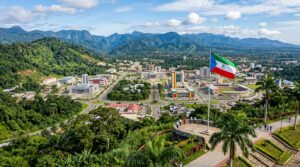
Angola
Angola at a Glance
Angola sits on the southwestern coast of Africa, where the cold Benguela Current sweeps up from the south and keeps the coastal air dry and hazy even in summer. The official name is simply Angola; the capital, Luanda, holds roughly a third of the country’s 36 million people in a city that has rebuilt itself at striking speed since the end of a 27-year civil war in 2002. At 1,246,700 km², the country is roughly twice the size of Texas — large enough to contain the Congo Basin rainforest in the north, the semi-arid Namib fringe in the south, and the fertile Bié Plateau in between.
Angola is one of sub-Saharan Africa’s largest oil producers, a fact that shaped its twentieth-century history as much as its economy. Less internationally recognized but equally significant: it is the origin point of semba, the Luanda-born rhythm that preceded and directly influenced Brazilian samba, carried across the Atlantic by enslaved people. The country also harbors some of the continent’s least-visited wilderness, including Bicuar National Park’s open miombo woodland. Travelers who assume Angola is simply a petro-state tend to leave with a substantially revised picture.
Geography & Climate
Angola sits on the southwestern coast of Africa, covering 1,246,700 square kilometers — roughly twice the size of Texas. It borders the Democratic Republic of Congo to the north and northeast, Zambia to the east, Namibia to the south, and the Atlantic Ocean to the west. The northern exclave of Cabinda shares borders with the Republic of Congo and the DRC, separated from the rest of Angola by a narrow strip of Congolese territory.
The terrain shifts dramatically as you move inland. A narrow coastal plain, often dry and hazy with salt-tinged air, gives way to a steep escarpment and then to the Bié Plateau, which dominates the country’s interior at elevations between 1,500 and 2,000 meters. The Cuanza River, Angola’s most significant waterway, cuts westward through this plateau toward the Atlantic. The far south and southeast shade into the Kalahari Basin, increasingly arid toward the Namibian border.
Angola has two main seasons: a wet season running roughly from October to April across most of the country, and a long dry season from May to September. The coast near Luanda stays relatively mild year-round, rarely exceeding 30°C (86°F), tempered by the cold Benguela Current offshore. The interior plateau is cooler and can drop sharply at night during the dry season. The southern provinces face recurring drought, which periodically stresses agriculture and water supply.
A Brief History of Angola
Long before Portuguese ships arrived on its Atlantic coast, the territory now called Angola was home to several powerful states. The most significant was the Kingdom of Kongo, which by the 14th century controlled a broad swath of land straddling present-day northern Angola, the Democratic Republic of the Congo, and the Republic of the Congo. To the south and east, the Ndongo kingdom, ruled by a sovereign known as the Ngola — the likely root of the country’s name — held considerable influence over the Mbundu people of the interior.
Portuguese contact began in earnest around 1483, when navigator Diogo Cão reached the mouth of the Congo River. What followed was centuries of slave trading and gradual territorial encroachment, with Luanda formally established as a colonial capital in 1575. Angola became one of the primary sources of enslaved people shipped to Brazil, a trade that reshaped the region’s demographics and political structures for generations. Formal Portuguese colonial administration intensified in the late 19th century after the Berlin Conference carved up the continent.
Independence came on November 11, 1975, but was immediately overshadowed by a civil war among three competing movements: the MPLA, FNLA, and UNITA, led in part by figures such as Agostinho Neto and Jonas Savimbi. That conflict, fueled by Cold War proxy interests, lasted — with brief interruptions — until Savimbi’s death in 2002. A peace agreement followed, and Angola has since held elections and rebuilt significant oil-driven infrastructure, though political power has remained concentrated within the MPLA.
Culture, Religion & Daily Life
## Culture, Religion & Daily Life
Christianity is the dominant faith in Angola, practiced by an estimated 85–90% of the population, with Roman Catholicism and various Protestant denominations — particularly the Evangelical Church of Angola — both holding substantial followings. Traditional indigenous beliefs persist alongside Christianity, especially in rural areas, and a small Muslim community exists primarily in the north and in Luanda’s commercial districts.
Portuguese is the official language and the medium of government, education, and urban commerce. Angola is home to around 40 indigenous languages, with Umbundu, Kimbundu, and Kikongo the most widely spoken among the country’s major ethnic groups, which include the Ovimbundu, Mbundu, and Bakongo peoples. In Luanda’s busy Roque Santeiro market area — one of the largest informal markets in southern Africa — you’ll hear Portuguese switch mid-sentence into Kimbundu as vendors call out prices, the air carrying the smoky, charred smell of grilled muamba chicken from nearby food stalls.
Independence Day on November 11 is Angola’s most significant national holiday, marking the end of Portuguese colonial rule in 1975. Celebrations include military parades in Luanda, public concerts, and community gatherings, with the date carrying particular weight for older Angolans who lived through the transition firsthand.
Economy & Industry
## Economy & Industry
Angola’s economy runs on oil — crude petroleum accounts for roughly 90% of export revenue, with state-owned Sonangol operating as the sector’s dominant force. GDP sits at around $84 billion, making Angola one of sub-Saharan Africa’s larger economies despite significant poverty among its 36 million people. The currency, the Angolan kwanza (Kz), trades at approximately 850–900 Kz to the dollar in 2025, though the rate has fluctuated sharply in recent years following managed devaluation policies.
Beyond oil, diamonds are Angola’s second major export, mined primarily in the northeastern Lunda provinces by companies including Endiama, the state diamond conglomerate. Agriculture — cassava, maize, and coffee — employs a large share of the rural population, and the government has pushed to revive the coffee sector, which was a significant earner before the civil war ended in 2002. Fisheries along Angola’s Atlantic coast also contribute meaningfully, particularly anchovies processed for fishmeal.
Angola is a member of the Southern African Development Community (SADC) and a signatory to the African Continental Free Trade Area (AfCFTA). The most consequential forward-looking project is the Lobito Corridor — a rail line connecting Angola’s Atlantic port of Lobito to the copper belts of the Democratic Republic of Congo and [Zambia], attracting substantial U.S. and EU investment as a strategic supply-chain alternative.
People & Demographics
Angola’s population stands at approximately 36.2 million, spread across a country roughly twice the size of Texas — giving it a relatively low density of around 29 people per square kilometer. The median age is estimated at just under 17, making Angola one of the youngest populations on Earth; roughly two-thirds of Angolans are under 25. Urbanization has accelerated sharply since the civil war ended in 2002: around 68 percent of the population now lives in cities, with Luanda home to an estimated 9 million people. Huambo and Lobito are the next largest urban centers, each with populations in the low hundreds of thousands.
Life expectancy sits at approximately 63 years, though estimates vary by source and region. Literacy rates are around 70 percent nationally, with a notable gap between men and women. Angola’s diaspora is concentrated primarily in Portugal — a direct legacy of the colonial relationship — with smaller communities in [Democratic Republic of the Congo], [South Africa], and Brazil.
Government & Political System
Angola is a presidential republic in which the head of state and head of government are the same office. The current president — João Lourenço as of the most recent election — leads both the executive branch and the ruling party, the MPLA (People’s Movement for the Liberation of Angola), which has held power continuously since independence in 1975. The legislature is unicameral: the National Assembly (Assembleia Nacional), a 220-seat body whose members are elected by proportional representation every five years.
Luanda, the capital, serves as the administrative center of the country, housing the presidency, the National Assembly, and the principal ministries. Power has transferred within the same party across decades, though the 2017 election marked a notable shift when José Eduardo dos Santos stepped down after nearly 38 years in office, and Lourenço — the MPLA’s candidate — assumed the presidency through a constitutional process tied to the legislative vote rather than a direct presidential ballot.
Famous People from Angola
Angola’s international profile has been shaped by a generation of artists, athletes, and intellectuals who carried the country’s Portuguese-inflected culture and post-independence energy onto a global stage — from Lusophone literature to the dance floors of Europe.
- Agostinho Neto (1922–1979) — Poet and revolutionary leader whose verse, collected in Sacred Hope, is studied across the Lusophone world and earned him recognition as one of Africa’s foremost political poets.
- Jonas Savimbi (1934–2002) — Founder and longtime leader of UNITA, whose decades-long insurgency made him one of the most internationally covered figures of Cold War-era Africa.
- Lourdes Van-Dúnem (born 1941) — Diplomat and jurist who served as Angola’s first female Prime Minister and later as President of the Constitutional Court, a landmark figure in Angolan public life.
- Paulo Flores (born 1968) — Semba and kizomba musician whose albums popularized Angolan popular music in Portugal and Brazil, making him one of the genre’s most recognized ambassadors abroad.
- Quincy Quisanga (born 1994) — Professional footballer who has represented the Angolan national team and built a club career across European leagues, part of a generation raising Angola’s football visibility internationally.
- Ondjaki (born 1977) — Novelist and poet, born Ndalu de Almeida, whose novel Granma Nineteen and the Soviet’s Secret has been translated into multiple languages and won the José Saramago Prize in 2013.
Food & Cuisine
## Food & Cuisine
Angolan cooking is built on funge, a smooth, dense porridge made from cassava flour that has a pale, almost ivory color and a silky resistance when you press it with a spoon. It anchors most meals, typically served alongside muamba de galinha — chicken slow-cooked in palm oil with garlic, okra, and chili — or calulu, a dried fish and vegetable stew layered with spinach, tomatoes, and sweet potato leaves. A third staple worth knowing is mufete, a grilled fish platter from Luanda served with beans, palm oil, and roasted plantain. For a drink, palm wine tapped fresh from the raffia palm is the traditional choice inland, though Cuca, Angola’s national lager brewed in Luanda since 1952, is the cold bottle you’ll find at almost every roadside table.
Street food in Luanda means stopping for chikuanga, a dense cassava bread wrapped and steamed in banana leaves, sold by vendors near the Mercado do Kinaxixi. Regionally, the northern Cabinda enclave leans heavily on fresh Atlantic seafood and coconut-based sauces, reflecting its proximity to the Congo coast, while the southern Huíla Plateau favors grilled goat and sorghum-based dishes shaped by the Ovambo and Nyaneka-Humbe communities there.
Sports & Recreation
## Sports & Recreation
Football is Angola’s dominant sport, and the national men’s team — known as the Palancas Negras, or Black Sable Antelopes — qualified for their first and only FIFA World Cup in 2006, finishing the group stage without a win but holding Argentina to a 0–0 draw. At the Africa Cup of Nations, Angola hosted the 2010 tournament, marking a significant moment for a country still rebuilding after decades of civil war.
Basketball runs a close second in cultural weight, fueled in part by the success of Angolan clubs in continental competition — Petro de Luanda has won the BAL (Basketball Africa League) and dominated the AfroBasket club circuit for years. The country’s most internationally recognized athlete is likely Joaquim Gomes, though Angola’s basketball programs collectively have drawn more global attention than any single star. At the Olympics, Angola has competed since 1980 but has not yet won a medal, with its men’s basketball team reaching the Games multiple times as the continent’s representative.
Music & The Arts
## Music & The Arts
Angola’s defining contemporary genre is semba — the syncopated, guitar-driven predecessor to Brazilian samba — alongside its faster, accordion-laced cousin kuduro, a genre that blew up globally in the 2010s. Producer and DJ Buraka Som Sistema helped carry kuduro out of Luanda’s musseques (informal neighborhoods) onto European dance floors, and artists like Puto Prata continue shaping the sound today. Traditional music leans on the dikanza (a scraper percussion instrument) and the hungu, a single-string bow instrument played by Khoisan-descended communities in the south, giving Angolan folk music a textural depth distinct from its neighbors.
In literature, Pepetela (pen name of Artur Pestana) is Angola’s most internationally recognized novelist; his 1980 novel Mayombe, set during the independence war, remains widely translated and taught. Angolan visual art is anchored in Chokwe woodcarving — intricate masks and stools whose geometric motifs carry cosmological meaning — and the Luanda-based Trienal de Arte Contemporânea has steadily positioned the country as a serious node on the African contemporary art circuit.
Wildlife & Natural Wonders
## Wildlife & Natural Wonders
Angola’s wildlife took a severe hit during its 27-year civil war, but recovery is underway. Bicauri National Park in the southwest shelters populations of giant sable antelope — the palanca negra, Angola’s national symbol — a species so rare it was feared extinct during the conflict. Cameia National Park in the east, spanning floodplains along the Zambezi watershed, supports elephant herds and sitatunga, a semi-aquatic antelope adapted to swampy terrain. Angola isn’t a classic Big Five destination, but the giant sable alone draws serious wildlife photographers and conservationists from across the continent.
The country’s most dramatic natural feature is Kalandula Falls, one of Africa’s largest waterfalls by volume, where the Lucala River drops roughly 105 meters into a horseshoe gorge — the roar carries well before the mist comes into view. Angola currently has no natural UNESCO World Heritage sites, though nominations have been discussed. Poaching and decades of land-mine contamination remain the primary conservation challenges: large areas of otherwise viable habitat are still too dangerous to survey properly, leaving accurate population counts for many species genuinely uncertain.
Top Things to See in Angola
Angola suits travelers who want variety without a crowd: colonial-era forts and baroque churches sit within an hour of Atlantic surf, while the interior opens into savanna, desert, and highland plateaus. Infrastructure is improving fast, but this remains a destination for self-sufficient, curious visitors rather than package tourists.
- Fortaleza de São Miguel (Luanda) — A 16th-century Portuguese fort overlooking Luanda Bay, now housing the Museu das Forças Armadas, with cannons, military artifacts, and sweeping harbor views. Visit in the dry season (May–October); the museum typically takes 1–2 hours.
- Kalandula Falls (Malanje Province) — One of Africa’s largest waterfalls by volume, where the Lucala River drops roughly 105 meters in a wide horseshoe curtain of white water. The falls are most dramatic at the end of the rainy season (April–May); reach them via a 4–5 hour drive from Luanda on a road that requires a 4WD.
- Kissama National Park (Bengo Province) — Angola’s most accessible wildlife reserve, about 70 km south of Luanda, home to forest elephants, manatees, and palanca negra (giant sable antelope). Dry season visits (June–September) offer the best game viewing; day trips from Luanda are feasible, though an overnight stay extends sightings considerably.
- Ilha do Mussulo (Luanda) — A narrow sand peninsula south of Luanda, lined with seafood restaurants and calm Atlantic shallows popular with local families on weekends. Boats from the Ilha de Luanda ferry passengers across for around $2–5 (roughly 1,000–2,500 kwanzas); a half-day is enough for lunch and a swim.
- Tundavala Gap (Huíla Province) — A dramatic escarpment near Lubango where the plateau edge drops nearly 1,000 meters into the lowlands below, offering one of Angola’s most striking panoramas. The site is a short drive from Lubango and best visited in the morning before haze builds; Lubango is served by domestic flights from Luanda.
- Namibe Desert and Arco (Namibe Province) — A coastal desert of red dunes and fossil-rich rock formations meeting the cold Atlantic, including the natural stone arch known as Arco; the landscape is geologically related to the Namib in [Namibia]. The region is driest and clearest May–September; Namibe city has a
Visa & Travel Tips
## Visa & Travel Tips
Angola requires advance visas for most nationalities — US, UK, and EU citizens cannot obtain a visa on arrival and must apply through an embassy or via Angola’s e-visa portal before departure. ECOWAS member nationals benefit from more relaxed entry arrangements, though conditions shift regularly, so confirm requirements with the Angolan embassy or consulate in your country before booking. Luanda’s Quatro de Fevereiro International Airport (LAD) is the main gateway, served by TAAG Angola Airlines, Ethiopian Airlines, and TAP Air Portugal, among others.
The Angolan kwanza (Kz) is the only legal tender for most transactions; as of recent years, US dollars are not widely accepted at street level, and card payments remain unreliable outside upscale Luanda hotels and larger supermarkets. Carry sufficient kwanza cash — ATMs exist in Luanda but can run dry, and mobile money services comparable to M-Pesa or MTN MoMo are not yet mainstream here. Angola operates on UTC+01:00 year-round; dial +244 for international calls. Power sockets use Type C and Type F plugs at 220V, so bring a universal adapter. Check your government’s official travel advisory for current safety guidance before departure — conditions in some provinces differ from the capital. Getting a reliable data connection sorted early will make everything else easier, which is where local SIMs and eSIM options come in.
Staying Connected: Internet & eSIM in Angola
Angola’s mobile landscape is dominated by two operators: Unitel and Movicel. Unitel holds the larger share, with 4G LTE available in Luanda and most provincial capitals; coverage thins considerably once you move into rural or interior areas, where 3G — or no signal at all — is the realistic expectation. 5G has not launched commercially in Angola as of 2024. Roaming costs from home networks are steep, so picking up local data before you explore is worth the effort.
The traditional route is a local SIM, sold at Aeroporto Internacional Quatro de Fevereiro in Luanda and at Unitel or Movicel shops around the city. Expect to show your passport and complete a registration form; activation typically takes 30 minutes to a few hours. A starter SIM with a small data bundle runs approximately Kz 1,000–2,000 (around $1.50–$3.00), with top-up data packages priced from there. An eSIM skips the kiosk entirely — you activate a plan before your flight lands, avoiding both the queue and any roaming surprise on arrival; most iPhone XS and later models and recent Android flagships from Samsung and Google support eSIM. Hotel and café Wi-Fi is available at mid-range and upmarket properties in Luanda and Benguela, though speeds and reliability vary.