Botswana
Botswana at a Glance
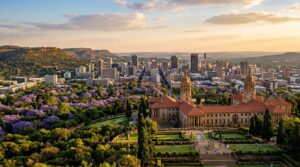
Botswana sits in the heart of southern Africa, landlocked on all sides and dominated by the Kalahari Desert, which covers roughly 70 percent of its surface. The official name is simply Botswana; its capital, Gaborone, anchors the southeastern corner of the country near the South African border. Population stands at approximately 2.36 million — one of the least densely settled countries on the continent — spread across 582,000 square kilometers, a footprint slightly larger than France.
The country is best known for three things that rarely overlap elsewhere: the Okavango Delta, an inland river system that fans out into the Kalahari and draws water-dependent wildlife into an otherwise arid landscape; diamonds, which have funded one of sub-Saharan Africa’s most consistent economic growth records since independence in 1966; and a conservation model that has kept roughly 38 percent of its land under protected status. Travelers who arrive expecting a quick safari detour from [South Africa] or [Zimbabwe] often discover that the country rewards slower attention — the silence of the salt pans at Makgadikgadi at dawn, the dry-season dust hanging orange over the Chobe floodplains — and that its political stability makes it a useful lens for understanding the wider region.
Geography & Climate
Botswana sits at the center of southern Africa, a landlocked country sharing borders with South Africa to the south and southeast, Namibia to the west and north, Zimbabwe to the northeast, and Zambia at a narrow point near Kasane. Covering approximately 582,000 square kilometers, it is one of the continent’s larger nations — about the size of France — yet holds a population of only around 2.5 million people.
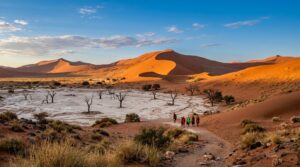
The terrain is dominated by the Kalahari, a vast semi-arid basin of reddish sand and scrub that covers roughly 70 percent of the country. Despite its desert reputation, the Kalahari receives enough seasonal rainfall to support acacia woodland and grassland. The north is a striking contrast: the Okavango River fans out into the Okavango Delta, the world’s largest inland delta, flooding each year to create a maze of papyrus-lined channels and shallow lagoons. After the first rains break in October or November, the air carries a sharp, iron-rich smell of dry earth soaking up water for the first time in months.
Botswana has a semi-arid climate with a rainy season running roughly November through March, when temperatures regularly reach 35°C (95°F). The dry winter months, May through August, bring cooler days and cold nights that can drop near freezing in the Kalahari. Drought is the primary natural hazard, and multi-year dry spells periodically stress both agriculture and wildlife.
A Brief History of Botswana
Long before European contact, the territory now called Botswana was home to the San people — among the oldest continuous inhabitants of southern Africa — and later to Tswana-speaking chiefdoms such as the Bangwato, Bakwena, and Bangwaketse, who established organized polities across the Kalahari plateau. These groups traded, farmed, and managed cattle across a landscape where the dry season turns the grass the color of straw and the air smells of dust and acacia smoke.
In 1885, Britain declared the region the Bechuanaland Protectorate, partly to block expansion by Boer settlers from the Transvaal and partly to secure the route north toward Rhodesia. The protectorate status was unusual: Britain administered the territory lightly, and Tswana chiefs — most notably Khama III of the Bangwato — successfully lobbied London in 1895 to resist incorporation into the British South Africa Company. That act of political maneuvering preserved a degree of local authority that shaped the territory’s relatively stable path to independence.
Botswana became independent on September 30, 1966, with Seretse Khama — grandson of Khama III and a figure whose earlier interracial marriage to Ruth Williams had caused a diplomatic crisis with apartheid South Africa — becoming the country’s first president. Post-independence Botswana was one of the world’s poorest countries, but the discovery of diamonds at Orapa in 1967 transformed its economy within a generation. Careful revenue management and consistent multiparty elections have made Botswana one of Africa’s more stable democracies, though inequality and the HIV/AIDS crisis of the 1990s and 2000s tested that resilience severely.
Culture, Religion & Daily Life
Christianity is the dominant faith in Botswana, practiced by an estimated 70–80% of the population across denominations including Zion Christian Church, Roman Catholic, and Lutheran congregations. Traditional beliefs — centered on ancestral reverence and communal spiritual practice — remain significant, often woven alongside Christian observance rather than standing apart from it. Muslims and other religious minorities make up a small share of the population.
Setswana (also called Tswana) and English are the two official languages, and Setswana functions as the true lingua franca: spoken at markets, on public minibuses, and in most homes across the country. Around 30 indigenous languages are spoken nationally, reflecting communities including the Tswana, Kalanga, and San peoples. The San languages, with their distinctive click consonants, are among the most linguistically distinct in the region.
Daily greetings carry real social weight in Botswana. The exchange Dumela, Mma or Dumela, Rra — “Hello, ma’am” or “Hello, sir” — is offered to strangers and elders alike, and skipping it reads as rude rather than merely informal. Botswana Day, celebrated on September 30, marks independence from Britain in 1966 with public gatherings, traditional dance performances, and cattle parades that reflect the country’s deep pastoral identity.
Economy & Industry
Botswana runs one of sub-Saharan Africa’s more stable economies, built on a foundation of diamonds that has funded decades of infrastructure and social spending. The Botswana pula (P) trades at approximately 13–14 to the dollar in 2025. GDP sits around $20 billion, modest in absolute terms but impressive per capita for a landlocked nation of roughly 2.4 million people.
Diamonds dominate. Debswana, the joint venture between the government and De Beers, operates some of the world’s largest diamond mines — including Jwaneng, which produces gems by value rather than volume. Mining accounts for a significant share of export revenue, though the government has spent years trying to reduce that dependence. Tourism, particularly around the Okavango Delta and Chobe National Park, draws high-spend visitors and generates meaningful foreign exchange. Beef exports, processed through the Botswana Meat Commission, round out the traditional pillars.
Botswana is a member of the Southern African Development Community (SADC) and the African Continental Free Trade Area (AfCFTA), which shapes its trade relationships across the region. The most closely watched forward-looking shift is diamond beneficiation: a 2023 renegotiation of the De Beers sales agreement pushed more rough stones through local cutting and polishing facilities in Gaborone, aiming to capture more value before export.
People & Demographics
## People & Demographics
Botswana’s population stands at approximately 2,359,609 — one of Africa’s smaller totals — spread across a country the size of France, yielding a density of around 4 people per square kilometer. The median age is roughly 25, giving the country a notably young profile, though an expanding older cohort is slowly shifting that balance. Life expectancy is approximately 70 years, a significant recovery from the lows recorded during the peak HIV/AIDS crisis of the early 2000s. Literacy runs around 90 percent among adults, reflecting decades of consistent public investment in schooling.
Urbanization has accelerated sharply since independence: today roughly 70 percent of Batswana live in towns or cities. Gaborone, the capital, holds around 230,000 people within the city proper, while Francistown — the commercial hub of the north — accounts for approximately 100,000 more. Smaller centers like Maun and Serowe absorb much of the remaining urban population. The largest diaspora communities are concentrated in [South Africa], with smaller pockets in the United Kingdom and the United States.
Government & Political System
## Government & Political System
Botswana is a presidential republic, with the president serving as both head of state and head of government. The current president is elected indirectly — the National Assembly votes for a president rather than a direct popular vote — a system that has produced stable, peaceful transitions since independence in 1966. The legislature is unicameral, consisting of the National Assembly, which holds 61 elected seats. An advisory body, the Ntlo ya Dikgosi (House of Chiefs), provides counsel on customary law and tribal matters but holds no binding legislative power.
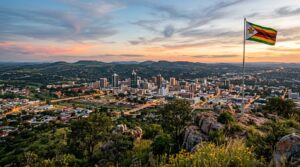
Gaborone, the capital, sits in the southeast of the country near the South African border and houses all three branches of government. Botswana has long been noted for orderly electoral transfers of power; the Botswana Democratic Party dominated politics for decades before losing its parliamentary majority in the 2024 elections, after which the Umbrella for Democratic Change formed a government — a significant shift achieved through the ballot rather than disruption.
Famous People from Botswana
Botswana’s international profile punches above its population of roughly 2.6 million, with its most recognized figures emerging from literature, athletics, and the long struggle against apartheid-era regional pressures — alongside a growing creative class.
- Seretse Khama (1921–1980) — First president of independent Botswana and central figure in a landmark interracial marriage that provoked a British and South African diplomatic crisis, later dramatized in the 2016 film A United Kingdom.
- Bessie Head (1937–1986) — Novelist whose works, including When Rain Clouds Gather and A Question of Power, are studied internationally as foundational texts of African literature; she lived most of her adult life in Serowe, Botswana.
- Nijel Amos (born 1994) — Middle-distance runner who won a silver medal in the 800 m at the 2012 London Olympics at age 18, one of the youngest athletes ever to medal in that event.
- Amantle Montsho (born 1983) — 400 m sprinter and 2011 World Athletics Champion, the first Botswanan woman to win a global track-and-field title.
- Mpule Kwelagobe (born 1979) — Won the Miss Universe title in 1999 and subsequently became a UNAIDS youth ambassador, raising the country’s international profile on HIV/AIDS advocacy.
- Unity Dow (born 1959) — Jurist who became Botswana’s first female High Court judge and later Chief Justice, recognized across Africa as a pioneer in judicial independence and gender equity on the bench.
Food & Cuisine
Botswana’s kitchen is built on bogobe, a stiff sorghum or maize porridge with a faintly sour, earthy smell that drifts from household pots across the country every morning and evening. It anchors most meals, served alongside seswaa — beef or goat pounded after slow-boiling until it shreds into a pale, fibrous heap, seasoned with nothing but salt and time. Morogo, wild leafy greens cooked down with onion and tomato, is the everyday vegetable partner. For something richer, phane — mopane worms harvested in the northeast — are dried or fried until crunchy and eaten as a protein-dense snack or stirred into stew; their flavor sits somewhere between dried shrimp and sunflower seeds. At roadside stalls, vetkoek — deep-fried dough pockets filled with spiced mince — are the snack a visitor is most likely to encounter, hot and greasy in the best way.
The Okavango Delta region in the north leans on freshwater fish, particularly bream grilled over open coals, a contrast to the beef-dominant south where cattle culture runs deep. The national drink of choice is bojalwa, a home-brewed sorghum beer with a cloudy, rust-orange color and a mild, slightly tart finish — best shared from a communal clay pot.
Sports & Recreation
## Sports & Recreation
Football is Botswana’s dominant sport, followed closely by athletics. The senior men’s national team, nicknamed the Zebras, made history at the 2012 Africa Cup of Nations — their first-ever AFCON appearance — where they held hosts Gabon to a 1–1 draw in the group stage, a result still celebrated as a landmark moment in the country’s football history.
Athletics has produced Botswana’s most decorated international competitor: Isaac Makwala, a 400-meter and 200-meter specialist who won gold at the 2017 World Athletics Championships relay and reached the individual 400m final under dramatic circumstances after recovering from illness mid-tournament. At the Olympic level, Nijel Amos won silver in the 800 meters at the 2012 London Games, running 1:41.73 as a teenager — Botswana’s first Olympic medal. The country has won approximately two Olympic medals total, both in middle-distance running, cementing athletics alongside football as a source of genuine national pride.
Music & The Arts
## Music & The Arts
Botswana’s contemporary sound is rooted in kwasa kwasa, the infectious Congolese-derived dance rhythm that took hold across southern Africa, but local artists have pushed it toward a distinctly Botswana-inflected pop. Vee Mampeezy — born Odirile Sento — is the country’s most recognizable musical export, blending kwasa kwasa with Afropop production and racking up millions of streams across the continent. Beneath the pop surface, traditional San music survives in the form of the segaba, a one-stringed bowed instrument whose thin, reedy tone accompanies storytelling and healing ceremonies in the Kalahari communities.
Alexander McCall Smith’s The No. 1 Ladies’ Detective Agency series — set in Gaborone and steeped in Botswana’s landscape and social texture — has sold millions of copies worldwide and introduced the country to readers who might otherwise never have found it. In craft, Botswana is known for its San ostrich eggshell beadwork, tiny cream-colored discs strung into geometric patterns worn as jewelry. The Maitisong Festival in Gaborone, running annually since 1987, functions as the country’s main stage for theater, dance, and live music, drawing regional performers each March.
Wildlife & Natural Wonders
## Wildlife & Natural Wonders
Botswana holds some of the continent’s most intact wilderness. The Okavango Delta — a UNESCO World Heritage Site since 2014 — is the world’s largest inland delta, a maze of papyrus channels and floodplains that draws elephant herds, hippos, and sitatunga antelope deep into the Kalahari. Chobe National Park, in the north, hosts one of Africa’s densest elephant populations: an estimated 130,000 animals, audible at dusk as they crash through the mopane scrub toward the Chobe River. Botswana is a genuine Big Five country — lion, leopard, elephant, buffalo, and both white and black rhino are present, the latter carefully protected in private conservancies after near-extinction.
Beyond the parks, the Makgadikgadi Pans form one of the world’s largest salt flat systems — blinding white under midday sun, and eerily silent except during the seasonal zebra migration that crosses them each year. Conservation pressure is real: elephant numbers strain the carrying capacity of northern ecosystems, and conflict with farming communities along park boundaries remains an ongoing management challenge. Botswana’s community-based natural resource management (CBNRM) programs attempt to share tourism revenue directly with local villages, with mixed but documented results.
Top Things to See in Botswana
Botswana rewards travelers who come for wilderness and space rather than beaches or dense urban history. The country’s signature is scale — enormous game reserves, the world’s largest inland delta, and skies dark enough to read star charts by. A week here typically splits between a fly-in safari camp and a self-drive through savanna.
- Okavango Delta (Northwest Botswana) — A UNESCO World Heritage Site and one of the world’s largest inland deltas, where the Okavango River fans out across the Kalahari to create a seasonal floodplain teeming with elephants, hippos, and sitatunga. Best visited June–August when flood waters peak and wildlife concentrates on islands; most camps are reached by small charter flight from Maun.
- Chobe National Park (Kasane) — Home to one of Africa’s densest elephant populations — estimates run above 50,000 — with riverfront game drives along the Chobe River offering close-range sightings from open vehicles or boats. Dry season (May–October) is prime; Kasane is accessible by road from [Zimbabwe] and [Zambia].
- Moremi Game Reserve (Ngamiland) — Occupying the eastern third of the Okavango Delta, Moremi protects diverse habitat from mopane woodland to papyrus lagoon, supporting wild dog packs and large lion prides. Self-drive is possible via 4WD on sandy tracks; Third Bridge campsite is a classic stop for budget travelers.
- Tsodilo Hills (Ngamiland) — A cluster of four quartzite hills rising from the Kalahari desert, containing over 4,500 rock paintings made by San communities across thousands of years — the highest concentration of rock art in the world. A UNESCO World Heritage Site; the nearest town is Shakawe, roughly 70 km away by dirt road.
- Central Kalahari Game Reserve (Central District) — The second-largest game reserve on earth, covering around 52,000 sq km of fossil riverbeds, salt pans, and open grassland where brown hyena and black-maned Kalahari lions roam. Self-drive requires a fully equipped 4WD; the park is largely undeveloped, making it a genuine wilderness experience.
- Makgadikgadi Pans (Northeast Botswana) — One of the largest salt pan systems in the world, blinding white and nearly featureless in the dry season, then transformed into a flamingo-dotted wetland after rains. Jack’s Camp, near Gweta, is the
Visa & Travel Tips
## Visa & Travel Tips
Most visitors — including US, UK, and EU citizens — receive a free visa on arrival for stays up to 90 days, making Botswana one of the more accessible destinations on the continent. Citizens of many African Union member states enter under bilateral agreements with similarly light requirements. Visa rules shift, so confirm current conditions with your nearest Botswana embassy or consulate before booking. The main international gateway is Sir Seretse Khama International Airport in Gaborone (GBE), served by South African Airways, Ethiopian Airlines, and Kenya Airways, with regional connections routing through Johannesburg’s OR Tambo.
The Botswana pula (P) is the only currency you should rely on — US dollars are not widely accepted outside upscale safari lodges. Cards work at ATMs in Gaborone and Maun, but smaller towns and bush camps run cash-only, so carry enough pula before heading into the delta. Mobile money is available but less dominant than in neighboring markets. Botswana sits at UTC+02:00 year-round, and the international dialling code is +267. Power sockets are predominantly Type G (the three-rectangular-pin British standard), so pack a universal adapter. Standard safety advice applies: check your government’s official travel advisory before departure, as conditions can change. Getting a local SIM or eSIM sorted early will make navigating all of the above considerably smoother.
Staying Connected: Internet & eSIM in Botswana
Mobile coverage in Botswana is dominated by three main operators: Mascom, Orange Botswana, and BTC Mobile. All three offer 4G LTE in Gaborone, Francistown, and along major highways; 5G remains unavailable as of 2024. Rural coverage — particularly in the Okavango Delta and Central Kalahari — drops sharply, so download offline maps before heading into the bush.
The traditional route is a local SIM from Mascom or Orange, available at Sir Seretse Khama International Airport in Gaborone. Bring your passport for mandatory registration; a starter SIM with a small data bundle typically costs P5–P15 (around $0.40–$1.10 USD), with activation usually complete within the hour. The modern alternative is an eSIM: buy and install a plan before you board, skip the airport kiosk entirely, and arrive already connected — no roaming shock on your home carrier’s bill. Most iPhone XS and newer models support eSIM, as do recent Samsung Galaxy and Google Pixel flagships. Hotel and café Wi-Fi is reliable in Gaborone and Maun, patchier elsewhere.