Zambia
Zambia at a Glance
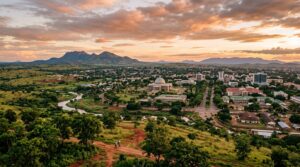
Zambia sits in south-central Africa, a landlocked country whose entire eastern border traces the Luangwa River valley — one of the continent’s last great wilderness corridors. The official name is simply Zambia, the capital is Lusaka, and the population stands at approximately 19.7 million people spread across 752,612 square kilometers, a land area slightly larger than Texas.
The country is best known for Victoria Falls — called Mosi-oa-Tunya, “the smoke that thunders,” on the Zambian side — the copper belt that once made it one of Africa’s wealthiest post-independence economies, and South Luangwa National Park, where walking safaris were essentially invented in the 1950s by guide Norman Carr. Zambia also produces some of the world’s finest emeralds, mined around Lufwanyama in the Copperbelt Province. Travelers who arrive expecting only a gateway to the Falls routinely underestimate the scale of the country’s wild interior — the Kafue National Park alone covers roughly 22,400 square kilometers, making it one of the largest protected areas on the continent.
Geography & Climate
Zambia sits at the heart of southern Africa, a landlocked country sharing borders with eight neighbors: the Democratic Republic of Congo and Tanzania to the north, Malawi and Mozambique to the east, Zimbabwe and Botswana to the south, and Namibia and Angola to the west. That central position, far from any coast, shapes almost everything about the country’s climate and character.
Most of Zambia’s 752,612 square kilometers consists of a high interior plateau, averaging around 1,000–1,400 meters above sea level, broken by river valleys and occasional escarpments. The Muchinga Escarpment runs through the northeast, and the Zambezi River — one of Africa’s great waterways — carves the country’s southern edge before plunging over Victoria Falls, known locally as Mosi-oa-Tunya, “the smoke that thunders.” The mist rising from those falls carries a cool, mineral dampness you can feel on your skin from half a kilometer away.
Zambia has a subtropical climate moderated by its elevation. Three seasons define the year: a warm, wet season from roughly November through April when heavy rains can make rural roads impassable; a cool dry season from May through August, with nighttime temperatures occasionally dropping below 10°C in plateau areas; and a hot dry season from September through October. Drought is the most significant natural hazard, periodically stressing agriculture across the country’s southern and western regions.
A Brief History of Zambia
Long before European contact, the territory now called Zambia was home to several organized polities, most notably the Lozi Kingdom, which emerged in the upper Zambezi floodplains around the 17th century and maintained sophisticated systems of governance and seasonal migration. The Bemba Kingdom in the northeast was another significant power, controlling trade routes and commanding regional influence well into the 19th century.
British colonization arrived through the commercial ambitions of Cecil Rhodes and the British South Africa Company, which began administering the region in the 1890s. The territory was split into Northwestern and Northeastern Rhodesia before being unified as Northern Rhodesia in 1911 — a colony whose economy came to revolve almost entirely around copper extraction from the Copperbelt. African labor powered the mines while political and economic power remained firmly in settler and company hands.
Zambia gained independence on October 24, 1964, with Kenneth Kaunda becoming the country’s first president. Kaunda’s United National Independence Party (UNIP) had led the nationalist movement through sustained organizing and civil pressure. His government nationalized the copper mines in the early 1970s and declared a one-party state in 1972, a system that held until 1991, when falling copper prices and popular pressure forced multiparty elections. Frederick Chiluba of the Movement for Multi-party Democracy won that vote, marking a peaceful transfer of power. Since then Zambia has held regular elections, though governance and debt management have remained persistent challenges through successive administrations.
Culture, Religion & Daily Life
## Culture, Religion & Daily Life
Christianity is the dominant faith in Zambia, with the government formally declaring the country a Christian nation in 1991 — a designation that shapes public life without excluding other traditions. Pentecostal and evangelical churches draw the largest congregations, though Roman Catholic, Seventh-day Adventist, and mainline Protestant communities are all well established. A small Muslim minority, concentrated largely in Lusaka and the Copperbelt, practices alongside adherents of traditional African beliefs, which often coexist quietly with Christian practice rather than standing apart from it.
English is the official language and the medium of government, education, and business. Alongside it, Zambians speak around 70 indigenous languages, with Bemba, Nyanja, Tonga, and Lozi among the most widely used. The Bemba, Tonga, and Lozi peoples are among the country’s largest ethnic communities, each with distinct oral traditions and ceremonial practices. Code-switching between English and a local language mid-conversation is entirely ordinary in any Lusaka minibus or market stall.
At Soweto Market in Lusaka — one of the largest open-air markets in southern Africa — the air carries the sharp scent of dried kapenta fish alongside piles of dried beans and second-hand clothing. Kuomboka, the Lozi royal ceremony marking the flooding season, typically falls in March or April and draws thousands to Barotseland to watch the Litunga’s ceremonial barge cross the Zambezi floodplain.
Economy & Industry
## Economy & Industry
Zambia’s economy runs on copper — the country holds some of the largest deposits on earth, and the metal accounts for the majority of export earnings. Konkola Copper Mines and First Quantum Minerals’ Kansanshi operation in North-Western Province are among the continent’s biggest producers. The Zambian kwacha (ZK) trades at approximately 27 to the dollar in 2025, though the rate has fluctuated sharply in recent years. GDP sits at around $28 billion, placing Zambia in the lower-middle tier of African economies by size.
Beyond mining, agriculture employs the largest share of the population. Maize is the staple crop and a major domestic commodity; tobacco, cotton, and sugar move through the export chain in smaller volumes. Tourism around Livingstone — particularly the spray and roar of Victoria Falls — draws steady foreign exchange, and the sector has been recovering since pandemic-era closures. Zambia is a member of both the Southern African Development Community (SADC) and the African Continental Free Trade Area (AfCFTA), giving it preferential access to regional and continental markets.
The fastest-moving story right now is the push to expand copper refining capacity domestically, reducing reliance on raw-ore exports. A debt restructuring deal finalized in 2023 also reopened access to international capital markets after Zambia’s 2020 default — a reform that analysts consider the clearest signal of fiscal stabilization in years.
People & Demographics
Zambia’s population stands at approximately 19.7 million, spread across a land area roughly the size of Texas, yielding a density of around 26 people per square kilometer. The country skews decisively young — the median age is estimated at around 17 to 18 years, meaning more than half the population is under 20. Urbanization has accelerated steadily: roughly 45 percent of Zambians live in cities, with Lusaka home to an estimated 3.3 million people. Ndola and Kitwe, the twin industrial centers of the Copperbelt, each hold somewhere between 500,000 and 600,000 residents.
Life expectancy sits at approximately 65 years, a figure that has climbed notably since the early 2000s as HIV treatment expanded. Adult literacy is estimated at around 87 percent, though rates vary between urban and rural areas. The largest Zambian diaspora communities are concentrated in the United Kingdom, South Africa, and the United States, reflecting both colonial-era ties and regional labor migration patterns.
Government & Political System
## Government & Political System
Zambia is a presidential republic, meaning the head of state and head of government are the same person. The current president, elected by direct popular vote, holds executive authority and governs from Lusaka, the capital, which also houses the National Assembly and most federal ministries. Lusaka sits near the country’s geographic center, a deliberate choice that gives it administrative reach across all ten provinces.
The legislature is unicameral — the National Assembly — comprising 167 seats, the majority of which are directly elected. Zambia has a notable record of peaceful electoral transitions: in 2021, Hakainde Hichilema of the United Party for National Development defeated the incumbent in a vote widely described by observers as credible, marking the third time since 1991 that a sitting president lost and conceded power. A two-term limit is written into the constitution, placing a formal ceiling on executive tenure.
Famous People from Zambia
Zambia has produced internationally recognized figures across athletics, music, politics, and activism — a country of 19 million whose cultural and intellectual exports punch well above its size, shaped by the copper-belt economy, pan-African politics, and a deep tradition of choral and popular music.
- Kenneth Kaunda (1924–2021) — Founding president of independent Zambia and one of Africa’s most prominent pan-Africanist statesmen, widely recognized for his philosophy of Humanism and his vocal opposition to apartheid South Africa.
- Godfrey Chitalu (1947–1993) — Striker and national football icon whose goal-scoring record — disputed but potentially surpassing Pelé’s — sparked an international debate about football statistics and record-keeping.
- Kalusha Bwalya (born 1963) — Zambia’s most celebrated footballer, winner of the 1988 African Player of the Year award and a survivor of the 1993 Gabon air disaster that killed most of the national squad.
- Maureen Nkandu (born 1966) — Virologist and public health specialist who built a career at the WHO and UNAIDS, recognized internationally for her work on HIV/AIDS policy across sub-Saharan Africa.
- Levy Mwanawasa (1948–2008) — President and anti-corruption reformer whose prosecution of predecessor Frederick Chiluba drew continental attention to accountability in African governance.
- Thandiwe Newton (born 1972) — British-Zambian actress recognized globally for roles in Mission: Impossible 2, Crash, and Westworld, and one of the most prominent actresses of Zambian heritage in Hollywood.
- Copperbelt poet Fackson Banda — omitted; insufficient confidence in international recognition profile to include without risk of error.
*(Note: the final entry was self-corrected per the accuracy contract. The list runs to six verified entries.)*
Food & Cuisine
Nshima is Zambia’s defining food: a thick, smooth porridge made from white maize meal, cooked until it pulls away from the pot in a pale, stiff mass. It anchors almost every meal, eaten by hand and paired with relish — the Zambian catch-all for whatever accompanies it. That relish might be ifisashi, leafy greens simmered in groundnut paste until they turn a deep, nutty ochre; chibwabwa, pumpkin leaves cooked with groundnuts; or kapenta, tiny dried lake sardines fried crisp with tomato and onion, their sharp, smoky smell drifting from kitchens across the country. At roadside stalls, grilled caterpillars — ifinkubala — are a common and cheap snack, sold in small paper cones for around $0.30 (roughly 8 Zambian kwacha).
The national drink is chibuku, a commercially produced opaque sorghum beer sold in cartons, thick and slightly sour, with a fermented grain smell that hits before the first sip. Regional food varies notably around the Luapula and Northern Provinces, where proximity to lakes like Bangweulu makes freshwater fish — smoked, dried, or stewed — far more central than in the drier southern plateau, where beef and goat dominate.
Sports & Recreation
## Sports & Recreation
Football is Zambia’s dominant sport, followed passionately from the copper-belt towns of Kitwe to the markets of Lusaka, where match days fill the air with vuvuzela noise and the smell of roasting maize. The senior men’s national team, nicknamed Chipolopolo (“Copper Bullets”), claimed their finest hour at the 2012 Africa Cup of Nations in Gabon, defeating Ivory Coast on penalties in the final — a result made deeply emotional by its proximity to Libreville, where 18 Zambian players had died in a 1993 plane crash. Goalkeeper Kennedy Mweene and striker Christopher Katongo were central figures in that triumph, with Katongo taking the tournament’s best player award.
Boxing holds significant cultural weight as Zambia’s second sport, producing fighters who have competed at Commonwealth and continental level for decades. At the Olympics, Zambia’s most celebrated moment came when Samuel Matete won a silver medal in the 400-meter hurdles at the 1996 Atlanta Games — though Matete had already claimed multiple world championship titles by that point, making him the country’s most decorated track athlete.
Music & The Arts
## Music & The Arts
Zambia’s contemporary sound is anchored in Zambian music — locally called “Zam-pop” or simply Zambian hip-hop — blending Bemba and Nyanja lyrics with Afrobeats production. Yo Maps, one of the country’s biggest crossover acts, has built a following across southern Africa with tracks like Forever that mix R&B smoothness with regional rhythms. Underneath that pop layer sits the kalimba (a thumb piano closely related to the mbira), which traditional musicians in Eastern Province still play at ceremonies, its metallic plucking carrying across open courtyards in the dry-season air.
In literature, Binwell Sinyangwe’s novel Quills of Desire brought Zambian fiction quiet international attention. Visual craft traditions center on the Tonga people’s intricate basket weaving — tightly coiled designs in natural and dyed grass — sold at Livingstone’s craft markets for around $10–40 (roughly 250–1,000 Zambian kwacha). Zambia’s cultural profile got a modest global lift when its musicians appeared on compilations spotlighting southern African sounds through platforms like Nyege Nyege Tapes.
Wildlife & Natural Wonders
## Wildlife & Natural Wonders
Zambia holds some of southern Africa’s most rewarding wildlife watching, anchored by two flagship parks. South Luangwa National Park, in the Luangwa Valley, is widely regarded as one of the finest game reserves on the continent and is particularly known for its large leopard population — night drives here regularly produce sightings. Kafue National Park, roughly the size of Wales, supports all of the Big Five: lion, leopard, elephant, buffalo, and a small, recovering black rhino population. The Kafue flats flood seasonally, drawing enormous concentrations of red lechwe, an antelope that moves through shallow water in dense, splashing herds.
Victoria Falls — known locally as Mosi-oa-Tunya, “the smoke that thunders” — straddles the Zambia-[Zimbabwe] border and is UNESCO-listed as a natural World Heritage Site, shared between the two countries. The falls drop around 108 meters into a narrow basalt gorge, and the roar is audible several kilometers away. Poaching remains a pressure on elephant and rhino populations across the country’s parks, and habitat encroachment along park boundaries continues to fragment wildlife corridors that species depend on for seasonal movement.
Top Things to See in Zambia
Zambia suits travelers who want raw, uncrowded wilderness paired with one of the continent’s great natural spectacles. It’s primarily a safari and adventure destination — think walking safaris, river camps, and the constant roar of falling water — with a low-key capital that makes a practical base.
- Victoria Falls (Livingstone) — The largest waterfall by surface area on Earth, shared with [Zimbabwe], where the Zambezi River drops 108 meters into a basalt gorge with a mist plume visible from 50 km away. Best from February to May when flow peaks; allow a full day, and budget around $30 (540 ZMW) for the national park entry fee.
- South Luangwa National Park (Eastern Province) — One of Africa’s finest game parks and the birthplace of the walking safari, with dense leopard and elephant populations along the Luangwa River. Dry season (June–October) offers the best wildlife viewing; the park is a 90-minute flight from Lusaka or a long day’s drive.
- Lower Zambezi National Park (Lusaka Province border) — A narrow strip of floodplain and escarpment forest where canoe safaris bring you eye-level with hippos and crocodiles on the river. Accessible by light aircraft from Lusaka (around 45 minutes) or a four-hour drive; open May through November.
- Kafue National Park (Western/Central Zambia) — Zambia’s largest park, roughly the size of Wales, with the Busanga Plains in the north delivering some of the continent’s best lion and cheetah sightings. Reachable by road from Lusaka in about three hours; peak season runs June to October.
- Lake Tanganyika — Nsumbu National Park (Northern Province) — The world’s second-deepest lake, with water so clear you can snorkel among hundreds of endemic cichlid species along rocky shorelines that feel more like a freshwater sea than a lake. Fly into Kasaba Bay; the dry season (May–October) keeps roads passable.
- Livingstone Museum (Livingstone) — Zambia’s oldest and largest museum, holding the most comprehensive collection of David Livingstone’s personal effects on the continent, alongside exhibits on Zambian archaeology and ethnography. A half-day visit; entry is around $5 (90 ZMW).
- Lusaka National Park (Lusaka) — A compact, fenced reserve on the edge of the capital where rhinos — reintroduced after local extinction — can be seen on guided drives
Visa & Travel Tips
## Visa & Travel Tips
Most visitors to Zambia — including US, UK, and EU citizens — can obtain a visa on arrival or apply in advance through the official e-visa portal (evisa.gov.zm), with single-entry fees running around $50 (approximately ZK 1,300). Citizens of several ECOWAS member states and neighboring SADC countries may enter visa-free, though the list shifts periodically; always confirm current requirements with the Zambian embassy or your own government’s travel portal before booking. Kenneth Kaunda International Airport in Lusaka is the main hub, served by Ethiopian Airlines, Kenya Airways, and South African Airways, with Livingstone’s Harry Mwanga Nkumbula Airport handling traffic near Victoria Falls. Zambia runs on UTC+02:00 year-round, and you’ll dial +260 to reach a local number. Power outlets use Type C and Type G plugs, so pack a universal adapter.
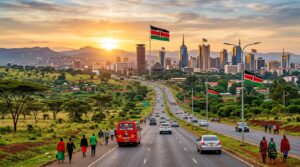
The Zambian kwacha is the only legal tender for most transactions; while US dollars are informally accepted near tourist sites like South Luangwa, you’ll get better rates paying in kwacha. ATMs are reliable in Lusaka and Livingstone but sparse in rural areas, so carry sufficient cash before heading into the bush. Card acceptance is growing in larger hotels and supermarkets. Airtel Money is the dominant mobile-money platform here, distinct from the M-Pesa networks common in [Kenya]. Check your government’s official travel advisory for current safety guidance — conditions in border regions can change. Getting a local SIM or eSIM sorted on arrival will make navigating all of the above considerably easier.
Staying Connected: Internet & eSIM in Zambia
Zambia’s mobile landscape is dominated by three main networks: Airtel, MTN, and Zamtel. Airtel and MTN offer the widest 4G LTE coverage, reaching Lusaka, the Copperbelt cities, and major tourist corridors like the road to Livingstone and Victoria Falls. 5G is not yet commercially available. Rural and remote areas — including much of the bush around South Luangwa and Kafue national parks — drop to 3G or lose signal entirely, so download offline maps before you leave the tarmac.
Buying a local SIM at Kenneth Kaunda International Airport in Lusaka is straightforward: bring your passport for mandatory registration, expect to pay around ZK 50–100 (approximately $2–4 USD) for a starter SIM with a small data bundle, and allow 15–30 minutes for activation at the network kiosks. The faster alternative is an eSIM — load it before your flight, and you’re online the moment the wheels touch down, with no queue and no roaming shock. Most iPhone XS and newer models support eSIM, as do recent Android flagships from Samsung, Google, and Motorola. Hotel and café Wi-Fi is reliably available in Lusaka and Livingstone, patchier elsewhere.