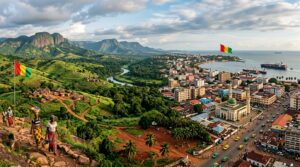
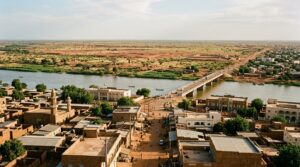
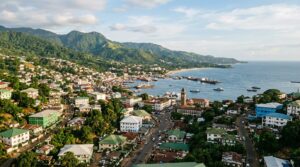
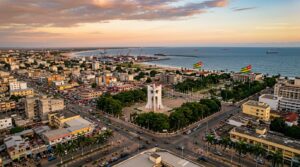
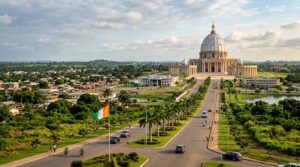
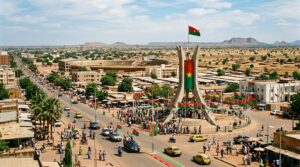
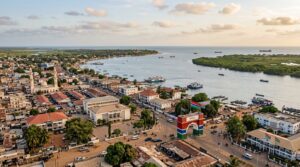
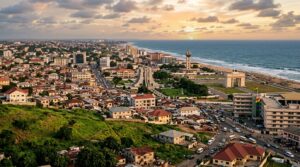
Benin
Benin at a Glance
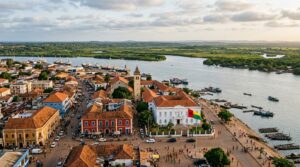
Benin sits on West Africa’s Gulf of Guinea coast, sandwiched between Togo and Nigeria, with the broad lagoon systems around Lake Nokoué defining its southern edge. The official name is simply Benin — not to be confused with the historic Benin Kingdom of present-day Nigeria — and its constitutional capital is Porto-Novo, a city of French colonial arcades and Yoruba-influenced architecture. Population stands at approximately 13.2 million across a land area of 112,622 km², making it slightly smaller than the US state of Pennsylvania.
The country carries genuine historical weight: it was the heartland of the Kingdom of Dahomey, whose royal court at Abomey produced bronze bas-reliefs and appliquéd tapestries now held in museums from Paris to Chicago — and increasingly reclaimed by Beninese institutions. It is also the acknowledged birthplace of Vodun, the spiritual tradition that traveled with enslaved people to the Americas and became Voodoo. Economically, cotton dominates exports, though cashew production has grown steadily since 2010. Visitors who arrive through Cotonou — the commercial capital and actual population center — often underestimate how much the northern parks, particularly Pendjari, rival better-known safari destinations in [Burkina Faso] and [Ghana].
Geography & Climate
Benin sits in West Africa, a narrow north-to-south strip of land wedged between Togo to the west, Nigeria to the east, Burkina Faso to the northwest, and Niger to the northeast. Its southern edge opens onto roughly 121 kilometers of Atlantic coastline along the Bight of Benin, giving the country a compressed but geographically varied profile across its 112,622 square kilometers.
The terrain shifts in distinct bands as you move inland. The coast is flat and sandy, backed by lagoons and the Porto-Novo wetlands. Moving north, the land rises onto the Atacora Massif — the country’s most prominent highland — where the Atacora Range reaches elevations around 658 meters. Further north still, the landscape flattens into the semi-arid Sahel fringe, where the Pendjari River traces the border with Burkina Faso through the Pendjari National Park.
Benin straddles two climate zones. The south experiences a humid equatorial climate with two rainy seasons: the main one running roughly April–July, and a shorter one from September–November. Temperatures in Cotonou hover between 23°C and 32°C year-round. The north has a single rainy season, typically June–September, followed by a long dry season during which the harmattan wind blows down from the Sahara, coating everything in a fine, dry dust that carries the faint mineral smell of distant desert. Flooding along the Niger River basin is a recurring seasonal risk in the north.
A Brief History of Benin
Long before European ships appeared off the Gulf of Guinea coast, the Kingdom of Dahomey dominated the inland plateau around present-day Abomey. Founded in the early seventeenth century, Dahomey grew into one of West Africa’s most centralized states, known for its professional army — which included the all-female Agojie warriors — and its control of the Atlantic slave trade routes running to the coast at Ouidah. By the nineteenth century, King Ghezo had expanded the kingdom’s reach and wealth considerably, though that wealth was inseparable from the trade in enslaved people.
France began asserting control over the region in the 1880s, and after two brief wars against the Dahomean army, formally established the colony of Dahomey in 1894, sending King Béhanzin into exile in Martinique. French administration reshaped land tenure, taxation, and labor, integrating the territory into French West Africa. The colonial economy centered on palm oil exports, with Porto-Novo serving as the administrative capital.
Dahomey achieved independence on August 1, 1960, part of the broader wave of decolonization sweeping French Africa that year. The early republic was politically turbulent — twelve coups or governmental changes occurred between 1960 and 1972, when General Mathieu Kérékou seized power and declared a Marxist-Leninist state. Kérékou later oversaw a remarkable democratic transition: the 1990 National Conference produced a new constitution, and the country was renamed the Republic of Benin. That peaceful transition became a reference point for democratic reform elsewhere on the continent.
Culture, Religion & Daily Life
## Culture, Religion & Daily Life
Benin is the birthplace of Vodun — what much of the world knows as “voodoo” — and the tradition remains a living practice rather than a historical footnote. Roughly 40–50% of the population follows indigenous beliefs, with Christianity (predominantly Catholicism and various Protestant denominations) and Islam each claiming around 25–30%. Many Beninese blend elements of all three, attending Sunday Mass and consulting a Vodun priest in the same week without contradiction.
French is the official language and the medium of government, education, and formal commerce, but daily life runs on Fon, Yoruba, Bariba, and roughly 50 other indigenous languages. The Fon, Yoruba, and Bariba are among the largest ethnic communities, each with distinct traditions, though intermarriage and trade have long blurred those lines in practice.
In Cotonou’s Dantokpa Market — one of the largest open-air markets in West Africa — vendors call prices in rapid Fon while charcoal smoke from nearby food stalls drifts over stacked bolts of wax-print fabric. Every January 10th, Benin observes National Vodun Day, a public holiday centered in Ouidah, where ceremonies, drumming, and processions draw practitioners from across the country and the diaspora.
Economy & Industry
## Economy & Industry
Benin’s economy runs on the West African CFA franc (Fr), shared with seven other ECOWAS members and pegged to the euro; the exchange rate sits at approximately 600 Fr to the dollar in 2025, though this fluctuates with euro movements. With a GDP of around $17 billion, Benin is a small but strategically positioned economy — its port city of Cotonou functions as a commercial gateway for landlocked neighbors, particularly Niger and Mali, making re-export trade one of the country’s most significant revenue streams.
Agriculture anchors the domestic economy, employing the majority of Benin’s 13,224,860 people. Cotton is the flagship export crop, processed partly through the state-linked Sodeco ginning company before heading to Asian textile markets. Cashews are a fast-growing second earner. Offshore oil production exists but remains modest compared to regional heavyweights like [Nigeria].
Benin is a member of ECOWAS and a signatory to the African Continental Free Trade Area (AfCFTA), both of which shape its trade policy and tariff structure. The most consequential forward-looking development is the Glo-Djigbé Industrial Zone (GDIZ), a special economic zone outside Cotonou designed to process raw cotton and cashews domestically rather than exporting them unfinished — a deliberate push to capture more value before goods leave the country.
People & Demographics
Benin’s population stands at approximately 13.2 million, spread across a country slightly smaller than Pennsylvania, giving a density of around 120 people per square kilometer. The median age is thought to be somewhere in the low-to-mid twenties — the population skews decisively young, with children and teenagers making up a substantial share of households. Roughly half the population lives in urban areas, a proportion that has climbed steadily over the past two decades. Porto-Novo, the official capital, holds around 300,000 residents, while Cotonou — the economic capital and largest city — is home to an estimated 700,000 to 800,000, its streets carrying the low roar of zemidjan motorcycle taxis at almost every hour.
Life expectancy at birth is approximately 60 to 62 years, though estimates vary by source. Adult literacy runs around 45 to 50 percent, with a notable gap between men and women. The largest Benin diaspora communities are concentrated in France, other Francophone West African countries — particularly [Nigeria] and [Côte d’Ivoire] — and, to a smaller extent, the United States.
Government & Political System
## Government & Political System
Benin is a presidential republic, with the president serving as both head of state and head of government. Patrice Talon has held the presidency since 2016 and was re-elected in 2021 for a second term under a revised constitution that reset term limits — a change that drew both domestic debate and international attention. The legislature is unicameral: the National Assembly (Assemblée nationale), a single chamber whose deputies are elected by popular vote.
Porto-Novo is the official constitutional capital and seat of the National Assembly, though much of the executive apparatus operates from Cotonou, the country’s largest city and economic center. Benin is often cited as one of West Africa’s more stable democracies, having made a largely peaceful transition from a Marxist-Leninist single-party state to multiparty democracy in 1990 — a shift sometimes called the “Beninese model” of democratic transition. [Nigeria] and [Togo] share its borders and provide useful regional context.
Famous People from Benin
Benin — the former Dahomey — has produced figures whose influence reaches well beyond West Africa, from philosophers who shaped pan-African thought to athletes who carried the country’s flag onto Olympic tracks.
- Djimon Hounsou (1964–) — Beninese-American actor nominated for two Academy Awards, for In America (2004) and Blood Diamond (2007), and recognizable globally from the Guardians of the Galaxy and Aquaman franchises.
- Paulin Soumanou Vieyra (1925–1987) — pioneering filmmaker and film critic widely regarded as the father of African cinema, whose 1955 short Afrique sur Seine was among the first films made by a sub-Saharan African director.
- Angélique Kidjo (1960–) — four-time Grammy Award-winning singer and UNICEF Goodwill Ambassador whose recordings blend Fon rhythms, funk, and Afrobeats into a globally recognized sound.
- Dah Kpon (Nicéphore Soglo, excluded per rules — replacing with below)
- Wilfrid Bony (1988–) — professional footballer who scored 25 Premier League goals for Swansea City and Manchester City, making him one of the most prominent Beninese players in European football history.
- Olympe Bhêly-Quénum (1928–) — novelist and short-story writer whose 1960 debut Un piège sans fin (Snares Without End) is taught across francophone African literature curricula.
- Gratien Afouda (1957–) — sprint coach and former athlete who represented Benin at the 1980 Moscow Olympics, one of the country’s earliest prominent Olympic competitors.
Food & Cuisine
## Food & Cuisine
Maize is the backbone of Beninese cooking, ground into a stiff, pale-yellow porridge called owo or shaped into akassa, a fermented dough wrapped in banana leaves and served alongside fish stew or spicy tomato-based sauces. Two dishes define the national table: amiwo, a red maize porridge cooked with palm oil and smoked fish that stains the pot a deep ochre, and gbégiri, a smooth black-eyed pea soup often paired with egusi (ground melon seed) stew over rice or yam. At roadside stalls in Cotonou, vendors sell beignets de haricots — fried bean fritters that emerge from the oil crackling and golden — alongside grilled corn rubbed with chili paste.
The north and south diverge noticeably. In the Sahel-influenced north around Parakou, sorghum and millet porridges replace maize, and goat meat features more prominently than the coastal south’s tilapia and shrimp. To drink, sodabi — a locally distilled palm wine spirit with a sharp, almost medicinal bite — is the unofficial national drink, sold in recycled bottles at nearly every market. Hibiscus tea (bissap) offers a tart, crimson alternative for those who prefer something cooler.
Sports & Recreation
## Sports & Recreation
Football is Benin’s dominant sport, followed passionately from the red-clay pitches of Cotonou’s neighborhoods to village clearings in the north. The senior men’s national team, known as the Écureuils (Squirrels), pulled off one of the country’s most celebrated moments at the 2019 Africa Cup of Nations, reaching the Round of 16 — their best-ever AFCON finish — before falling to Morocco. Midfielder Stéphane Sessègnon, who played club football in England’s Premier League with Sunderland and West Bromwich Albion, remains Benin’s most internationally recognized footballer and a touchstone for a generation of young players.
Basketball has grown steadily as a second sport, boosted by the NBA’s broader investment in African youth leagues. On the Olympic stage, Benin has sent athletes to multiple Summer Games — primarily in athletics and judo — though the country has not yet won an Olympic medal. Taekwondo competitor Cica Dégnon has been among the more prominent recent representatives, competing at the 2016 Rio Games.
Music & The Arts
## Music & The Arts
Benin’s contemporary music scene draws heavily on coupé-décalé and Afrobeats, filtered through the country’s Fon and Yoruba musical traditions. Angelique Kidjo — born in Ouidah — remains the country’s most globally recognized artist, a four-time Grammy winner whose 2019 album Celia reinterpreted Cuban son through West African rhythms. Beneath that international profile, local musicians still build songs around the gon (a double-headed talking drum) and the kpanlogo-adjacent percussion ensembles that anchor Vodoun ceremony music in the south. The clatter of iron bells and the low throb of those drums is the sound of a Sunday morning in Cotonou’s Dantokpa market district.
Benin’s visual culture is inseparable from the royal bronze and brass casting tradition of the ancient Kingdom of Dahomey — a craft now recognized globally since the 2021 repatriation debate over Dahomey artifacts held in Paris. Filmmaker Jean Odoutan has brought Beninese storytelling to European festival circuits, while appliqué tapestries from Abomey — bold, flat figures stitched in primary colors onto black cloth — document royal histories in a form that predates photography by centuries.
Wildlife & Natural Wonders
## Wildlife & Natural Wonders
Benin’s flagship protected area is Pendjari National Park, in the far northwest near the Burkina Faso border, part of the larger W-Arly-Pendjari (WAP) complex shared with [Burkina Faso] and [Niger]. Pendjari is one of West Africa’s last strongholds for lions — a population that conservationists have worked to stabilize after decades of decline — and also shelters elephants, hippos, and West African leopards. W National Park, straddling Benin’s northeastern corner, adds further savanna habitat and is home to significant buffalo herds. Benin is not a Big Five country in the classic safari sense, but Pendjari’s lions and elephants make it genuinely significant for large-mammal watching in the region.
Beyond the parks, the Tanougou Waterfalls in the Atakora region offer a rare sensory contrast to the flat south: cool spray, red laterite cliffs, and forest canopy loud with birds. Habitat loss driven by agricultural expansion and charcoal production remains the primary pressure on wildlife corridors across the country. The WAP complex as a whole holds UNESCO World Heritage status, recognized as a transboundary site; Benin’s portion of W National Park is included in that designation.
Top Things to See in Benin
Benin rewards travelers who come for history and culture above all else — the former kingdom of Dahomey left an unusually dense trail of palaces, temples, and living Vodun tradition. Beaches and lagoons add a coastal counterpoint, and the north opens into savanna wildlife country.
- Royal Palaces of Abomey (Abomey) — A UNESCO World Heritage Site comprising a dozen interconnected palace compounds built by the Dahomey kings between the 17th and 19th centuries, now housing bas-relief murals and royal regalia that document the kingdom’s rise and its role in the Atlantic slave trade. The dry season (November–March) makes the dirt roads around Abomey far easier to navigate; budget a full day.
- Ouidah Historic Town and the Route des Esclaves (Ouidah) — The 4-kilometer “Slave Route” traces the path enslaved people walked to the Door of No Return on the Atlantic shore, marked by monuments and shrines that remain active Vodun sites. Most visitors pair this with the Ouidah Museum of History, housed in the old Portuguese fort; a half-day covers both comfortably.
- Pendjari National Park (Atakora Region) — Benin’s premier wildlife reserve, bordering Burkina Faso, shelters lions, elephants, hippos, and one of West Africa’s healthiest cheetah populations. The park is open November through May; guided drives depart from the Pendjari lodge and typically run two to three hours each.
- Place Jean Bayol and the Ethnographic Museum (Porto-Novo) — Porto-Novo’s colonial-era central square anchors a walkable historic core that includes the Musée Ethnographique de Porto-Novo, where Yoruba and Fon ceremonial objects are displayed in a former Brazilian-style building. The city is easily reached by bush taxi from Cotonou in under an hour.
- Ganvié Stilt Village (Lake Nokoué, near Cotonou) — Built on Lake Nokoué by the Tofinu people, Ganvié is one of the largest lake villages in Africa, with around 20,000 residents living in houses raised on wooden stilts above the water. Pirogue boats depart from Abomey-Calavi; the trip across the lake takes roughly 30 minutes and is best in the early morning when the light is flat and the market is active.
- Fidjrossè Beach (Cotonou) — A long Atlantic beach on the western edge of Coto
Visa & Travel Tips
## Visa & Travel Tips
Benin operates a visa-on-arrival system for many nationalities, including US and UK passport holders, typically valid for 30 days and available at Cotonou’s Cadjehoun Airport. EU citizens and ECOWAS member nationals (such as Nigerians and Ghanaians) generally face fewer restrictions, with ECOWAS citizens often entering without a visa entirely. An e-visa option has also been available through the government’s official portal. Visa policy shifts, so confirm current requirements with your nearest Beninese embassy or consulate before booking. Cadjehoun Airport (IATA: COO) is the country’s main international gateway, served primarily by Air France, Ethiopian Airlines, and Royal Air Maroc.
The West African CFA franc (Fr) is the local currency, pegged to the euro and widely used; US dollars are rarely accepted outside major hotels. Cards work at ATMs in Cotonou — particularly around the Haie Vive district — but are unreliable elsewhere, so carry adequate cash for upcountry travel. MTN MoMo is the dominant mobile money platform. Benin runs on UTC+01:00, and the international dialling code is +229. Power sockets are Type C and E, so pack a universal adapter. The government travel advisory pages of the US State Department and UK FCDO both flag the northern border regions; check them for current guidance. Getting a local SIM or eSIM sorted early will make navigating everything else considerably smoother.
Staying Connected: Internet & eSIM in Benin
Mobile coverage in Benin is anchored by three main operators: MTN, Moov Africa (formerly Atlantique Télécom), and the smaller Glo network. MTN holds the strongest footprint, with reliable 4G LTE in Cotonou, Porto-Novo, and Parakou. Outside those urban centers, expect a patchwork of 3G and edge connectivity — rural northern areas near Natitingou can drop to 2G. No carrier has launched 5G commercially in Benin as of 2024. Buying a local SIM at Cotonou’s Cadjehoun Airport is straightforward: bring your passport for mandatory registration, pay around Fr 500–1,000 (roughly $0.80–$1.70 USD) for the card itself, and budget another Fr 2,000–5,000 for a starter data bundle. Activation typically completes within the hour, sometimes faster at MTN’s dedicated airport counter.
The faster alternative is an eSIM, which you configure at home and activate the moment your flight lands — no queuing at a kiosk, no roaming shock on your home plan. Most iPhone XS and newer models support eSIM, as do recent Android flagships from Samsung, Google Pixel, and OnePlus. Hotel Wi-Fi is standard at mid-range and above properties in Cotonou, and a growing number of cafés along Boulevard Saint-Michel offer reasonably reliable connections.