Senegal
Senegal at a Glance
Senegal sits at the westernmost tip of continental Africa, where the Atlantic coast curves into a series of lagoons, mangrove estuaries, and the sandy peninsula that holds the capital, Dakar. The official name is the Republic of Senegal; the population stands at approximately 18.6 million. At 196,722 km², the country is slightly smaller than South Dakota, stretching inland from the coast to the semi-arid Sahel.
It is known for teranga — a Wolof concept of hospitality that shapes daily life from family compounds to street-side cafés — and for thiéboudienne, a slow-cooked rice-and-fish dish that UNESCO recognized as intangible cultural heritage in 2021. Wrestling, called laamb, draws stadium crowds and national television coverage the way football does elsewhere. Dakar also anchors a serious contemporary art scene, anchored by the Dak’Art Biennale, one of the continent’s oldest international art exhibitions. Readers who assume the country is simply a transit point to [The Gambia] or a beach destination will find that the depth of its Sufi musical traditions, its groundnut export economy, and its unusually stable democratic record since independence in 1960 reward considerably closer attention.
Geography & Climate
Senegal sits at the westernmost point of the African continent, bordered by Mauritania to the north, Mali to the east, and Guinea and Guinea-Bissau to the south. The Gambia cuts deep into Senegal’s interior, nearly bisecting the country along the Gambia River. With a total area of 196,722 square kilometers, Senegal is compact by regional standards but geographically varied.
The terrain is mostly low-lying, dominated by the flat, sandy plains of the Sahel in the north and the slightly more wooded savanna of Casamance in the south. The Fouta Djallon highlands influence drainage patterns near the southeastern border, and the Sine-Saloum Delta — a labyrinth of mangrove channels and tidal creeks — defines much of the central coast. The Senegal River traces the entire northern border before emptying into the Atlantic near Saint-Louis.
Senegal has two distinct seasons: a dry season running roughly November through May, and a rainy season from June through October, when the Intertropical Convergence Zone pushes moisture inland from the Atlantic. Dakar’s average temperatures range from around 18°C (64°F) in the cooler dry months to 30°C (86°F) at the height of the rains. During the dry season, the harmattan wind carries fine Saharan dust that coats every surface and gives the air a faint mineral sharpness. Drought is a recurring risk in the northern Sahel zone, and seasonal flooding affects low-lying urban areas during heavy rainfall years.
A Brief History of Senegal
Long before European ships appeared off the Cap-Vert peninsula, the territory of present-day Senegal was shaped by powerful polities. The Jolof Empire, founded around the 14th century, united much of the region’s Wolof-speaking peoples under a single confederacy, controlling trans-Saharan trade routes and extracting tribute from subordinate kingdoms. To the south, the Mali Empire’s influence reached into the Casamance region, leaving traces in local governance and Islamic scholarship that persist today.
Portuguese navigators made first contact in the 1440s, but it was France that gradually consolidated control, establishing Saint-Louis as a colonial administrative center in 1659. French rule reshaped the economy around groundnut cultivation, displacing subsistence farming and tying the territory’s fortunes to commodity export prices set in Bordeaux and Paris. Resistance was persistent — most notably through the 19th-century jihads led by El Hadj Umar Tall, who challenged French expansion before being pushed east into present-day Mali.
Senegal achieved independence on April 4, 1960, with Léopold Sédar Senghor becoming its first president. Senghor, a poet and co-founder of the Négritude literary movement, shaped a secular, francophone state that maintained close economic ties with France. His peaceful handover of power to Abdou Diouf in 1981 was notable across a continent where such transfers were rare. A longer-running challenge has been the low-level separatist conflict in the Casamance region, ongoing since 1982, which has displaced communities and complicated southern development without ever escalating into full-scale war.
Culture, Religion & Daily Life
## Culture, Religion & Daily Life
Around 95 percent of Senegal’s 18,593,258 people are Muslim, the majority following Sufi brotherhoods — the Mouride and Tijaniyya orders are the most influential. Christians, predominantly Roman Catholic, make up roughly 4 percent and coexist with their Muslim neighbors with a degree of interfaith ease that is genuinely notable; it is common for Wolof, Serer, and Lebu families to share meals across religious lines during each other’s celebrations.
French is the official language, used in government and formal education, but Wolof functions as the true lingua franca on the street, in markets, and on the radio. Senegal has over 30 indigenous languages in active use, including Pulaar, Serer, and Mandinka. A vendor at Dakar’s Marché Sandaga will switch between three of them mid-sentence without pausing, the Wolof syllables clipped and percussive against the background clatter of aluminum cookware.
The Grand Magal of Touba, held in the Islamic month of Safar (falling in late summer or early autumn on the Gregorian calendar), draws millions of Mouride pilgrims to the holy city of Touba — one of the largest religious gatherings on the continent. Daily life is punctuated by the five calls to prayer, and the midday Friday prayer visibly empties offices and workshops across the country.
Economy & Industry
## Economy & Industry
Senegal runs on the West African CFA franc (Fr), pegged to the euro and trading at approximately 600 Fr to the dollar in 2025. With a GDP around $27 billion, the economy is mid-sized by West African standards — larger than many neighbors but still heavily reliant on remittances, which flow in from a large diaspora concentrated in France, Italy, and the United States.
Agriculture, fishing, and phosphate mining form the traditional backbone. Senegal is one of the world’s top exporters of phosphate, with Industries Chimiques du Sénégal (ICS) operating the main processing complex near Dakar. The Atlantic fishery — sardines, tuna, and octopus hauled through the port of Dakar — generates significant export revenue, though overfishing pressure from foreign fleets has strained the sector for years. Tourism, centered on the Petite Côte and the colonial-era streets of Saint-Louis, contributes meaningfully before and after disruptions.
The most consequential shift is offshore oil and gas. The Sangomar field, developed by Woodside Energy, began production in 2024 — Senegal’s first commercial oil output — and the adjacent Greater Tortue Ahmeyim LNG project straddles the maritime border with [Mauritania]. Senegal is a member of ECOWAS and a signatory to the AfCFTA, positioning it to capture regional trade as hydrocarbon revenues scale up.
People & Demographics
Senegal’s population stands at approximately 18.6 million, spread across a country slightly smaller than South Dakota, giving a density of around 95 people per square kilometer. The population skews young — the median age is estimated at roughly 19 years, with children and teenagers making up the majority of households. You notice this immediately in any neighborhood: schoolyards overflow, and street football games run until dark.
Around 49 percent of Senegalese live in urban areas, a share rising steadily each decade. Dakar, the capital, holds an estimated 3.9 million people in the city proper — far outpacing Touba, the country’s second city at around 1 million, and Thiès, a regional hub of approximately 400,000. Senegal’s diaspora is substantial: large communities have settled in France, Italy, Spain, and the United States, and their remittances form a meaningful part of the national economy. Life expectancy sits at approximately 68 years, while the adult literacy rate is estimated at around 56 percent, with a notable gap between men and women.
Government & Political System
Senegal is a presidential republic, with executive power concentrated in the head of state, who also serves as head of government. The current president, elected through a multi-round popular vote, governs from Dakar, the capital and administrative center where the presidency, national assembly, and principal ministries are all headquartered. Senegal abolished its Senate in 2012, leaving it with a unicameral legislature: the National Assembly, which holds 165 seats.
Senegal has a notable record of peaceful democratic transitions in a region where those are not guaranteed. Power has changed hands through the ballot box on several occasions since independence in 1960, including a closely watched 2024 presidential election in which the opposition candidate won — a transfer of power accepted by the outgoing administration. Term limits are enshrined in the constitution, though their interpretation has been contested in court. The country is often cited alongside [Botswana] and [Ghana] as an example of relatively stable multiparty democracy on the continent.
Famous People from Senegal
Senegal punches well above its weight in global culture, producing writers and musicians who reshaped Francophone identity, wrestlers and footballers who dominate African sport, and political thinkers whose ideas outlasted their governments.
- Léopold Sédar Senghor (1906–2001) — Poet, philosopher, and co-founder of the Négritude literary movement, he became one of the most celebrated Francophone intellectuals of the 20th century and the first African elected to the Académie française.
- Youssou N’Dour (1959–) — Singer and musician whose fusion of Wolof griot tradition with global pop, anchored by his 1994 album Guide (Wommat), made him one of the most recognized African artists worldwide.
- Sadio Mané (1992–) — Footballer who won the Premier League with Liverpool, the UEFA Champions League, and the 2021 Africa Cup of Nations with Senegal, reaching a FIFA Ballon d’Or podium finish in 2022.
- Mariama Bâ (1929–1981) — Novelist whose debut, Une si longue lettre (So Long a Letter, 1979), won the inaugural Noma Award and became a landmark text in African feminist literature.
- Cheikh Anta Diop (1923–1986) — Historian and anthropologist who argued for the African origins of ancient Egyptian civilization, fundamentally challenging Eurocentric historiography and influencing Afrocentric scholarship globally.
- Akon (1973–) — R&B and pop artist born Aliaune Thiam in St. Louis, Senegal, who sold over 35 million albums worldwide and launched the Akon Lighting Africa initiative to bring solar electricity to rural communities across the continent.
Food & Cuisine
## Food & Cuisine
Rice is the backbone of Senegalese cooking, typically served with fish, meat, or peanut-based sauces. The national dish, thiéboudienne — a dense, saffron-colored one-pot of broken rice, whole fish, and vegetables like cassava and eggplant — fills the air of any Dakar neighborhood around noon with the smell of scorched tomato paste and dried fermented fish (guedj). Mafé is a slow-cooked peanut stew, usually made with lamb or beef, rich enough to coat a spoon. Yassa poulet layers marinated grilled chicken over rice with a sharp, caramelized onion-and-lemon sauce. At roadside stalls, vendors sell fataya — small deep-fried pastries stuffed with spiced fish or meat — for around $0.30–0.50 (150–250 CFA francs) each.
The default drink is attaya, a Senegalese mint tea ritual involving three rounds poured progressively sweeter from a small iron pot, shared slowly and socially. Regionally, the southern Casamance area draws on its wetter climate and proximity to [Guinea-Bissau]: palm wine appears more commonly here, and dishes incorporate more fresh vegetables and coconut alongside the rice-and-fish staples of the north.
Sports & Recreation
## Sports & Recreation
Football is Senegal’s dominant sport, and the national men’s team — the Lions of Teranga — have become one of Africa’s most consistent forces. They won the Africa Cup of Nations for the first time in 2021 (the tournament held in early 2022), ending a long wait that included a painful runner-up finish in 2002. That 2002 squad also reached the FIFA World Cup quarterfinals, still the country’s best World Cup result. Sadio Mané, the forward who spent years at Liverpool and Bayern Munich before returning to Saudi Arabia’s Al-Nassr, is Senegal’s most recognized footballer globally and was named African Footballer of the Year multiple times.
The second sport with genuine cultural weight is laamb, traditional Senegalese wrestling, which fills stadiums in Dakar and draws massive television audiences — bouts are loud, ceremonial affairs heavy with drumming and amulet-wearing fighters. On the Olympic stage, Senegal has won a small number of medals, with boxing producing the country’s most notable performances across several Games.
Music & The Arts
## Music & The Arts
Mbalax is Senegal’s defining popular music — a percussive, polyrhythmic genre built around the sabar drum, which players strike with one hand and a stick simultaneously to produce a sharp, almost conversational crack. Youssou N’Dour, who has performed everywhere from Carnegie Hall to the World Cup stage, remains its global ambassador; his 1994 album Guide (Wommat) brought mbalax to mainstream international audiences. Younger artists like Wally Seck are pushing the sound forward at home. Beneath contemporary pop sits a deeper tradition: the kora, a 21-string bridge harp played by griots — hereditary musician-historians — whose repertoire carries centuries of oral history across the Sahel.
Senegal’s literary and cinematic standing is equally serious. Ousmane Sembène, often called the father of African cinema, made Xala (1975) a landmark of postcolonial satire. Visual artists draw on the souwer tradition of reverse glass painting, sold in markets from Dakar’s Sandaga to galleries in Paris. Dakar hosts the Dak’Art Biennale, one of the continent’s premier contemporary art gatherings, which has been running since 1992 and regularly draws curators from across [Nigeria], [Morocco], and Europe.
Wildlife & Natural Wonders
## Wildlife & Natural Wonders
Senegal is not a Big Five country, but it punches well above its weight for West African wildlife. Niokolo-Koba National Park, a UNESCO World Heritage Site in the southeast, shelters one of the last viable populations of Derby eland — the world’s largest antelope — alongside lions, hippos, and chimpanzees. In the north, Djoudj National Bird Sanctuary, also UNESCO-listed, is one of the first freshwater refuges south of the Sahara for migratory birds; around three million pelicans, flamingos, and warblers funnel through each year, the air thick with the clatter of wings at dawn.
Beyond the parks, the Pink Lake — Lac Rose, formally Lac Retba — sits just north of Dakar, its strawberry-tinted water colored by the microorganism Dunaliella salina and edged with salt collectors who wade chest-deep in crystalline brine. Conservation pressures are real: Niokolo-Koba faces persistent poaching and agricultural encroachment that have sharply reduced its elephant numbers over recent decades. Both Niokolo-Koba and Djoudj hold UNESCO natural heritage status, giving them international standing that advocates use to press for stronger protections.
Top Things to See in Senegal
Senegal suits travelers who want variety without crossing borders: colonial-era island history, Atlantic beach towns, savanna wildlife, and a capital city with one of West Africa’s most distinctive food and music scenes. The dry season, November through May, covers nearly everything on this list comfortably.
- Île de Gorée (Dakar) — A car-free island a short ferry ride from central Dakar, known for the Maison des Esclaves and its sobering role in the transatlantic slave trade. Ferries run from the Port de Dakar for around $3 (1,800 CFA); budget two to three hours.
- Parc National de la Langue de Barbarie (Saint-Louis) — A narrow sand-spit reserve where the Senegal River meets the Atlantic, sheltering pelicans, flamingos, and nesting sea turtles. Best visited October through April during peak bird migration; reachable by pirogue from Saint-Louis.
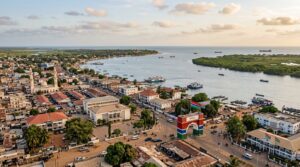
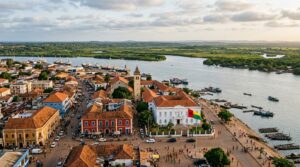
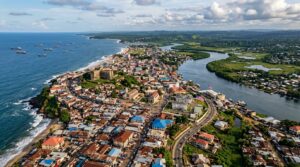
- Saint-Louis (Saint-Louis Region) — A UNESCO-listed colonial island city connected by the Faidherbe Bridge, with faded ochre architecture and a jazz festival, the Saint-Louis Jazz Festival, held each May. Fly or take the four-hour road from Dakar.
- Parc National du Niokolo-Koba (Tambacounda Region) — Senegal’s largest national park and a UNESCO Biosphere Reserve, home to lions, hippos, western Derby elands, and chimpanzees. The dry season, February through May, concentrates wildlife near waterholes; the park is roughly eight hours by road from Dakar.
- Lac Rose / Lac Retba (Dakar Region) — A shallow lake northeast of Dakar whose high salinity turns the water pink, particularly vivid in the dry season, with salt harvesters working the shallows by hand. Day trips from Dakar take about an hour each way.
- Saly (Petite Côte) — The main beach resort town on the Petite Côte, with calm Atlantic surf, seafood grills serving thiéboudienne along the shore, and easy access from Dakar in under two hours by road. November through April offers the most reliable weather.
- Cap Skirring (Casamance Region) — A long, relatively uncrowded Atlantic beach in the southern Casamance region, backed by cashew groves and known for its clear water. Air Sénégal flies from Dakar in under an hour; the overland route through The Gam
Visa & Travel Tips
## Visa & Travel Tips
Senegal admits citizens of ECOWAS member states and a number of other countries — including the US, UK, and most EU nations — without a visa for stays of up to 90 days. Passport holders from countries outside that group typically need to arrange a visa in advance through a Senegalese embassy; an e-visa option has been available in recent years, though availability and fees shift. Always confirm current requirements with your nearest embassy or consulate before booking.
The main gateway is Blaise Diagne International Airport (DSS), around 45 km southeast of Dakar, which replaced the older Léopold Sédar Senghor Airport in 2017. Air Senegal, Air France, Turkish Airlines, and Royal Air Maroc are among the carriers with regular service. On the ground, the West African CFA franc (Fr) is the working currency; card acceptance is limited outside Dakar hotels and larger restaurants, so carry cash. ATMs are reliable in Dakar but sparse upcountry. Wave, the Senegal-dominant mobile money platform, is widely used for everyday payments and is worth setting up if you have a local SIM. The US dollar is not routinely accepted. Senegal runs on UTC (no daylight saving), the international dialling code is +221, and sockets use Type C and E plugs — bring a universal adapter. Check your government’s official travel advisory for current safety guidance before departure.
Getting a local SIM or activating an eSIM is straightforward, and the next section covers your connectivity options in detail.
Staying Connected: Internet & eSIM in Senegal
Senegal’s mobile infrastructure is anchored by three main operators: Orange Senegal, Expresso, and Free Senegal (formerly Tigo). Orange holds the largest share of both subscribers and tower coverage, with reliable 4G LTE across Dakar, Thiès, and Saint-Louis. Rural areas — particularly the Casamance region and eastern Senegal — drop to 3G or edge connectivity, so download maps before leaving the capital.
Travelers arriving at Blaise Diagne International Airport can pick up a local SIM at operator kiosks inside the arrivals hall. Expect to show your passport for mandatory registration; activation typically takes 15–30 minutes. A starter SIM with 5–10 GB of data runs roughly Fr 3,000–5,000 (around $5–8 USD). The faster alternative is an eSIM: purchase and install a plan before your flight — Datamax offers Senegal data from $4.50 per GB — and your connection is live the moment you land, with no kiosk queues or surprise roaming charges. Most iPhone XS and later models support eSIM, as do recent Android flagships from Samsung, Google, and Motorola. Hotel and café Wi-Fi is widely available in Dakar and other major cities, though speeds vary.