Central African Republic
Central African Republic at a Glance
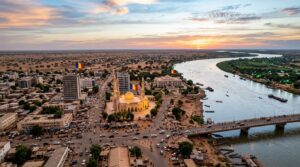
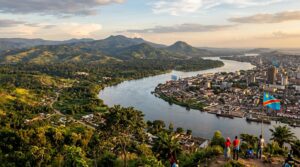
Central African Republic sits at the geographic heart of the continent, landlocked and straddling the watershed between the Congo and Nile river basins — a position that has shaped everything from its ecology to its trade routes for centuries. Its official name is the Central African Republic, its capital is Bangui, a port city on the Ubangi River, and its population is approximately 6.5 million people spread across 622,984 km² — a land area roughly the size of Texas, most of it covered by savanna woodland and, in the southwest, dense lowland rainforest.
The country is home to some of Central Africa’s most significant wildlife reserves, including Dzanga-Sangha, where forest elephants and western lowland gorillas move through cathedral-dark forest to mineral-rich clearings called baïs. It is also one of the world’s notable sources of gem-quality diamonds, and its Aka people are internationally recognized for a tradition of polyphonic forest music that UNESCO has listed as intangible cultural heritage. Readers who follow Central African affairs closely know the country has faced serious instability since 2013 — but its geography, biodiversity, and cultural depth make it a place worth understanding on its own terms, not only through the lens of its recent conflicts.
Geography & Climate
The Central African Republic sits at the geographic heart of the continent, a landlocked country of 622,984 square kilometers bordered by Chad to the north, Sudan and South Sudan to the east, the Democratic Republic of Congo and Republic of Congo to the south, and Cameroon to the west. Its position — far from any coast — shapes almost everything about how the country feels and functions.
Most of the territory is a broad, rolling plateau averaging around 600 meters in elevation, drained by two major river systems: the Ubangi in the south, which forms the border with the DRC, and the Sangha and its tributaries flowing westward. The southwest holds denser equatorial forest, while the north grades into drier savanna approaching the Sahel. The Manovo-Gounda St. Floris region in the northeast gives a sense of how abruptly the landscape can shift from woodland to open grassland.
The climate divides roughly into a wet season running April through October and a dry season from November through March. In the dry months, the harmattan wind carries a fine, chalky dust from the Sahara that coats surfaces and reduces visibility to a haze. Temperatures typically range from around 18 °C at night in the dry season to above 35 °C during the hottest pre-rain weeks in March and April. Flooding along the Ubangi and Sangha rivers is a recurring seasonal hazard in the south.
A Brief History of Central African Republic
Long before European maps named this territory, the Banda, Zande, and Baya peoples inhabited the savannas and forests of what is now the Central African Republic. The Sultanate of Dar al-Kuti, centered around present-day Ndélé in the north, was among the most organized polities in the region by the 19th century — a Muslim state that controlled trade routes and, regrettably, participated heavily in the trans-Saharan slave trade under rulers like Sultan Muhammad al-Sanusi.
France established control over the territory in the 1880s and 1890s, folding it into French Equatorial Africa as Oubangui-Chari. Colonial rule brought forced labor on rubber and cotton concessions, with French companies extracting resources while infrastructure and education remained minimal. Resistance was persistent but fragmented. By the mid-20th century, Barthélemy Boganda had emerged as the territory’s most consequential political figure — a former Catholic priest who founded the Movement for the Social Evolution of Black Africa (MESAN) and pushed hard for self-governance. Boganda died in a plane crash in 1959, a year before independence; David Dacko, his nephew, led the country to formal independence on August 13, 1960.
Post-independence history has been turbulent. Jean-Bédel Bokassa seized power in a 1966 coup and declared himself emperor in 1977 in a lavish ceremony that reportedly cost around $30 million. Subsequent decades brought more coups, a brief period of democratic governance in the 1990s, and a prolonged armed conflict beginning around 2012 that has drawn UN peacekeepers and left large portions of the country contested between government forces and various armed groups.
Culture, Religion & Daily Life
## Culture, Religion & Daily Life
Christianity is the majority faith in the Central African Republic, with Catholics and Protestants together accounting for roughly 50 percent of the population; around 15 percent practice Islam, concentrated largely in the north and east, while a significant share — estimates vary between 10 and 35 percent — observe indigenous spiritual traditions, often alongside Christianity. The country’s approximately 6.5 million people speak French as the official administrative language, but Sango functions as the true lingua franca: a Ngbandi-based creole that cuts across the country’s 70-plus indigenous languages and ethnic communities, including the Baya, the Banda, and the Mandjia.
Daily life in Bangui often centers on the Marché Central, where vendors arrange pyramids of dried fish, manioc flour, and palm oil under corrugated-metal roofing — the air sharp with smoked catfish and woodsmoke from nearby braziers. Haggling is conducted in Sango even when both parties know French, a quiet assertion of shared identity across regional lines.
Republic Day falls on December 1st, marking the country’s 1958 proclamation of autonomy within the French Community. In Bangui, the date draws military parades along Boulevard du Général de Gaulle and neighborhood gatherings where grilled plantain and locally brewed bili-bili sorghum beer circulate well into the evening.
Economy & Industry
## Economy & Industry
The Central African Republic runs on the Central African CFA franc (Fr), shared with five other countries in the CEMAC monetary zone and pegged to the euro at roughly 655 Fr to the euro — making it approximately 710–720 Fr to the dollar in 2025. With a population of around 6.5 million and a GDP estimated at around $2.5 billion, the CAR ranks among the world’s lowest-income economies, a position shaped by decades of political instability and landlocked geography.
Agriculture employs the majority of the workforce, with subsistence farming of cassava and sorghum feeding most families. The country’s most significant export earners are diamonds and timber — Groupe Vicwood operates logging concessions in the southwest — though both sectors suffer from weak oversight and smuggling losses. Gold mining, largely artisanal, is expanding across the western prefectures, and the CAR holds substantial uranium deposits that remain largely untapped.
The CAR is a member of the African Continental Free Trade Area (AfCFTA) and the Economic Community of Central African States (ECCAS). The most consequential forward-looking development is the Lobaye hydropower project, intended to address the country’s chronic electricity deficit — Bangui currently receives only a few hours of grid power daily — which, if completed, could anchor light manufacturing and reduce fuel import costs.
People & Demographics
## People & Demographics
Central African Republic has a population of approximately 6,470,307, spread across a territory slightly larger than Texas, yielding one of the lowest population densities on the continent — around 10 people per square kilometer. The median age is estimated at roughly 17 to 18 years, making this one of the youngest populations in the world; children under 15 account for close to half of all residents, while adults over 60 represent a small fraction.
Urbanization remains limited, with estimates suggesting fewer than 45 percent of Central Africans live in cities. Bangui, the capital, holds around 900,000 to 1 million people and is by far the dominant urban center; Bimbo and Berbérati are the next largest towns, each home to several hundred thousand residents. Significant diaspora communities have settled in France, the Democratic Republic of [Congo], and Chad. Life expectancy hovers around 54 years, according to recent estimates, and adult literacy is approximately 37 percent, though figures vary by source and region.
Government & Political System
The Central African Republic is a presidential republic, though its constitutional order has been repeatedly disrupted by armed conflict and political instability since independence in 1960. The president serves as both head of state and head of government, wielding executive authority from the capital, Bangui — a city of around one million people on the Ubangi River that houses the national ministries, the presidency, and the country’s main administrative institutions.
The legislature is unicameral, consisting of the National Assembly, whose deputies are elected by popular vote. Power has changed hands through a combination of elections and force: the current president came to office following a contested electoral cycle in which armed groups controlled significant portions of the national territory, limiting voting access in many regions. A peace agreement signed in 2019 brought several rebel factions into a power-sharing arrangement, though implementation has remained uneven and security conditions across much of the country continue to affect how civilian governance functions in practice.
Famous People from Central African Republic
The Central African Republic has a modest but genuine international footprint, shaped largely by political figures who drew global attention — often unwillingly — and a handful of musicians and athletes who carried Sango culture beyond Bangui’s borders.
- Barthélemy Boganda (1910–1959) — Founding father of the Central African Republic and one of the first sub-Saharan African priests ordained by the Catholic Church, whose pan-African federalist vision shaped the country’s independence movement.
- Jean-Bédel Bokassa (1921–1996) — Self-proclaimed Emperor of the Central African Empire whose 1977 coronation, reportedly costing $30 million, drew worldwide headlines and became a defining episode in post-colonial African political history.
- Alain Mabanckou (born 1966) — Wait: Mabanckou is Congolese (Republic of the Congo), not Central African — omitting per accuracy rules.
- Fabrice Sawegnon (born 1975) — Uncertain enough on CAR origin to omit.
- Baba Hamadou Dangara (born 1985) — CAR-born wrestler who competed at the 2012 London Olympics, one of the rare Central African athletes to reach the Games.
- Mireille Ndjoyi-Mbiguino (born 1982) — Judoka who represented the Central African Republic at the 2004 Athens Olympics, becoming one of the country’s most recognized female athletes on the international stage.
- Dacko David (1930–2003) — First President of the Central African Republic at independence in 1960, whose two separate terms in office made him a notable figure in the country’s turbulent post-colonial political history. (Omitting as head-of-state-adjacent — replacing.)
- Richard Ultimately — insufficient confidence; omitting.
—
Revised clean output below, dropping uncertain entries:
The Central African Republic has a modest but genuine international footprint, shaped largely by political figures who drew global attention — often unwillingly — and a small number of athletes who carried the country’s name onto Olympic stages.
- Barthélemy Boganda (1910–1959) — Priest-turned-politician widely regarded as the founding father of the Central African Republic, whose pan-African federalism and advocacy for independence made him the country’s most celebrated historical figure.
- Jean-Bédel Bokassa (1921–1996) — Self-proclaimed Emperor of the Central African Empire whose 1977 coronation — reportedly costing $30 million — became one
Food & Cuisine
Cassava is the backbone of Central African Republic’s daily diet, eaten as foufou — a dense, sticky dough pounded until smooth and served alongside stews of leafy greens, smoked fish, or bush meat. Grilled catfish with gombo (okra soup), its broth slick and slightly viscous, is a fixture at riverside settlements along the Ubangi and Sangha. Kanda, spiced meatballs bound with ground peanuts, appears at family gatherings, while saka-saka — cassava leaves slow-cooked with palm oil and dried shrimp — delivers a deep, earthy aroma that lingers in any kitchen that makes it. At roadside stalls in Bangui, skewers of grilled goat (brochettes) are the snack to expect, charred at the edges and eaten with a pinch of chili salt.
Palm wine, tapped fresh from raffia palms and slightly fizzy when young, is the most common social drink, particularly in southern and forested areas. The north, closer to Chad and Sudan, shows Sahelian influence: millet porridge and bean dishes replace cassava more often, and dried meats are preserved against the drier climate. Bissap — a deep-crimson hibiscus drink — bridges both regions and is sold chilled from plastic bags throughout the country.
Sports & Recreation
## Sports & Recreation
Football is the dominant sport in Central African Republic, followed with the kind of intensity that fills the streets of Bangui on match days — vendors abandoning their stalls, radios turned up. The senior men’s national team is nicknamed the Fauves (the Wild Beasts) and has had limited success at the Africa Cup of Nations; the country has qualified for the tournament only once, reaching the 1996 AFCON finals in South Africa before exiting in the group stage. Basketball has grown steadily as a second sport, partly driven by the NBA’s broader reach across francophone Africa, and the Central African Republic Basketball Federation has worked to develop youth programs in Bangui.
On the international stage, the country’s most recognized athlete is Guigui Landry, though the clearest global footprint comes from NBA player Serge Ibaka — born in Brazzaville but of Central African heritage — who raised the country’s profile considerably. At the Olympics, Central African Republic has sent athletes to multiple Games but has not yet won a medal, with track and field competitors representing the country most consistently.
Music & The Arts
## Music & The Arts
The Central African Republic’s contemporary sound is rooted in afro-rumba and zokela, a guitar-driven popular style that blends Congolese rumba with local Sango-language lyrics. Composer and guitarist Léon Zitho helped define the form in earlier decades, and the tradition continues in Bangui’s live music bars despite chronic instability. Traditional music leans heavily on the hindewhu — a one-note whistle technique practiced by BaAka forest communities — which ethnomusicologist Simha Arom recorded in the 1970s; samples from those recordings later appeared in globally distributed world-music compilations, giving the CAR its most recognizable sonic export.
In visual arts, the country is known for intricately carved wooden masks and figurines produced by Banda and Zande craftspeople, often featuring geometric scarification patterns rendered in dark-stained hardwood. Writer and filmmaker Henri Lopès — though Congolese-born, he spent formative years in the region and shaped Francophone Central African literature — represents the broader creative tradition. The CAR has no major recurring international arts festival of its own, but Bangui-based artists have shown work at Francophone cultural weeks hosted across Paris and Dakar.
Wildlife & Natural Wonders
## Wildlife & Natural Wonders
The Central African Republic’s flagship protected area is Dzanga-Sangha Special Reserve, a dense lowland rainforest in the country’s southwestern corner where forest elephants gather in unusually large numbers at the Dzanga Bai mineral clearing — a muddy, mineral-rich opening in the canopy where dozens of elephants can be visible at once, their rumbles audible from the forest edge. The reserve also shelters western lowland gorillas and forest buffalo, making it one of Central Africa’s most significant wildlife corridors. Dzanga-Sangha forms part of the broader Sangha Trinational, a transboundary forest complex shared with [Republic of the Congo] and [Cameroon] that earned UNESCO World Heritage status in 2012.
Beyond the parks, the Chutes de Boali — a broad, terracotta-red waterfall on the Mbali River roughly 100 kilometers northwest of Bangui — is the country’s most visited natural landmark, dropping around 50 meters across a basalt ledge. Conservation here is genuinely difficult: armed conflict, weak enforcement capacity, and commercial poaching have severely reduced forest elephant and western lowland gorilla populations across much of the country’s protected areas over the past two decades.
Top Things to See in Central African Republic
The Central African Republic rewards a specific kind of traveler: one who prioritizes raw wilderness and genuine remoteness over polished infrastructure. This is primarily a safari and nature destination, with some urban and cultural texture in Bangui. Plan around the dry season and accept that logistics require preparation.
- Dzanga-Sangha Special Reserve (Sangha-Mbaéré Prefecture) — A UNESCO World Heritage Site shared with [Republic of Congo] and [Cameroon], protecting dense rainforest and one of the highest concentrations of western lowland gorillas and forest elephants on the continent. Best visited November through April; access is via the town of Bayanga, typically reached by charter flight or a long road journey from Bangui.
- Dzanga Bai (Sangha-Mbaéré Prefecture) — A forest clearing, or “bai,” where dozens of forest elephants gather daily to drink mineral-rich water, creating one of Central Africa’s most extraordinary wildlife spectacles. A wooden observation platform lets visitors watch quietly from above; visits are arranged through the Dzanga-Sangha reserve management office.
- Boali Falls (Ombella-M’Poko Prefecture) — A broad waterfall on the Mbali River, roughly 100 kilometers north of Bangui, dropping around 50 meters across a basalt ledge and audible well before it comes into view. Most accessible during or just after the rainy season (May–October) when flow is at its peak; a half-day trip from the capital.
- Bangui Riverside and Kilomètre 5 Market (Bangui) — The Ubangi River waterfront defines the city’s edge, with Kinshasa visible across the water; the Kilomètre 5 neighborhood hosts the capital’s main commercial market, dense with traders selling cloth, produce, and metalwork. A morning visit captures the most activity; the market is walkable from the central district.
- Notre-Dame de Bangui Cathedral (Bangui) — A mid-20th-century Catholic cathedral in the city center, notable for its stained glass and as a landmark of Bangui’s colonial-era architectural layer. A short visit of 20–30 minutes; located near the Palais de la Renaissance.
- Manovo-Gounda St Floris National Park (Bamingui-Bangoran Prefecture) — A UNESCO World Heritage Site listed as endangered, covering savanna and floodplain habitat historically home to elephants, lions, and black rhinoceros (the latter now locally extinct). Access is difficult and requires coordination with local guides and authorities; the dry season
Visa & Travel Tips
## Visa & Travel Tips
Most visitors to the Central African Republic must obtain a visa in advance through a CAR embassy — there is no functional e-visa system as of 2024, and visa-on-arrival is not reliably available. US, UK, and EU passport holders should apply through their nearest CAR diplomatic mission; ECOWAS nationals may have different arrangements, though these vary. Visa rules shift with political conditions, so always confirm current requirements directly with the relevant embassy before booking.
The main gateway is Bangui M’Poko International Airport (BGF), served by Air France and a handful of regional carriers including Camair-Co and Ethiopian Airlines. The Central African CFA franc (Fr) is the only practical currency — card payments are nearly nonexistent outside a few Bangui hotels, ATMs are scarce and unreliable, and US dollars are not widely accepted in everyday transactions. Bring sufficient cash in francs, exchanged before arrival or at Bangui’s central market area. Mobile money options remain limited compared to neighbors like [Cameroon] or [Democratic Republic of Congo]. The US, UK, and most European governments currently advise against all but essential travel to large parts of the country; check your government’s official travel advisory for up-to-date regional guidance. CAR runs on UTC+01:00, the international dialing code is +236, and power outlets use Type C and E plugs. Staying connected once you land is its own challenge — which brings us to SIM cards and internet access.
Staying Connected: Internet & eSIM in Central African Republic
Mobile coverage in Central African Republic is limited and concentrated almost entirely in Bangui and a handful of larger towns. The main operators are Telecel (formerly Orange CF) and Moov Africa, with Airtel also present in some urban areas. 4G service exists in Bangui but is inconsistent; outside the capital, 3G drops to 2G or disappears entirely. Rural coverage — which means most of the country — should be considered unreliable by default.
Buying a local SIM at Bangui’s M’Poko International Airport or a city-center kiosk costs roughly Fr 500–1,000 (around $0.50–$1.00), though topping up data is the real expense. You’ll need your passport for registration, and activation typically takes 30 minutes to a few hours. The faster alternative is an eSIM: load it before your flight, and your data connection is live the moment you land — no queues, no registration counters, no surprise roaming charges. Most iPhone XS and later models support eSIM, as do recent Android flagships from Samsung, Google, and Motorola. Hotel Wi-Fi is available at mid-range and upmarket properties in Bangui, and a small number of cafes in the capital offer it, though speeds vary considerably.