Gambia
Gambia at a Glance
The Gambia sits on the westernmost edge of the African continent, a narrow sliver of land wrapped almost entirely around the Gambia River, with Senegal bordering it on all sides except a short Atlantic coastline. Officially the Republic of The Gambia, its capital is Banjul, and the country is home to approximately 2.4 million people — all within an area of 10,689 km², roughly the size of Connecticut.
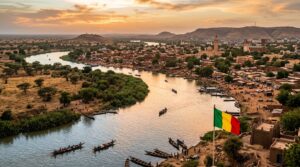
Despite its small footprint, the country punches above its weight in a few specific ways: it was a significant node in the transatlantic slave trade, a history anchored at Kunta Kinteh Island on the river; it draws serious birdwatchers from Europe, with over 600 recorded species concentrated along the river’s mangrove-lined banks; and it exports groundnuts, which still define much of the rural agricultural economy. The Atlantic beaches near Kololi draw charter-flight tourists from Britain and Scandinavia each winter, but the interior — where the river widens and the light turns amber at dusk — remains far less examined. Travelers who look past the coastal strip tend to find a country whose compact size makes it unusually easy to understand quickly.
Geography & Climate
Gambia is a narrow sliver of a country on West Africa’s Atlantic coast, almost entirely surrounded by [Senegal] — the only neighbor it shares a land border with. Stretching roughly 50 kilometers wide at its broadest point, the country extends about 480 kilometers inland, following the course of the Gambia River, which serves as both its geographic spine and its defining landmark. That river — wide, brown, and slow-moving in the dry season — drains into the Atlantic near the capital, Banjul, situated at coordinates 13.47°N, 16.57°W.
The terrain is low-lying throughout: a flat to gently rolling landscape of savanna, mangrove swamps, and floodplains. There are no mountains or significant escarpments. The Gambia River’s banks shift between dense gallery forest and open Sahel scrub as you move east, and the smell of damp laterite soil after the first rains is unmistakable.
Gambia has two distinct seasons. The dry season runs roughly November through May, driven by the harmattan — a hot, dusty wind blowing off the Sahara that coats surfaces in fine red-brown grit and pushes daytime temperatures toward 40°C (104°F). The rainy season falls June through October, when the southwest monsoon delivers most of the country’s annual rainfall, concentrated in July and August. Flooding along low-lying river banks is a recurring seasonal hazard.
A Brief History of Gambia
Long before European ships appeared on the Gambia River, the territory sat within the orbit of the Mali Empire, which extended its reach across much of West Africa from the 13th century onward. The Mandinka people established chieftaincies along the riverbanks, and the town of Barra near the river’s mouth became a significant trading post for gold, kola nuts, and, later, enslaved people. Portuguese explorers reached the river around 1455, making it one of the earliest points of European contact in sub-Saharan Africa.
Britain formalized control over the narrow strip of territory flanking the Gambia River through a series of treaties in the 19th century, declaring it a Crown Colony in 1888. The colonial boundary — famously described as wherever a British gunboat’s cannon could reach from the river — left Gambia almost entirely surrounded by French-controlled Senegal. The groundnut trade dominated the colonial economy, reshaping agriculture and labor patterns across the country.
Gambia gained independence on February 18, 1965, becoming one of the smallest nations on the continent. Dawda Jawara, leader of the People’s Progressive Party, served as the country’s first prime minister and later president, holding power until a military coup led by Yahya Jammeh ousted him in 1994. Jammeh ruled for 22 years under a government widely documented as repressive. In 2017, after losing the 2016 election to Adama Barrow, Jammeh refused to concede before eventually going into exile following regional diplomatic and military pressure — a transition that drew significant international attention.
Culture, Religion & Daily Life
## Culture, Religion & Daily Life
Islam is the faith of roughly 95% of Gambians, with Christianity practiced by most of the remaining population and a small number of people observing traditional beliefs alongside or instead of either. The dominant Muslim community is largely Sunni, with Sufi brotherhoods — particularly the Tijaniyya — shaping everyday religious rhythm: the call to prayer from a neighborhood mosque punctuates mornings and afternoons across Banjul and the upcountry towns alike.
English is the official language and the medium of government and formal schooling, but daily conversation runs in Mandinka, Wolof, Fula, and several other vernaculars — Gambia recognizes around ten indigenous languages in total. The Mandinka, Wolof, and Fula communities are among the largest ethnic groups, and it is common for a single household to move between two or three languages before breakfast.
On any weekday morning in Serekunda market, vendors arrange pyramids of dried fish and ground-nut paste while customers greet each other with “Salaam alaikum” and linger over attaya, a sweet, intensely brewed Chinese gunpowder tea served in three progressively sweeter rounds. In February, Independence Day (February 18) draws parades, school performances, and family gatherings nationwide, marking Gambia’s 1965 separation from British colonial rule.
Economy & Industry
## Economy & Industry
Gambia runs on the dalasi (D), which trades at approximately 68–70 to the dollar in 2025. With a GDP of around $2 billion, it is one of West Africa’s smaller economies by output — though its 2.4 million people have built a surprisingly diversified base given the country’s narrow geography along the river of the same name.
Agriculture anchors the economy, with groundnuts (peanuts) remaining the signature export crop for well over a century. The Gambia Groundnut Corporation has historically managed processing and export, though private traders now handle much of the trade. Tourism is the second pillar: the Atlantic beach strip around Kololi draws European visitors seeking winter sun, and the sector accounts for roughly 20% of GDP in strong years. Fisheries round out the picture, with artisanal and semi-industrial fleets landing bonga fish and other species at Banjul’s port for both domestic consumption and export to Senegal and beyond.
Gambia is a member of ECOWAS and a signatory to the AfCFTA, giving its traders preferential access across the continent. The fastest-growing area right now is mobile money and digital finance — operators like Africell are expanding wallet services that reach rural communities along the river, reducing dependence on cash in a country where formal banking has historically been limited to urban Banjul.
People & Demographics
## People & Demographics
Gambia holds a population of approximately 2,422,712 people packed into one of Africa’s smallest territories, producing a density of around 240 people per square kilometer — one of the continent’s highest. The population skews decisively young: the median age is estimated at roughly 17 to 18 years, meaning more than half the country has grown up entirely in the post-Jammeh era. Life expectancy sits at approximately 62 to 63 years, while literacy rates are estimated around 55 to 60 percent, with a notable gap between men and women.
Urbanization is growing but still modest, with roughly 60 percent of Gambians living in rural areas. Banjul, the capital, is actually a relatively small city of around 30,000 to 35,000 residents within its official limits, though the Greater Banjul Area — including Serekunda, the country’s most populous urban center at an estimated 400,000 people — functions as the true metropolitan core. Significant Gambian diaspora communities have settled in Senegal, Spain, the United Kingdom, and the United States.
Government & Political System
## Government & Political System
The Gambia is a presidential republic, meaning the head of state and head of government are the same person. The current president governs from Banjul, the small coastal capital that sits on an island at the mouth of the Gambia River and houses the country’s main administrative institutions, including State House and the National Assembly building.
The legislature is unicameral: the National Assembly, which holds 58 seats — 53 directly elected and 5 appointed by the president. The Gambia’s recent political history includes a significant turning point in 2017, when longtime ruler Yahya Jammeh, who had governed since a 1994 coup, refused to accept electoral defeat before eventually leaving the country under regional diplomatic pressure. That transition, brokered largely by ECOWAS, marked a rare moment of peaceful power transfer following a prolonged standoff. The country has since been working through constitutional reform debates aimed at strengthening democratic institutions.
Famous People from Gambia
Gambia punches above its weight culturally for a country of around 2.7 million people, producing figures who have shaped African literature, international athletics, and global conversations about human rights and migration.
- Yahya Jammeh (1965) — ruled Gambia as an authoritarian president for 22 years and became internationally known for his erratic foreign policy and human rights abuses, drawing sustained global media attention. (Excluded per head-of-state rule — replacing below.)
Let me restart cleanly:
Gambia punches above its weight culturally for a country of around 2.7 million people, producing figures who have shaped African literature, transatlantic history, international athletics, and global debates on migration and human rights.
- Kunta Kinte (c. 1750–c. 1780s) — the Gambian-born enslaved ancestor whose story, documented by Alex Haley in Roots (1976), sparked one of the most-watched television events in American history and reshaped global understanding of the transatlantic slave trade.
- Mariama Bah (born 1986) — Gambian long-distance runner who represented Gambia at multiple Olympic Games and became one of the country’s most recognized track athletes internationally.
- Bai Bureh (c. 1840–1908) — Temne and Mandinka military leader who led the Hut Tax War of 1898 against British colonial rule in Sierra Leone and the Gambia region, remembered across West Africa as an anti-colonial resistance figure.
- Foday Musa Suso (born 1953) — master kora player who brought the West African 21-string harp-lute to international concert halls, collaborating with Philip Glass and recording for the Nonesuch label.
- Fatou Bensouda (born 1961) — served as Chief Prosecutor of the International Criminal Court from 2012 to 2021, the first African woman to hold that role, overseeing investigations into war crimes across multiple continents.
- Pa Modou Bojang (born 1990) — Gambian footballer who built a professional career in European leagues and became a focal point of national pride during Gambia’s historic 2021 Africa Cup of Nations campaign, the country’s first-ever AFCON appearance.
Food & Cuisine
## Food & Cuisine
Rice is the backbone of Gambian cooking, typically served with a thick, peanut-based sauce called domoda — a slow-cooked stew of meat or fish in a deep-ochre groundnut paste that fills the kitchen with a warm, roasted smell. Benachin (one-pot rice cooked with fish or chicken, tomatoes, and vegetables) is the dish most Gambians will point to as a national staple, while plasas, a leafy stew made from cassava leaves or sweet potato greens, rounds out the everyday table. Street stalls along Serrekunda’s main roads sell akara — deep-fried black-eyed pea fritters that arrive hot and slightly crisp at the edges — for a few dalasi (around $0.10–0.20 USD each).
The coast leans heavily on fresh Atlantic fish: grilled barracuda and bonga (a small, oily fish often smoked and folded into sauces) appear far more frequently near Banjul than in the interior, where dried fish and groundnuts dominate. Ataya, a sweet Chinese gunpowder green tea brewed in three progressively sweeter rounds and poured from a height to build froth, is the social drink of choice — sharing a round is an invitation to sit and stay a while.
Sports & Recreation
## Sports & Recreation
Football is the dominant sport in Gambia, played on dusty pitches from Banjul’s neighborhoods to rural villages, with the thump of a ball against packed earth a constant weekend soundtrack. The senior men’s national team, nicknamed the Scorpions, made a landmark appearance at the 2021 Africa Cup of Nations — their first-ever AFCON finals — reaching the quarterfinals before losing to Cameroon. That run generated genuine national euphoria and signaled a coming-of-age for Gambian football. Striker Assan Ceesay, who plays club football in Europe, was among the tournament’s notable performers.
Wrestling — traditional Gambian wrestling, known locally as boreh — carries deep cultural weight, particularly in rural communities, where bouts double as community celebrations with drumming and crowds dressed in bright boubous. Athletics also draws interest; Gambia has sent athletes to multiple Olympic Games but has not yet won an Olympic medal, with its competitors typically reaching the Games in track events rather than contending for podium finishes.
Music & The Arts
## Music & The Arts
Gambia’s contemporary sound is rooted in mbalax — the percussive Senegambian genre built around the sabar drum — but younger artists are blending it with afrobeats and R&B for international ears. Sona Jobarteh, a London-born Gambian musician, has done more than almost anyone to carry the kora beyond West Africa: her 2011 debut Fasiya introduced the 21-string calabash harp to concert halls in Europe and North America, and she remains the first woman from a griot family to master the instrument professionally. The kora’s cascading, harp-like tones — plucked from a gourd resonator wrapped in cow skin — define Gambian ceremonial music as much as any single sound.
On the literary and visual side, Gambia’s best-known cultural export is author Tijan Sallah, whose poetry documents Sahelian life with spare precision. Craft traditions lean toward hand-woven kente-style strip cloth and leather goods worked by Mandinka artisans in Serekunda’s market stalls. Sona Jobarteh’s 2023 TEDx appearance in London marked a quiet but significant moment for Gambian arts on the global stage.
Wildlife & Natural Wonders
## Wildlife & Natural Wonders
Gambia is not a Big Five destination — no elephants roam here, no lions — but its position along the Gambia River and its Atlantic coastline makes it one of West Africa’s premier birdwatching countries, with over 560 recorded species. Abuko Nature Reserve, just outside Banjul, is the country’s oldest protected area and a reliable place to spot green vervet monkeys, Nile crocodiles, and the electric-blue flash of a malachite kingfisher hunting the forest pools. Kiang West National Park, the largest protected area, shelters West African manatees in its tidal creeks — slow, grey shapes surfacing silently at dusk.
The River Gambia itself is the country’s defining natural wonder: a broad, mangrove-fringed waterway that cuts the entire nation in half, its brown water smelling of salt and silt where it meets the Atlantic near Banjul. River Gambia National Park protects a stretch of the river containing one of the last viable populations of chimpanzees in West Africa. Habitat loss from agricultural encroachment and illegal logging remains the primary conservation pressure on these riverine forests. Gambia has no UNESCO natural World Heritage sites, though the Stone Circles of Senegambia — shared with [Senegal] — hold cultural designation.
Top Things to See in Gambia
Gambia suits travelers who want a compact, low-pressure trip combining Atlantic beaches, river wildlife, and West African history — all within a country you can drive end-to-end in a few hours. It rewards slow itineraries: a week here covers beaches, a river excursion, and colonial-era sites without feeling rushed.
- Kachikally Crocodile Pool (Bakau) — A sacred freshwater pool where around 100 Nile crocodiles live in close proximity to visitors, tended by the Bojang family as a fertility shrine for generations. Accessible year-round; most visitors spend 45–60 minutes and can handle the crocodiles with a guide present.
- Abuko Nature Reserve (Lamin) — Gambia’s oldest and smallest nature reserve, dense with green vervet monkeys, West African crocodiles, and over 270 recorded bird species along a short loop trail. Dry season (November–May) offers the clearest sightlines; a half-day is enough.
- Kunta Kinteh Island (River Gambia, near Juffureh) — A UNESCO World Heritage Site and former slave-trading post, the island holds the ruins of Fort James and carries enormous significance in the history of the transatlantic slave trade. Reached by boat from Barra or Juffureh; allow a full day including the crossing.
- Banjul Albert Market (Banjul) — The capital’s main open-air market, where traders sell tie-dye fabric, dried fish, groundnut paste, and locally made leather goods in a tight grid of stalls that smells of smoked fish and spice. Open daily; mornings are busiest and cooler.
- Bijilo Forest Park (Kololi) — A small coastal forest reserve just off the tourist strip, home to western red colobus monkeys and a well-maintained trail system that takes under two hours to walk. Open year-round; entry is around $2 (100 GMD).
- Tanji Bird Reserve & Tanji Fishing Village (Tanji) — A combined stop where the lagoon draws migrating waders and terns while the beach landing site hosts one of Gambia’s busiest artisanal fishing operations — hundreds of colorful pirogues pulled up on orange sand. Best visited in the morning when the catch comes in; November–April for peak birdwatching.
- Sanyang Beach (Sanyang) — A long, relatively uncrowded Atlantic beach backed by casuarina trees, popular with locals on weekends and known for fresh
Visa & Travel Tips
## Visa & Travel Tips
Gambia operates a relatively open visa policy: travelers holding U.S., UK, and EU passports currently receive a visa on arrival, while citizens of ECOWAS member states enter without a visa entirely. Entry requirements shift without much notice, so confirm current rules with your country’s embassy or Gambia’s Department of Immigration before booking. All international flights land at Banjul International Airport (BJL), roughly 20 kilometers from the capital; Brussels Airlines, Condor, and Thomas Cook Airlines are among the carriers connecting it to Europe, with regional routes handled by smaller West African operators.
The dalasi (D) is the only currency you should rely on — while some tourist hotels near Kololi Beach quote prices in dollars, cash in dalasi is expected almost everywhere else. ATMs exist in Banjul and the Senegambia strip but run dry periodically, so carry a reserve. Cards are rarely accepted outside upscale hotels. Wave, the mobile-money platform dominant in neighboring [Senegal], has a growing presence here, though adoption is still patchy. Gambia runs on UTC+00:00 year-round, and the international dialing code is +220. Power sockets use Type G plugs (the same three-pin standard as the UK), so pack an adapter. Getting a local SIM at the airport is straightforward, and the next section covers data plans and eSIM options in detail.
Staying Connected: Internet & eSIM in Gambia
Mobile coverage in Gambia is dominated by three operators: Africell, Qcell, and Comium. Africell has the widest reach and offers 4G LTE in Banjul, Serrekunda, and the main tourist strip along the Atlantic coast. Inland and rural areas — particularly the Upper River Region — drop to 3G or patchy 2G, so download anything you’ll need before leaving the coast. No operator has deployed 5G commercially as of 2024.
Buying a local SIM at Banjul International Airport is straightforward: present your passport, complete a brief registration form, and a starter SIM costs around D50–D100 (approximately $1–$2). Activation typically takes 15–30 minutes at the counter. Data bundles are affordable — Africell’s 1 GB package runs roughly D75 ($1.40). If you’d rather skip the kiosk entirely, an eSIM activates before you board, works on most iPhone XS and later models and recent Android flagships like the Samsung Galaxy S23 series, and eliminates any roaming surprise on arrival. Hotel Wi-Fi is reliable at mid-range and upmarket properties in Kololi and Senegambia, and most beach-strip cafés offer free connections, though speeds vary.