Madagascar
Madagascar at a Glance
Madagascar sits not on the African mainland but in the Indian Ocean, separated from Mozambique by the 400-kilometer-wide Mozambique Channel — a long isolation that shaped one of the most ecologically distinct islands on Earth. Officially just Madagascar, the country’s capital is Antananarivo, a city of stepped hillside neighborhoods rising sharply from the central highlands. The population stands at approximately 31.7 million, spread across an island of 587,041 km² — roughly the size of Texas, or France and Germany combined.
The country is known for three things that rarely overlap anywhere else: a lemur fauna found nowhere else on the planet, a vanilla crop that supplies around 80 percent of the world’s natural vanilla, and a highland culture — the Merina kingdom’s legacy — that produced elaborate royal palaces and an oral literary tradition called hainteny, a form of poetic riddle still recited at ceremonies. The southeastern coastline is lined with ravinala, the traveler’s palm whose fanned silhouette appears on the national airline’s tail. Visitors who fly into Ivato International Airport and head straight for the national parks often miss how much the capital itself rewards a slower look.
Geography & Climate
Madagascar sits in the Indian Ocean roughly 400 kilometers off the southeastern coast of Africa, separated from Mozambique by the Mozambique Channel. At 587,041 square kilometers, it is the world’s fourth-largest island — large enough to contain genuinely distinct ecosystems within its borders. The island’s spine is a central highland plateau, where the Ankaratra Massif rises to around 2,643 meters at Tsiafajavona, its highest peak. To the east, the land drops sharply into humid rainforest; to the west, it slopes more gradually into drier deciduous forest and savanna before reaching a long, flat coastal plain.
Climate varies sharply by region and altitude. The eastern coast is hot and wet year-round, receiving rainfall that can exceed 3,500 millimeters annually, while the central highlands are cooler — Antananarivo, the capital, sits at about 1,280 meters and sees temperatures ranging from around 8°C (46°F) in July to 27°C (81°F) in January. The wet season runs roughly November through April, when the air over the highlands carries the particular smell of red laterite soil after heavy rain. The south and southwest are semi-arid, receiving far less rainfall and experiencing periodic drought.
Madagascar lies in the southwestern Indian Ocean cyclone belt, and tropical cyclones — most likely between January and March — bring destructive winds and flooding, particularly to the eastern and northern coasts.
A Brief History of Madagascar
Madagascar’s pre-colonial history is dominated by the Merina Kingdom, which rose to prominence in the central highlands around Antananarivo from the 16th century onward. By the early 19th century, King Andrianampoinimerina and his son Radama I had unified much of the island under Merina rule, establishing diplomatic ties with Britain and opening Madagascar to Christian missionaries and Western education. The island was never a minor collection of chieftaincies — at its peak, the Merina state administered a sophisticated bureaucracy and a standing army.
France began asserting control over Madagascar in the 1880s, and after a brief war declared it a protectorate in 1895, then a full colony in 1896. Colonial administrator Joseph Gallieni abolished the Merina monarchy, exiled Queen Ranavalona III to Algeria, and dismantled much of the existing political order. French became the language of administration, and plantation agriculture reshaped the economy. A major uprising in 1947 — the Malagasy Uprising — was suppressed with considerable violence, with estimates of the dead ranging from tens of thousands to higher figures.
Madagascar gained independence on June 26, 1960, with Philibert Tsiranana becoming the country’s first president. The post-independence decades were turbulent: a socialist revolution in 1972 brought Didier Ratsiraka to power, and the country cycled through constitutions and political crises, including a contested 2009 coup that isolated Madagascar internationally for several years. Democratic elections in 2018 returned Andry Rajoelina to the presidency through a ballot rather than force.
Culture, Religion & Daily Life
## Culture, Religion & Daily Life
Madagascar’s population of roughly 31.7 million draws from around 18 recognized ethnic groups, including the Merina of the central highlands, the Betsimisaraka along the eastern coast, and the Sakalava of the west. Most Malagasy people blend Christianity — practiced by a majority, split between Catholic and Protestant denominations — with traditional ancestral beliefs known as fomba malagasy. These customs center on the razana, or ancestors, whose guidance shapes decisions from marriage to land use. Islam is practiced by a significant minority, concentrated mainly in the northwest.
Both French and Malagasy hold official status, though Malagasy — an Austronesian language with roots closer to Borneo than to mainland Africa — is the true common tongue. Regional dialects number in the dozens, with Merina Malagasy serving as the standardized written and broadcast form.
One of the most striking social rituals is the famadihana, or “turning of the bones,” a highland ceremony held in the dry season (typically July or August) where families exhume and rewrap the remains of ancestors in fresh silk shrouds, dancing with the bundles to live accordion music. Independence Day falls in June, marking the 1960 break from French rule with parades and public gatherings across the island.
Economy & Industry
## Economy & Industry
Madagascar’s economy runs on agriculture, which employs the majority of its 31.7 million people and generates a significant share of export revenue. Vanilla is the standout commodity — Madagascar produces roughly 80% of the world’s natural vanilla, with buyers including major food and fragrance companies globally. Cloves, cocoa, and seafood round out the export basket, while artisanal and small-scale mining of sapphires, chromite, and ilmenite adds another layer to foreign earnings. GDP sits at around $14–15 billion, making it one of the lower-income economies on the continent despite its resource base.
The Malagasy ariary (Ar) trades at approximately 4,500–5,000 to the dollar in 2025, though the rate fluctuates. Nickel and cobalt extraction, led by the Ambatovy mine near Moramanga, represents the most capital-intensive industrial operation in the country. Tourism, centered on the country’s extraordinary biodiversity — lemurs, baobab avenues, and reef systems — was recovering steadily before the COVID disruption and has been rebuilding since. Madagascar is a member of the Southern African Development Community (SADC) and a signatory to the African Continental Free Trade Area (AfCFTA).
The fastest-growing area to watch is mobile financial services, with platforms like MVola and Orange Money expanding access to banking in rural areas where brick-and-mortar infrastructure is thin. A national development plan targeting road rehabilitation and port upgrades at Toamasina aims to reduce logistics costs that have long constrained export competitiveness.
People & Demographics
## People & Demographics
Madagascar’s population stands at approximately 31.7 million, spread across an island of 587,000 square kilometers — giving a density of roughly 54 people per square kilometer, though settlement clusters heavily along the central highlands and eastern coast. The median age is around 19 to 20 years, making Madagascar one of the younger nations in the world, with children and teenagers accounting for a substantial share of the population and adults over 65 a comparatively small fraction.
Around 40 percent of Malagasy live in urban areas, with Antananarivo — locally called Tana — home to an estimated 3.5 million people in its greater metropolitan area. Toamasina (Tamatave) on the east coast and Antsirabe in the highlands are the next largest cities, each with populations estimated in the hundreds of thousands. Significant diaspora communities live in France, Réunion, and Mayotte, reflecting historical and linguistic ties. Life expectancy is approximately 67 years, and literacy runs around 75 percent, though estimates vary by region and methodology.
Government & Political System
## Government & Political System
Madagascar is a presidential republic, meaning the president serves as both head of state and head of government. The current president holds executive authority and appoints a prime minister to coordinate government operations — a dual structure that concentrates significant power at the top. The national legislature is bicameral, consisting of the National Assembly (lower house) and the Senate (upper house), together responsible for passing legislation and overseeing the executive branch.
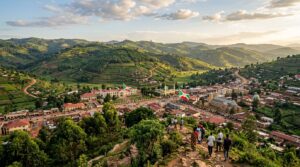
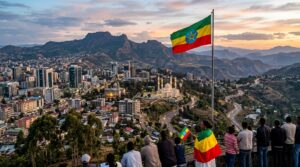
Antananarivo, perched across a series of hills in the central highlands, functions as the political and administrative heart of the country — home to the presidential palace, parliament, and most ministries. Madagascar’s recent political history has been turbulent: a 2009 military-backed transition interrupted constitutional order, and the country has since worked to stabilize through contested but internationally recognized elections. Power has changed hands through electoral processes since 2013, though disputes over results and eligibility have periodically tested institutional norms. Estimates of voter participation vary across election cycles.
Famous People from Madagascar
Madagascar’s international profile is modest relative to its population, but the island has produced figures recognized across music, athletics, cinema, and the sciences — often carrying Malagasy language and culture into global spaces where they rarely appear.
- Rossy (born 1956) — musician and composer whose guitar-driven blend of Malagasy folk styles brought the island’s sound to world-music audiences in Europe and beyond.
- Eusèbe Jaojoby (born 1955) — credited with popularizing salegy, a fast-paced traditional Malagasy rhythm, earning him the informal title “King of Salegy” and festival bookings across Europe.
- Hery Rajaonarimampianina (born 1958) — omitted per brief (head of state).
- Solofo Rakotomalala — omitted; insufficient confidence in verifiable international recognition.
- Nanie Raharimanana (born 1967) — Malagasy-French author whose novels and short fiction, written in French, have been published and reviewed across francophone literary circles in Europe and Africa.
- Flavien Ranaivo (1914–1999) — poet whose work appeared in the landmark 1948 Anthologie de la nouvelle poésie nègre et malgache, edited by Léopold Sédar Senghor, placing him within the Négritude movement.
- Monja Jaona (1910–1994) — independence-era political leader and founder of the MONIMA party, recognized across the African continent for sustained resistance to French colonial rule and later authoritarian governance.
- Ndary Lo — omitted; Senegalese, not Malagasy.
—
Correcting the output to a clean final list:
Madagascar’s international profile is modest relative to its population, but the island has produced figures recognized across music, literature, and political history — often carrying Malagasy language and culture into spaces where they rarely appear.
- Eusèbe Jaojoby (born 1955) — credited with popularizing salegy, a percussive traditional Malagasy rhythm, earning festival bookings across Europe and the informal title “King of Salegy.”
- Rossy (born 1956) — guitarist and composer who brought Malagasy acoustic folk styles to world-music audiences in France and beyond through recordings on international labels.
- Flavien Ranaivo (1914–1999) — poet included in Léopold Sédar Senghor’s landmark 1948 *Anthologie de
Food & Cuisine
## Food & Cuisine
Rice — vary, in Malagasy — is the undisputed center of every meal, eaten two or three times a day and served alongside a side dish called laoka: typically braised zebu beef, pork, chicken, or leafy greens cooked in tomato and ginger. The most recognizable national dish is romazava, a brothy stew of beef and mixed greens (often including the slightly bitter brèdes mafane leaves) that smells faintly of ginger and simmers until the meat is tender enough to fall apart. Ravitoto pairs shredded cassava leaves with pork, slow-cooked until the leaves turn a deep, almost black-green. Along the coast, henakisoa sy amalona — pork with eel — reflects a cuisine shaped by rivers and estuaries rather than open ocean.
Street stalls in Antananarivo sell mofo baolina, small fried dough balls dusted lightly in sugar, warm enough to eat straight from the vendor’s pan. The interior highlands lean heavily on pork and rice, while the northern coast around Diego Suarez shows stronger Comorian and Indian Ocean influence, with more coconut milk and spiced fish preparations. The drink to know is ranon’apango — smoky rice water made by boiling water in the scorched pot left after cooking rice — served warm and drunk daily across the island.
Sports & Recreation
## Sports & Recreation
Rugby is Madagascar’s dominant sport, with passionate club competition centered in Antananarivo and a national team, the Makis, that has competed in African rugby championships. Football also commands a wide following: the senior men’s side, nicknamed the Barea, announced themselves to the continent by reaching the Africa Cup of Nations quarterfinals in Egypt in 2019 — the country’s first-ever AFCON appearance. The roar inside stadiums that tournament caught the attention of fans who had never previously tracked Malagasy football.
Basketball has deep roots on the island, partly a legacy of French colonial-era sports culture, and Madagascar fields competitive teams in FIBA Africa events. The country has sent athletes to the Olympics since 1964 but has not yet won a medal; sprinter and judoka competitors have come closest in recent cycles. Swimmer Mahery Yann Andriantsimialona drew attention at the Tokyo 2020 Games, representing a younger generation pushing Madagascar’s Olympic profile forward.
Music & The Arts
## Music & The Arts
Madagascar’s defining contemporary sound is salegy, a hypnotic, fast-cycling guitar style rooted in the northwest coast. Artist Tarika, the internationally touring ensemble led by Hanitra Rasoanaivo, has carried salegy and its close cousin hiragasy to European festival stages for decades. The traditional valiha — a tubular zither carved from bamboo and strung with metal strings — gives Malagasy music its most distinctive timbre, a bright, cascading tone that resembles a harp played in a hurry. Composer and valiha master Justin Vali brought the instrument to global audiences through collaborations recorded in Paris during the 1990s.
In literature, novelist Michèle Rakotoson writes in French about displacement and identity; her novel Lalana was translated and shortlisted for international prizes. Malagasy visual craft is dominated by lamba textile weaving — silk and raffia cloth in geometric patterns, often in deep burgundy and cream — and intricate woodcarving traditions centered around Antananarivo’s artisan workshops. The Malagasy film Ady Gasy (2013), directed by Lova Nantenaina, screened at international documentary festivals and introduced the country’s storytelling voice to global cinema audiences.
Wildlife & Natural Wonders
## Wildlife & Natural Wonders
Madagascar is not a Big Five destination — it’s something stranger and more specific: around 90% of its wildlife exists nowhere else on Earth. The island’s signature animals are its lemurs, roughly 100 species ranging from the mouse lemur (the world’s smallest primate) to the indri, whose haunting wail carries through Andasibe-Mantadia National Park in the eastern rainforest. Further south, Isalo National Park cuts through eroded sandstone canyons sheltering ring-tailed lemurs and the carnivorous fossa, Madagascar’s apex predator, which looks like a cross between a cat and a mongoose.
The limestone karst formations known as the Tsingy de Bemaraha — a UNESCO World Heritage Site — form one of the continent’s most surreal landscapes: a forest of razor-sharp stone needles rising from the western plateau, navigable only by suspension bridges and climbing harnesses. Deforestation is the defining conservation pressure here; Madagascar has lost over 90% of its original forest cover, pushing dozens of lemur species toward extinction. Habitat loss, driven largely by slash-and-burn agriculture called tavy, remains the primary threat despite protected-area expansion in recent decades.
Top Things to See in Madagascar
Madagascar rewards travelers who want all of it at once: lemurs in ancient rainforest, baobab-lined dirt roads at sunset, coral reefs in the Indian Ocean, and a highland capital with a distinct Franco-Malagasy character. It’s a destination for the genuinely curious — expect long drives, unpredictable infrastructure, and payoffs that are hard to find anywhere else on earth.
- Avenue of the Baobabs (Menabe Region) — A dirt road flanked by dozens of centuries-old Adansonia grandidieri baobabs, some over 30 meters tall, that turns amber-gold at dusk. Best visited during the dry season (April–October); the drive from Morondava takes about an hour on a rough laterite road.
- Tsingy de Bemaraha National Park (Melaky Region) — A UNESCO World Heritage Site of razor-sharp limestone karst formations, gorges, and suspension bridges above a landscape found nowhere else on the planet. Allow two to three days; the park is most accessible June–September, and a guide is required.
- Rova of Antananarivo (Antananarivo) — The hilltop royal palace complex that served as the seat of Merina monarchy for centuries, offering panoramic views over the capital’s terracotta rooftops and rice paddies below. Partially damaged by a 1995 fire, restoration is ongoing; the site is open most mornings and sits in the Haute-Ville neighborhood.
- Nosy Be (Diana Region) — Madagascar’s main beach destination, a small island off the northwest coast with warm turquoise water, ylang-ylang plantations whose scent drifts across the roads, and dive sites rich with whale sharks and manta rays. Fly directly from Antananarivo (approximately 1.5 hours); the dry season, May–October, brings the clearest visibility.
- Ranomafana National Park (Haute Matsiatra Region) — A montane rainforest park protecting several lemur species including the golden bamboo lemur, discovered here in 1986, with trails winding past hot springs and waterfalls. Half-day to full-day guided walks are standard; the park is accessible year-round, though June–August mornings are cold and misty.
- Isalo National Park (Ihorombe Region) — Sandstone massifs eroded into canyons, natural swimming pools, and dry gallery forest sheltering ring-tailed lemurs and endemic plants. Most visitors base themselves in Ranohira and spend one to two days hiking; the dry
Visa & Travel Tips
## Visa & Travel Tips
Most visitors — including US, UK, and EU nationals — can obtain a visa on arrival at Madagascar’s main entry points, valid for up to 30 days and extendable in-country. ECOWAS citizens may have different arrangements depending on bilateral agreements. Visa policy shifts regularly, so confirm current requirements with the Malagasy embassy or consulate in your country before booking. The principal international gateway is Ivato International Airport (TNR) in Antananarivo, served by Air Madagascar (now rebranded as Madagascar Airlines), Air France, and Ethiopian Airlines, among others.
The Malagasy ariary (Ar) is the currency you’ll rely on almost entirely — card acceptance outside upscale Antananarivo hotels is limited, and ATMs are concentrated in the capital and Nosy Be. US dollars are accepted at some tourist-facing businesses but are not universally reliable; carry ariary for markets, taxis, and smaller towns. Mobile money platforms common elsewhere in Africa have limited penetration here, so budget for cash. Madagascar sits at UTC+03:00 and the international dialling code is +261. Power outlets use Type C and Type E plugs, so pack a universal adapter. As with any destination, check your government’s official travel advisory for current safety guidance before departure. Getting connected once you land is straightforward — local SIM options make staying online easier than you might expect.
Staying Connected: Internet & eSIM in Madagascar
Mobile coverage in Madagascar runs primarily through three operators: Airtel, Orange, and Telma. All three offer 4G LTE in Antananarivo and the larger coastal cities like Toamasina and Mahajanga; 5G is not yet available. Step outside the main urban corridors, however, and signal drops sharply — much of the highland interior and the eastern rainforest coast relies on 3G at best, with dead zones common on routes toward Masoala Peninsula or the southern spiny desert.
Picking up a local SIM at Ivato International Airport in Antananarivo is straightforward: bring your passport for mandatory registration, expect to pay around Ar 5,000–10,000 (approximately $1.20–$2.50) for the SIM itself, and budget another Ar 20,000–50,000 ($5–$12) for a starter data bundle. Activation typically takes 15–30 minutes at the kiosk. The faster alternative is an eSIM — load a plan through a provider like Datamax before your flight, and your data connection is live the moment the plane lands, with no queue and no roaming bill shock. Most iPhone XS and later models support eSIM, as do recent Android flagships from Samsung, Google, and OnePlus. Wi-Fi is reliably available at hotels and cafés in Antananarivo and Nosy Be, though speeds vary.