Mauritius
Mauritius at a Glance
Mauritius sits in the southwestern Indian Ocean, roughly 2,000 kilometers off the southeastern coast of Africa — a volcanic island whose dramatic basalt peaks drop into lagoons ringed by one of the world’s most intact coral reef systems. The official name is simply Mauritius; Port Louis serves as the capital, and the island’s population stands at approximately 1.24 million. At 2,040 km², the country is slightly smaller than Rhode Island, the smallest US state, which makes its ecological and cultural density all the more striking.
The island is genuinely known for three things that rarely travel together: sugarcane, which still covers roughly a third of the land and underpins a significant rum industry; a multiethnic society shaped by successive waves of Dutch, French, British, and indentured South Asian settlers, producing a Creole culture with its own distinct sega music; and the dodo, the flightless bird that went extinct here in the late 17th century and remains a global symbol of human-caused extinction. Travelers who arrive expecting only beach resorts often find themselves pulled instead toward the volcanic crater of Trou aux Cerfs in Curepipe, the chaotic color of Port Louis’s Central Market, or the layered history that makes this small island one of the Indian Ocean’s most complex places.
Geography & Climate
Mauritius sits in the southwestern Indian Ocean, roughly 2,000 kilometers off the southeastern coast of the African mainland and about 900 kilometers east of [Madagascar]. It is a volcanic island of approximately 2,040 square kilometers, and its interior rises sharply from a narrow coastal plain to a central plateau averaging around 670 meters in elevation. The Piton de la Petite Rivière Noire, the island’s highest point at 828 meters, anchors the rugged Black River Gorges in the southwest — a landscape of dense native forest where the air carries the cool, resinous scent of traveller’s palms and cryptomeria pines.
The climate is tropical, shaped by the southeast trade winds that keep coastal temperatures between roughly 17°C (63°F) in the cooler months and 34°C (93°F) at the summer peak. The island has two broad seasons: a warm, humid summer from November through April and a drier, milder winter from May to October. Most rainfall arrives between January and March, when the central plateau can receive well over 4,000 millimeters annually compared to the drier northern and western coasts.
Mauritius lies within the South Indian Ocean cyclone belt, and tropical storms — occasionally severe — typically threaten the island between December and April. Infrastructure is generally well-prepared, but cyclone warnings are taken seriously by residents and authorities alike.
A Brief History of Mauritius
Mauritius has no indigenous pre-colonial population — Arab and Malay sailors knew the island as early as the 10th century, and Portuguese navigators charted it around 1507, but none established a permanent settlement. The Dutch were the first to colonize it, arriving in 1638 and naming the island after Prince Maurice of Nassau. They introduced sugar cane and, less fortunately, hunted the dodo to extinction within decades. The Dutch abandoned the island in 1710, and France claimed it shortly after, renaming it Île de France. Under French rule, Port Louis grew into a prosperous Indian Ocean trading hub, and enslaved Africans and Malagasy people were brought in to work the sugar plantations.
Britain seized the island during the Napoleonic Wars, formalizing control with the Treaty of Paris in 1814. Slavery was abolished in 1835, after which the British brought hundreds of thousands of indentured laborers from India — a migration that permanently shaped the island’s demographics, culture, and cuisine. The colonial economy remained anchored to sugar throughout the 19th and early 20th centuries.
Mauritius achieved independence on March 12, 1968, with Sir Seewoosagur Ramgoolam serving as the country’s first prime minister and widely regarded as the father of the nation. The transition was peaceful. In 1992, Mauritius became a republic within the Commonwealth, with a president replacing the British monarch as head of state. Since independence, the country has diversified from sugar into textiles, tourism, and financial services, becoming one of Africa’s more stable and prosperous economies.
Culture, Religion & Daily Life
## Culture, Religion & Daily Life
Mauritius is one of the world’s more genuinely plural societies: a population of roughly 1.24 million that is Hindu (around 48%), Christian (around 32%, predominantly Roman Catholic), Muslim (around 17%), and Buddhist in smaller numbers — all practicing openly, often in the same neighborhood.
Indo-Mauritian, Creole, and Sino-Mauritian communities each shape the island’s texture without any single group dominating public life. English is the official language of government and education, but almost nobody uses it at the corner shop. French carries prestige in media and business, while Mauritian Creole — a French-based creole with traces of Malagasy, Bhojpuri, and Bantu languages — is what people actually speak to each other: fast, warm, and laced with code-switching. Bhojpuri remains spoken among older Indo-Mauritian families.
Daily life in Port Louis snaps into focus at the Central Market on a weekday morning: vendors call out prices in Creole, the air carries turmeric and dried fish, and a stall selling fresh roti sits two doors from one selling dim sum. In February, Maha Shivaratri draws hundreds of thousands of Hindu pilgrims on foot to the crater lake of Grand Bassin — one of the largest Hindu pilgrimages outside India — turning the island’s roads into a river of white.
Economy & Industry
## Economy & Industry
Mauritius punches well above its weight for a country of 1.2 million people, with a GDP of around $14 billion — one of Africa’s highest per-capita incomes. The Mauritian rupee (₨) trades at approximately 45–47 to the dollar in 2025, though rates shift with global conditions. The economy rests on four main pillars: tourism, financial services, textiles, and a fast-growing technology sector. The island’s beaches and luxury resorts draw over a million visitors annually, while the Port Louis financial district has quietly become one of Africa’s most active offshore banking and investment hubs, attracting funds routing capital into sub-Saharan markets.
Textile and apparel manufacturing, centered on export processing zones established in the 1970s, remains a significant employer, with brands like Ciel Textile producing garments for European markets. Sugar, once the backbone of the colonial economy, still earns export revenue but has shrunk to a supporting role. Mauritius is a member of SADC, COMESA, and a signatory to the AfCFTA, giving its businesses preferential access across much of the continent.
The fastest-growing area right now is fintech and digital services — the government’s Mauritius Africa Strategy actively courts technology firms seeking a stable, English-speaking base to serve African markets. A new metro express line in Port Louis, completed in phases since 2019, signals continued investment in urban infrastructure.
People & Demographics
Mauritius has a population of approximately 1,243,741 people packed into 2,040 square kilometers, making it one of Africa’s most densely settled countries at around 610 people per square kilometer. The median age sits somewhere in the mid-to-upper thirties — older than most of the continent — reflecting a population that has aged steadily as birth rates declined. Life expectancy is approximately 75 years, and literacy runs around 92 percent of adults, both figures placing Mauritius near the top of African rankings.
Roughly half the population lives in urban areas. Port Louis, the capital, holds around 150,000 people in the city proper, with Beau Bassin-Rose Hill and Vacoas-Phoenix each home to roughly 100,000. The island draws its people from South Asian, African, Chinese, and European ancestry — a demographic mix shaped by centuries of plantation labor and trade. Significant diaspora communities have settled in the United Kingdom, France, and Australia, drawn by colonial-era ties and, more recently, professional migration.
Government & Political System
## Government & Political System
Mauritius is a parliamentary republic, with executive power resting primarily with the prime minister rather than the president. The president serves as head of state — a largely ceremonial role — while the prime minister, as head of government, directs policy and cabinet. Parliament is unicameral, consisting of the National Assembly, whose 70 members are elected through a mix of first-past-the-post constituencies and a best-loser system designed to ensure ethnic and political balance.
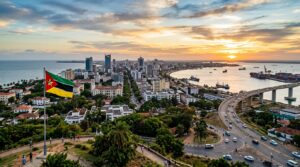
Port Louis, the capital, houses the National Assembly building, government ministries, and the Supreme Court, making it the undisputed center of Mauritian civic life — the air around its waterfront on election day carries the particular tension of a country that takes voting seriously. Power has changed hands through competitive multiparty elections since independence in 1968, with coalitions forming and dissolving between the main parties. The 2024 general election resulted in a change of government following a decisive ballot, continuing Mauritius’s record of peaceful democratic transitions.
Famous People from Mauritius
Mauritius punches above its weight culturally for an island of around 1.3 million people, producing figures recognized across sport, literature, and business — shaped by its layered Creole, Indian, Chinese, and European heritage.
- Kaya (Joseph Réginald Topize) (1960–1999) — Seggae musician who fused séga with reggae and became a countercultural icon whose death in police custody sparked the island’s most serious civil unrest in decades.
- Malcolm de Chazal (1902–1981) — Poet and painter whose aphorism collection Sens Plastique was championed by André Breton and published in Paris, bringing Mauritian French-language literature to international attention.
- Nathacha Appanah (born 1973) — Novelist whose book The Last Brother, set partly in wartime Mauritius, has been translated into over twenty languages and won multiple French literary prizes.
- Bruno Julie (born 1979) — Boxer who won a bronze medal at the 2000 Sydney Olympics, Mauritius’s first Olympic medal in any sport.
- Barlen Pyamootoo (born 1960) — Author whose debut novel Bénarès was published by Éditions de l’Olivier and translated into English, earning him recognition as one of the Indian Ocean’s most distinctive literary voices.
- Dev Virahsawmy (born 1942) — Playwright and linguist who adapted Shakespeare into Mauritian Creole and spent decades campaigning to establish Kreol Morisien as a recognized written language.
Food & Cuisine
## Food & Cuisine
Rice is the backbone of Mauritian cooking, served at almost every meal alongside a rotating cast of curries, chutneys, and pickled vegetables that reflect the island’s layered Indian, Creole, Chinese, and French inheritance. The signature dish is dholl puri — a thin, golden flatbread stuffed with ground split peas and rolled around rougaille, a tomato-based Creole sauce fragrant with thyme and garlic. Octopus curry, slow-cooked until tender in a sauce of turmeric and fresh ginger, is another staple, particularly along the coast. Mine frite, a Chinese-influenced stir-fried noodle dish tossed with vegetables and soy sauce, appears on nearly every local menu.
At roadside stalls, gato piment — small, deep-fried split-pea fritters with a crackling exterior and a faint heat from fresh chili — are the snack most visitors encounter first, sold for pocket change in Mauritian rupees (around $0.10–0.15 USD each). Phoenix beer, brewed locally since 1963, is the default drink at beach shacks and family tables alike. The north of the island, around Grand Baie, skews toward French-inflected seafood restaurants, while the interior town of Curepipe favors hearty Indian-Creole home cooking.
Sports & Recreation
## Sports & Recreation
Football is the dominant sport in Mauritius, with the national men’s team nicknamed the Club M. They have historically struggled at the Africa Cup of Nations qualifying stages, rarely advancing beyond the group rounds, though the team has shown incremental improvement under recent coaching setups. The Mauritian Premier League, played on natural-grass pitches that take a beating in the island’s humid summers, draws passionate local crowds, particularly for fixtures involving clubs like Pamplemousses SC and AS Port-Louis 2000.
Beyond football, horse racing holds a uniquely deep cultural place — the Champ de Mars racecourse in Port Louis, one of the oldest in the southern hemisphere, draws thousands on race days, filling the air with the smell of turf and the noise of the crowd. At the Olympic level, Mauritius has sent athletes to multiple Games but has not yet won a medal, with boxer Éric Milazar coming closest by reaching the quarterfinals at Athens 2004. Athletics and cycling are growing in participation, particularly among younger Mauritians.
Music & The Arts
## Music & The Arts
Mauritius has no single dominant export genre, but séga — a rhythmic coastal music built around the ravane, a goatskin frame drum struck with bare hands — remains the island’s defining sound. Contemporary artist Menwar (Jean-Claude Gaspard) spent decades pushing séga into global consciousness, blending it with rock and Creole poetry; his catalog is the closest thing the island has to a canonical archive. Younger musicians now layer séga rhythms over Afrobeats and dancehall production, a hybrid sometimes called ségatambour or séga tipik, the latter recognized by UNESCO in 2014 as intangible cultural heritage.
In literature, Ananda Devi — born in Mauritius and now based in France — writes French-language novels that have earned her the Prix des cinq continents de la Francophonie; her novel Ève de ses décombres brought Mauritian Creole street life to European readers. Visual craft traditions center on intricate model ship-building, a centuries-old trade using camphor and teak that supplies collectors worldwide and fills workshops in the village of Mahébourg.
Wildlife & Natural Wonders
## Wildlife & Natural Wonders
Mauritius is not Big Five territory — it’s an island nation whose wildlife story is almost entirely about birds and marine life. Black River Gorges National Park, covering roughly 68 square kilometers in the island’s southwest, is the stronghold of the Mauritius kestrel, a falcon that dropped to just four known individuals in the 1970s before a captive-breeding program pulled it back from the edge. Offshore, the waters around Île aux Aigrettes — a coral island nature reserve near Mahébourg — shelter giant Aldabra tortoises reintroduced as ecological proxies for the extinct Mauritian giant tortoise. The reef systems ringing the island, particularly along the west coast near Flic en Flac, glow in shades of cobalt and pale green and support hawksbill sea turtles and spinner dolphins.
The underwater plateau known as the Underwater Waterfall, a striking optical illusion off Le Morne Brabant peninsula caused by sand and silt cascading down the ocean shelf, is one of the island’s most photographed natural phenomena. Le Morne Brabant itself is a UNESCO World Heritage Site, though recognized for its cultural rather than strictly natural significance. Invasive species — particularly rats and introduced plants — remain the sharpest conservation threat to native bird populations and the island’s remaining endemic forest.
Top Things to See in Mauritius
Mauritius suits travelers who want beach time alongside genuine variety — the island pairs white-sand coastlines and turquoise lagoons with volcanic peaks, colonial history, and a multicultural capital that reflects Indian, African, French, and Chinese influences in a single afternoon’s walk.
- Le Morne Brabant (Le Morne Peninsula) — A UNESCO-listed basalt monolith rising from the southwestern tip of the island, historically a refuge for escaped enslaved people and now a symbol of resistance and freedom. Best visited May–November when skies are clear; allow half a day including the moderate hike to the summit ridge.
- Chamarel Seven Colored Earths (Rivière Noire District) — A small but striking geological formation where volcanic soil has settled into seven distinct bands of color — red, brown, violet, green, blue, purple, and yellow — that resist blending even after rain. Pairs well with the nearby Chamarel Rum Distillery; budget two to three hours for both.
- Blue Bay Marine Park (Blue Bay, Mahébourg) — The island’s most protected coral reef area, with glass-bottom boat tours and snorkeling over staghorn coral and sea turtles in water shallow enough to see the bottom clearly. Go between May and December to avoid cyclone-season swells; half a day is enough.
- Aapravasi Ghat (Port Louis) — A UNESCO World Heritage Site on the Port Louis waterfront where more than 500,000 indentured laborers arrived from India, China, and East Africa after 1834. The small museum on-site contextualizes the site’s role in post-slavery labor history; allow 45–90 minutes.
- Port Louis Waterfront & Central Market (Port Louis) — The capital’s covered Central Market on Farquhar Street sells spices, street food, and local crafts and has operated continuously since the 19th century; the adjacent waterfront precinct adds modern restaurants and the Blue Penny Museum. Best on a weekday morning before the lunch crowd; two to three hours covers both comfortably.
- Black River Gorges National Park (Rivière Noire District) — The island’s largest protected area, covering around 6,500 hectares of native forest and home to the Mauritius kestrel and pink pigeon, both pulled back from near-extinction. Trailheads near Pétrin are accessible by car; a full-day hike to Alexandra Falls and back rewards with forest canopy and valley views.
- Île aux Cerfs (Trou d’Eau Douce, East Coast)
Visa & Travel Tips
## Visa & Travel Tips
Mauritius operates a generous visa-on-arrival policy for citizens of most countries, including the US, UK, and EU member states, who receive up to 60 days free of charge on arrival. Travelers from ECOWAS nations are similarly admitted without a prior visa. Requirements shift regularly, so confirm current rules with the Mauritian embassy or your own government’s travel portal before booking. Sir Seewoosagur Ramgoolam International Airport (SSR), near Mahébourg on the southeast coast, is the single main gateway; Air Mauritius, Air France, and Emirates are among the largest carriers connecting the island to Europe, Africa, and the Gulf.
The Mauritian rupee (₨) is the only legal tender — around ₨45 to $1 USD at recent rates — and while major hotels and restaurants in Grand Baie or Port Louis accept Visa and Mastercard, smaller vendors and market stalls strongly prefer cash. ATMs are reliable in towns and at the airport; mobile money services like M-Pesa or MTN MoMo are not widely used here. The country is generally low-risk for tourists, but check your government’s official travel advisory for the latest guidance. Mauritius runs on UTC+04:00, the international dialing code is +230, and most sockets use Type G plugs (the three-pin British standard), though Type C adapters are common in older buildings. Getting a local SIM or eSIM sorted early will make navigating all of this considerably smoother.
Staying Connected: Internet & eSIM in Mauritius
Mauritius has solid mobile infrastructure for an island nation. The three main operators — Orange, Emtel, and MTML (trading as Chili) — cover the entire coastal belt and most inland areas with 4G LTE. Orange has begun rolling out 5G in Port Louis and the northwestern corridor around Grand Baie, though rural villages in the interior and some eastern beaches still drop to 3G. Coverage gaps are rare but worth noting if you’re staying somewhere remote like Rodrigues Island.
At Sir Seewoosagur Ramgoolam International Airport, all three operators run SIM kiosks in the arrivals hall. Expect to hand over your passport for mandatory registration; activation typically takes under 15 minutes. A tourist SIM with 10–15 GB of data runs approximately ₨500–₨800 (around $11–$18), depending on the operator and validity period. For a faster start, an eSIM activates before your flight lands — no kiosk, no queue, no roaming shock on arrival — and works on any iPhone XS or later and most recent Android flagships. Wi-Fi is reliably available at hotels across Grand Baie, Flic en Flac, and Port Louis, and at most established cafés.