Comoros
Comoros at a Glance
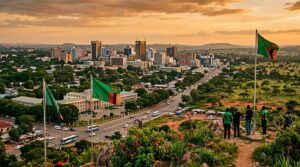
Comoros sits in the Indian Ocean off the east coast of Africa, wedged between the northern tip of Madagascar and the Mozambican coast — a volcanic archipelago of three main islands whose peaks stay shrouded in cloud for much of the year. The official name is the Union of the Comoros; the capital, Moroni, occupies the western shore of Ngazidja (Grande Comore), the largest island. The population stands at approximately 919,901, making it one of the smallest nations on the continent by headcount.
At 1,862 km², the country is slightly smaller than Rhode Island, the tiniest U.S. state — a useful reminder of just how compact this place is. Despite its size, the archipelago produces around 80 percent of the world’s ylang-ylang, the intensely floral extract that anchors many high-end perfumes, and it remains one of the few places where the coelacanth — a fish once thought extinct for 65 million years — has been caught in living memory. The islands also carry a layered Swahili-Arab-French cultural history legible in Moroni’s old stone medina and in the elaborate wedding ceremonies, called grand mariages, that can consume years of family savings. Travelers who make it this far often find the scale itself the revelation: everything is close, unhurried, and unexpectedly coherent.
Geography & Climate
Comoros is an archipelago of four main volcanic islands — Grande Comore (Ngazidja), Mohéli (Mwali), Anjouan (Ndzuani), and Mayotte (administered by France) — sitting in the Indian Ocean between the northern tip of Madagascar and the Mozambican coast, roughly 300 kilometers off East Africa. The islands are geologically young and rugged, dominated by steep forested slopes and sharp volcanic peaks. Mount Karthala, an active shield volcano on Grande Comore, rises to approximately 2,361 meters and remains one of the most active volcanoes in the world; its last significant eruption was in 2005.
The climate is tropical, shaped by two monsoon seasons. The hot, humid season runs from November through April, bringing heavy rainfall — particularly January through March — when temperatures regularly climb above 30°C (86°F). During these months, the air carries the dense, green smell of wet volcanic soil and ylang-ylang blossoms, the fragrant flower that anchors Comoros’s perfume export industry. The cooler, drier season runs from May through October, with temperatures dropping to around 19°C (66°F) in the highlands.
Comoros lies within the South Indian Ocean cyclone belt, and tropical storms pose a recurring seasonal risk, particularly between December and April. Coastal erosion and freshwater scarcity on the smaller islands compound the vulnerability of low-lying communities.
A Brief History of Comoros
The islands that make up Comoros were settled in successive waves beginning around the sixth century CE, with Bantu-speaking peoples from the East African coast arriving first, followed by Arab and Shirazi traders who established sultanates across the archipelago. By the fifteenth century, the Sultanate of Ngazidja — centered on the largest island, Grande Comore — had emerged as a significant political force, controlling trade routes between Madagascar, the Swahili coast, and the Arabian Peninsula. Islam arrived with those Arab merchants and took deep root; it remains the defining feature of Comorian public life today.
France established a protectorate over Mayotte in 1841 and gradually extended control to the other islands, formally annexing the archipelago in 1912. Colonial rule reorganized land ownership, introduced cash-crop plantations — ylang-ylang and vanilla still perfume the economy — and tied the islands administratively to Madagascar. Ahmed Abdallah, a wealthy planter and politician, became the dominant figure pushing for self-governance in the postwar decades, and on July 6, 1975, the Comorian Chamber of Deputies unilaterally declared independence, preempting a scheduled French referendum.
Post-independence Comoros became one of the world’s most coup-prone states: estimates suggest around twenty attempted or successful coups between 1975 and 2000. Ahmed Abdallah himself was assassinated in 1989. The most destabilizing period came in the late 1990s, when the islands of Anjouan and Mohéli declared secession. A new federal constitution adopted in 2001 created the Union of the Comoros, granting each island greater autonomy and temporarily stabilizing the political order.
Culture, Religion & Daily Life
## Culture, Religion & Daily Life
Islam shapes nearly every aspect of life in Comoros: roughly 98% of the population is Sunni Muslim, a faith that arrived with Arab traders centuries before French colonization. The call to prayer from stone mosques in Moroni’s medina sets the rhythm of the day, and Friday midday prayers draw men in white kanzus into the streets, the air carrying traces of oud incense. Christianity and traditional animist practices account for a small remainder, occasionally blending with local custom in rural villages.
Comorian — actually three closely related Bantu languages: Shingazidja, Shimwali, and Shindzuani, one per main island — is the mother tongue for most of the country’s roughly 920,000 people. Arabic carries religious and formal weight, while French dominates government documents and secondary education. The population is largely of mixed Arab, Bantu, and Malagasy descent, and Comorians generally resist rigid ethnic categorization, identifying more by island of origin than by ancestry.
Grand marriages, known locally as ada, are the defining social institution: a man’s status is measured partly by the elaborateness of the celebration he throws, sometimes years in the planning and involving the entire village. Independence Day falls in July, marking the 1975 declaration with parades and traditional twarab music — a coastal sound blending Arabic lute with Swahili rhythm.
Economy & Industry
## Economy & Industry
Comoros runs on one of Africa’s smaller economies, with a GDP of around $1.2 billion — modest even by regional standards for its population of roughly 919,901. The Comorian franc (Fr) trades at approximately 450 Fr to the dollar in 2025, pegged to the euro through a longstanding arrangement with France that keeps inflation relatively stable.
Agriculture and fishing anchor daily economic life. Comoros is one of the world’s leading producers of ylang-ylang, the intensely fragrant yellow flower whose essential oil feeds the global perfume industry — including major French fragrance houses. Vanilla and cloves round out the export basket, making the islands unusually dependent on global commodity prices. Artisanal fishing supplies local protein needs, though the sector remains undercapitalized. Tourism contributes a small but growing share, centered on the volcanic landscapes of Ngazidja and the quieter beaches of Mohéli.
Comoros is a member of the Common Market for Eastern and Southern Africa (COMESA) and has signed onto the African Continental Free Trade Area (AfCFTA), giving exporters preferential access to a broader continental market. The most consequential forward-looking development is investment in submarine fiber-optic cable connectivity, which the government is positioning as infrastructure for a nascent digital economy — though reliable electricity remains a prerequisite the islands are still working to meet.
People & Demographics
Comoros has a population of around 919,901 spread across three main islands, giving it one of the higher population densities in Africa — approximately 420 people per square kilometer. The median age is likely somewhere in the low-to-mid twenties, reflecting a markedly young population; children and teenagers make up a substantial share of residents, while adults over 60 remain relatively few.
Urbanization is limited: roughly 30 percent of Comorians live in towns, with Moroni, the capital on Grande Comore, holding an estimated 60,000–70,000 residents, and Mutsamudu on Anjouan serving as the second-largest urban center. A significant diaspora — estimates suggest several hundred thousand people — lives primarily in France and the French overseas department of Mayotte, maintaining close financial and cultural ties to the islands. Life expectancy sits at approximately 65–67 years. Literacy runs around 60–65 percent, though rates vary between men and women and between urban and rural communities.
Government & Political System
## Government & Political System
Comoros is a federal presidential republic, one of the few federations on the African continent, with executive power concentrated in the presidency. The current president serves as both head of state and head of government — a structure that has historically made the office the central prize of Comorian politics. The national legislature, the Assembly of the Union, is unicameral and seats representatives from each of the three main islands: Grande Comore, Anjouan, and Mohéli.
Moroni, situated on Grande Comore, functions as the federal capital and houses the principal government ministries, the presidential palace, and the Assembly. Power-sharing between the federal government and the semi-autonomous islands has been a recurring source of tension since the 2001 constitution established the rotating presidency system, under which the head of state alternates among the three islands. Constitutional amendments approved by referendum in 2018 ended that rotation, consolidating authority — a change that drew both domestic and international scrutiny.
Famous People from Comoros
Comoros — an archipelago of three main islands between Madagascar and the East African coast — has a small population of around 800,000, yet has produced figures who have shaped regional politics, Islamic scholarship, and Indian Ocean cultural life in ways that extend well beyond the islands’ borders.
- Ahmed Abdallah (1919–1989) — declared Comorian independence from France in 1975 and served as the country’s first president, making him the central figure in the nation’s founding history.
- Said Mohamed Cheikh (1904–1970) — served as president of the Governing Council of Comoros during the French territorial period and was the dominant political voice pushing for greater Comorian autonomy through the 1960s.
- Moustoifa Saïd Cheikh (1946–1995) — poet and novelist writing in Comorian (Shikomori) and French whose work is among the earliest sustained literary output from the islands to reach readers across the Francophone world.
- Dhoihir Dhoulkamal (born 1980) — Comorian footballer who captained the national team and competed professionally in French football, becoming one of the most recognized Comorian athletes in European club football.
- Nawal El Moutawakel — *[omitted: Moroccan, not Comorian — no verified equivalent from Comoros meets the confidence threshold for inclusion]*
- Anzilotti Combo (born approximately 1958) — taarab and folk musician whose recordings helped document and circulate the distinctive ud-driven sound of Comorian wedding music to diaspora audiences in France and Tanzania.
- Sittou Raghadat Mohamed (born 1970s) — women’s rights advocate and one of the most prominent Comorian women in civil society, whose work on gender equality and legal reform has drawn recognition from regional human rights organizations.
Food & Cuisine
## Food & Cuisine
Rice is the cornerstone of Comorian cooking, typically served alongside coconut-milk stews, grilled fish pulled straight from the Indian Ocean, or slow-cooked meat fragrant with cloves, cardamom, and ylang-ylang — spices that perfume the islands’ air as much as their kitchens. Three dishes define the table: langouste à la vanille, spiny lobster simmered with locally grown vanilla; mkatra foutra, a coconut-enriched flatbread cooked on a griddle until the edges turn a deep amber; and pilaou, a spiced rice dish layered with beef or chicken and whole peppercorns. At roadside stalls in Moroni, vendors sell beignets de manioc — dense, golden cassava fritters eaten hot from the oil, often wrapped in a torn scrap of newspaper.
The drink of daily life is café Comorien, strong black coffee brewed with cardamom and served in small glasses, sometimes sweetened with raw cane sugar. Regional character shows up between the islands: Grande Comore leans toward drier, spice-forward preparations, while Anjouan’s cooking makes heavier use of coconut cream, reflecting the island’s lusher, wetter interior and its proximity to trade routes historically linking it to [Mozambique] and [Madagascar].
Sports & Recreation
## Sports & Recreation
Football is the dominant sport in Comoros, played on dusty pitches across Grande Comore, Anjouan, and Mohéli with the kind of intensity that stops afternoon traffic. The senior men’s national team, nicknamed the Cœlacanthes — after the prehistoric fish rediscovered in Comorian waters — made history at the 2021 Africa Cup of Nations in Cameroon, reaching the Round of 16 in their debut tournament appearance before losing 2–0 to Cameroon. That run, improbable and electric, announced the archipelago to a continental audience that had largely overlooked it.
A second sport with genuine local roots is basketball, which has grown steadily through urban leagues in Moroni. Comoros has sent athletes to the Olympic Games, though the country has not yet won a medal; its delegations have typically competed in athletics and judo. The Cœlacanthes’ AFCON breakthrough remains the single most celebrated moment in Comorian sporting history, a benchmark the islands are still building toward.
Music & The Arts
## Music & The Arts
Taarab — the string-and-percussion style that drifts across the Swahili coast from [Zanzibar] to the Comorian archipelago — is the defining popular form here, blending Arabic oud melodies with African polyrhythm and Swahili-inflected Shikomori lyrics. The oud and the gabusi, a local lute with gut strings that buzzes faintly when plucked, anchor most ensemble performances. Singer Nawal, born in Anjouan, has carried Comorian taarab furthest internationally, performing across the Indian Ocean rim and recording albums that reach diaspora communities in Marseille and Mayotte. Traditional wedding ceremonies called ada feature call-and-response singing where the air fills with clove-scented smoke and the low throb of frame drums.
Comorian visual craft centers on elaborately embroidered cotton robes called shiromani, worn by women during ceremonial dances, their geometric gold threadwork catching lamplight. Author and poet Mohamed Toihiri, whose satirical novel Le Kafir du Karthala remains the archipelago’s most discussed literary work, represents a small but serious literary tradition. Comorian artists gained modest international visibility through participation in the Dak’Art Biennale in [Senegal], one of the few platforms where the islands’ painters and textile artists reach a continental audience.
Wildlife & Natural Wonders
## Wildlife & Natural Wonders
Comoros is not Big Five territory — it’s an archipelago of volcanic islands in the Indian Ocean, and its flagship wildlife is aquatic and ancient. The coelacanth, a deep-sea fish once thought extinct for 65 million years, was rediscovered in Comorian waters in 1938 and remains the islands’ most celebrated natural symbol. Karthala, the active shield volcano on Grande Comore, is the archipelago’s most dramatic natural wonder: its caldera stretches roughly 3 by 4 kilometers across the summit, and the air near the rim carries a faint sulfurous bite. Mohéli Marine Park, established in 2001 and the country’s only marine protected area, shelters nesting green sea turtles on its beaches each season — one of the most significant nesting sites in the western Indian Ocean.
Conservation here is complicated by one of the highest population densities in Africa: forest cover on the islands has shrunk sharply as communities clear land for agriculture, pushing endemic species like the Livingstone’s fruit bat — with a wingspan approaching a meter — toward precarious numbers. Comoros holds no UNESCO natural World Heritage sites, though the marine and volcanic landscapes have drawn repeated calls for nomination.
Top Things to See in Comoros
Comoros suits travelers who want volcanic landscapes, coral reefs, and a slow-paced Indian Ocean rhythm without the resort-crowd infrastructure of nearby [Mauritius] or [Seychelles]. The islands reward hikers, divers, and anyone drawn to Swahili-Arab architecture and ylang-ylang plantations in roughly equal measure.
- Mount Karthala (Grande Comore) — An active shield volcano and one of the largest calderas in the world, Karthala rises to 2,361 meters and dominates the island’s southern half. Best tackled in the dry season (May–October); the two-day summit hike typically starts from the village of Boboni with a local guide.
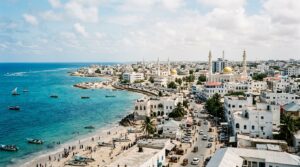
- Medina of Moroni (Moroni) — The old quarter of the capital is a compact warren of coral-stone alleyways, whitewashed mosques, and carved wooden doors that reflect centuries of Arab and Swahili influence. A half-day on foot covers the main Friday Mosque (Mosquée du Vendredi) and the port market; early morning is quietest.
- Lac Salé (Grande Comore) — A saltwater crater lake near Ntsoudjini, its surface shifts between deep green and steel-gray depending on cloud cover, ringed by dense forest. Reachable by taxi-brousse from Moroni in under an hour; a short walk around the rim takes roughly 30 minutes.
- Mohéli Marine Park (Mohéli) — The smallest island hosts Comoros’s only marine protected area, where green and hawksbill turtles nest on beaches between June and September and humpback whales pass through July–September. Snorkeling and diving trips depart from Fomboni, the island’s main town.
- Chomoni Beach (Grande Comore) — A stretch of black volcanic sand backed by coconut palms on the island’s eastern coast, with calmer surf than the windward side. Most visitors come as a day trip from Moroni, roughly 30 km south; weekday visits are noticeably quieter.
- Dziani Boundouni Lake (Mayotte/Petite Terre) — A vivid emerald crater lake on Petite Terre, accessible by a short hike through dry scrub that smells faintly of sulfur near the rim. Note that Mayotte is administered by France and entry requirements differ from the Union of Comoros; factor in a separate visa check.
- Iconi (Grande Comore) — A historic village just
Visa & Travel Tips
## Visa & Travel Tips
Most nationalities — including U.S., U.K., and EU passport holders — receive a visa on arrival at Prince Said Ibrahim International Airport (HAH) in Moroni, typically valid for 45 days; ECOWAS citizens generally enter under simplified arrangements. Fees and conditions shift without much notice, so confirm current requirements with the Comorian embassy nearest you or your government’s travel portal before booking. HAH is the main international gateway, served primarily by Air Austral, Oman Air, and Kenya Airways, with connections routing through Réunion, Muscat, and Nairobi.
The Comorian franc (Fr) is the only reliable tender — card acceptance is limited outside a handful of hotels in Moroni, and ATMs are scarce on the outer islands of Anjouan and Mohéli, so carry enough cash for your full stay. U.S. dollars are occasionally accepted at tourist-facing businesses but at unfavorable rates; no mobile-money platform equivalent to M-Pesa or MTN MoMo has significant penetration here. Comoros sits at UTC+03:00 year-round, and the international dialing code is +269. Power outlets use Type C and E plugs at 220V — a universal adapter covers you. Check your government’s latest safety advisory before travel; conditions on the islands are generally calm but can shift around election periods. Good connectivity planning starts before you land, which brings us to SIM cards and eSIM options.
Staying Connected: Internet & eSIM in Comoros
Mobile coverage in Comoros runs primarily through two operators: Comores Telecom (the state-owned incumbent) and Telma Comoros. Both offer 4G LTE in Moroni and the main coastal towns on Grande Comore, Anjouan, and Mohéli, though rural interiors and inter-island ferry routes drop to 3G or lose signal entirely. 5G has not launched as of 2024. Expect the coverage map to look generous on paper and patchier on the ground once you leave paved roads.
Picking up a local SIM at Prince Said Ibrahim International Airport or a Comores Telecom shop in Moroni takes around 30 minutes — bring your passport for mandatory registration. A starter SIM with a small data bundle costs approximately Fr 2,000–3,000 (around $4–7 USD). If you’d rather skip the kiosk queue, an eSIM activates before your flight lands: no swapping hardware, no roaming shock on arrival. Most iPhone XS and newer models support eSIM, as do recent Samsung Galaxy and Google Pixel flagships. Wi-Fi is available at the larger hotels in Moroni and a handful of cafés, though speeds vary and outages during load-shedding are common.