Eritrea
Eritrea at a Glance
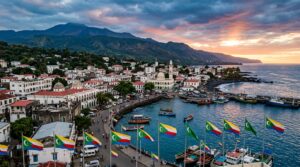
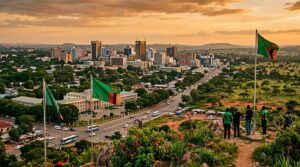
Eritrea sits at the horn of Africa’s northern shoulder, where the Red Sea coast stretches roughly 2,000 kilometers and separates the country from the Arabian Peninsula. Officially the State of Eritrea, its capital is Asmara — a city whose Italian Modernist architecture earned it UNESCO World Heritage status in 2017 — and the population stands at approximately 3,607,000. At 117,600 km², the country is slightly smaller than England and Scotland combined, a compact footprint that nonetheless contains dramatic contrasts: scorching Danakil lowlands, highland plateaus above 2,000 meters, and a reef-lined coastline.
The country is known for its cycling culture — the Eritrean national team has produced world-class riders including Biniam Girmay, who won a stage at the 2022 Giro d’Italia — for the well-preserved Art Deco and Futurist streetscapes of Asmara’s downtown, and for a fiercely independent political history that includes a 30-year liberation struggle ending in 1991. The cuisine shares the injera-and-zigni tradition of neighboring [Ethiopia] but carries its own coastal inflection, with grilled fish common along the Massawa waterfront. Readers who assume this is simply a harder-to-reach version of its southern neighbor tend to leave surprised by how distinct the place actually feels.
Geography & Climate
Eritrea sits in the Horn of Africa, bordered by Sudan to the north and west, Ethiopia to the south, and Djibouti to the southeast. Its eastern edge runs along roughly 2,000 kilometers of Red Sea coastline, giving the country a long maritime frontier that shapes both its economy and its climate. The Dahlak Archipelago — a scatter of coral islands off the coast near Massawa — extends that presence further into the sea.
The terrain divides into three distinct bands. A narrow, scorching coastal plain gives way to the central highlands, where the Eritrean Plateau rises to elevations above 2,000 meters; Emba Soira, the country’s highest peak at around 3,018 meters, sits within this range. To the west, the land drops into a drier lowland zone that blurs into the Sahel. In the highland capital, Asmara — located at approximately 15°N, 39°E — the air carries a cool, thin quality even in midsummer, a surprise to visitors expecting equatorial heat.
Climate varies sharply by zone. The highlands see a main rainy season from June through September, with temperatures typically between 5°C and 25°C year-round. Coastal Massawa is one of the hottest inhabited cities on Earth, regularly exceeding 40°C in summer. The western lowlands receive less than 400 mm of rain annually. Drought is a recurring risk, particularly in the western and northern lowlands.
A Brief History of Eritrea
The territory now called Eritrea has been inhabited since antiquity. The ancient port of Adulis, on the Red Sea coast, served as a key trading hub for the Aksumite Empire — one of the great powers of the ancient world, which dominated the region from roughly the first through seventh centuries CE. Aksumite merchants moved ivory, gold, and spices through Adulis to markets as far as Rome and India. After Aksum’s decline, the region passed through successive periods of rule by local sultanates and the Ottoman Empire, which controlled much of the coastline from the sixteenth century onward.
Italy colonized Eritrea beginning in 1890, consolidating control over territory it had been acquiring since 1882. The Italians built Asmara into a modernist showcase city, constructed roads and railways, and imposed a racial hierarchy that privileged Italian settlers. After Italy’s defeat in World War II, the United Nations federated Eritrea with Ethiopia in 1952; Ethiopia then annexed it outright in 1962, triggering a decades-long independence struggle led primarily by the Eritrean People’s Liberation Front (EPLF) under Isaias Afwerki.
Eritrea formally achieved independence on May 24, 1993, following a UN-supervised referendum in which around 99 percent voted for separation. The early years brought cautious optimism, but a brutal border war with Ethiopia from 1998 to 2000 killed tens of thousands and left the boundary unresolved for nearly two decades. A peace agreement signed in 2018 between Isaias Afwerki and Ethiopian Prime Minister Abiy Ahmed ended the formal state of conflict, though Eritrea remains one of the world’s most closed political systems.
Culture, Religion & Daily Life
## Culture, Religion & Daily Life
Eritrea is roughly split between Christianity and Islam, with the Eritrean Orthodox Tewahedo Church claiming the largest single share of adherents — concentrated mainly in the highlands — and Sunni Islam predominant along the coast and lowlands. Smaller communities practice Catholicism, Lutheranism, and traditional beliefs. The country recognizes no single state religion, though the government tightly regulates religious institutions.
Tigrinya is the most widely spoken language and serves as the primary working language alongside Arabic and English, both of which carry official status. Eritrea is home to nine recognized ethnic groups — among them the Tigrinya, Tigre, and Saho peoples — and approximately nine distinct indigenous languages reflect that diversity, each tied to a specific community and region.
Daily life in Asmara, the capital, carries a particular rhythm around the late-afternoon passeggiata along Harnet Avenue, where families and friends stroll past Italian-era art deco facades as the temperature cools. Coffee is rarely rushed: the traditional bun ceremony — green beans roasted tableside over charcoal, the smoke drifting through the room before the first cup is poured — marks hospitality in homes across the highlands. Independence Day, celebrated each May 24th, draws crowds into the streets with music, military parades, and the particular pride of a country that won its sovereignty through a 30-year struggle.
Economy & Industry
## Economy & Industry
Eritrea’s economy is one of the most closed and centrally controlled on the continent, with a GDP estimated at around $2–3 billion — a figure that reflects both its small population of approximately 3,607,000 and decades of post-independence isolation. The currency is the Eritrean nakfa (Nfk), exchanging at approximately 15 Nfk to the dollar at the official rate in 2025, though parallel market rates diverge significantly.
Mining is the single most consequential sector. The Bisha mine, operated historically by Canada’s Nevsun Resources before its acquisition by Zijin Mining, extracts gold, copper, and zinc for export — these metals represent Eritrea’s primary hard-currency earner. Agriculture, mostly subsistence-level sorghum and millet farming in the highlands around Asmara, employs the majority of the workforce but contributes modestly to formal GDP. Fisheries along the Red Sea coast hold underexploited potential, with dried and fresh fish moving through the port of Massawa.
Eritrea remains outside ECOWAS, SADC, and the East African Community, and its participation in AfCFTA frameworks is limited by its broader diplomatic posture. The most consequential forward-looking development is the gradual rehabilitation of the Massawa–Asmara railway corridor, a colonial-era narrow-gauge line that, if restored to freight capacity, could meaningfully reduce the country’s dependence on road transport for coastal trade.
People & Demographics
Eritrea’s population stands at approximately 3,607,000, spread across a land area roughly the size of Pennsylvania, yielding a density of around 35 people per square kilometer. The median age is estimated somewhere in the low-to-mid twenties, reflecting a notably young population — a pattern common across the Horn of Africa. Life expectancy is approximately 67 years, and literacy rates are around 76 percent, though both figures vary across sources and by gender.
Urbanization remains relatively low, with perhaps a quarter to a third of Eritreans living in cities. Asmara, the capital, is by far the largest urban center, home to an estimated 800,000 to 1 million people; Keren, a market town in the Anseba region, and the port city of Massawa are the next most significant. Eritrea’s diaspora is substantial relative to its population — large communities have settled in Ethiopia (historically), Sudan, Germany, the United States, and the United Kingdom, shaped largely by decades of conflict and ongoing emigration.
Government & Political System
## Government & Political System
Eritrea is a single-party presidential republic, though in practice it operates without functioning democratic institutions. The current president — Isaias Afwerki, who has held power since independence in 1993 — serves as both head of state and head of government. The People’s Front for Democracy and Justice (PFDJ) is the only legally permitted political party. The constitution ratified in 1997 has never been implemented, and no national elections have been held since independence.
The National Assembly, a unicameral legislature, exists on paper but has not convened since 2002, leaving executive authority effectively concentrated in the presidency. Asmara, the capital, functions as the administrative center of the country, housing all central government ministries and federal offices. Power has not changed hands through any electoral process; Afwerki’s continued rule reflects a political structure in which formal mechanisms for transition — term limits, scheduled elections — remain suspended indefinitely.
Famous People from Eritrea
Eritrea’s international profile punches above its size, shaped largely by long-distance runners who have dominated global podiums, a diaspora that carries its culture across continents, and a handful of artists and activists whose work has reached audiences far beyond the Horn of Africa.
- Zersenay Tadese (1982–) — Eritrea’s most decorated track athlete, he won the 2007 World Cross Country Championship and held the half-marathon world record from 2010 to 2016.
- Ghirmay Ghebreslassie (1995–) — became the youngest man ever to win the New York City Marathon (2016) and claimed gold at the 2015 World Marathon Majors series.
- Dawit Isaak (1964–) — Swedish-Eritrean journalist and co-founder of the independent newspaper Setit, he has been imprisoned without trial since 2001 and is one of the world’s longest-held journalists, the subject of sustained international press-freedom campaigns.
- Abraham Afewerki (1966–2006) — singer and composer whose blend of Tigrinya lyrics with Arabic and Western pop instrumentation made him the most beloved popular musician in Eritrean history.
- Yirgalem Fisseha Mebrahtu (1984–) — poet and radio journalist imprisoned in 2009 for her writing; her case drew sustained attention from PEN International and human rights organizations worldwide.
- Meb Keflezighi (1975–) — Eritrean-born American runner who won the 2004 Olympic marathon silver medal and became the first American man to win the Boston Marathon (2014) in three decades.
- Haben Girma (1988–) — Eritrean-American disability rights lawyer and the first deafblind graduate of Harvard Law School, recognized by President Obama as a White House Champion of Change.
Food & Cuisine
## Food & Cuisine
Injera — the same spongy, faintly sour sourdough flatbread found across the border in [Ethiopia] — is Eritrea’s daily staple, though Eritreans make theirs with a higher proportion of sorghum or barley alongside teff, giving it a slightly darker color and earthier bite. It arrives at the table as both plate and utensil, blanketed with zigni, a slow-cooked beef stew deep red from berbere spice paste, or with tsebhi dorho, a rich chicken and hard-boiled egg braise simmered until the sauce clings. Shiro — a smooth, warmly spiced chickpea flour stew — rounds out the everyday repertoire, often eaten for breakfast alongside a glass of hot, cardamom-scented shai tea.
Street stalls in Asmara, particularly around the Medebar market, sell himbasha, a slightly sweet, round flatbread stamped with decorative patterns and baked in a clay oven — the smell of it toasting carries half a block. Along the Red Sea coast near Massawa, the cuisine shifts noticeably: fresh fish grilled with cumin and chili replaces the highland stews, and rice cooked with tomato and spices substitutes for injera, reflecting the port city’s long ties to Arabian and Ottoman trading routes.
Sports & Recreation
## Sports & Recreation
Cycling, not football, is Eritrea’s defining sport — a fact that surprises many outsiders but makes sense to anyone who has watched riders train on the steep switchbacks above Asmara. The national football team, nicknamed the Red Sea Boys, has made limited impact at the Africa Cup of Nations; Eritrea has rarely qualified for the tournament’s final stages and remains one of the continent’s less prominent footballing nations. Far more celebrated is cyclist Biniam Girmay, who in 2022 became the first Black African rider to win a stage at a Grand Tour when he took Stage 10 of the Giro d’Italia — a moment that stopped traffic in Asmara.
Distance running is the second pillar of Eritrean sport, producing athletes who compete seriously at world cross-country and track events. At the Olympics, Eritrea has won no medals to date, though its runners and cyclists have reached finals and earned top-ten finishes across multiple Games, signaling a program still building toward the podium.
Music & The Arts
## Music & The Arts
Eritrean popular music is rooted in a style called tigrigna music — melodic, percussion-forward songs built around the krar, a six-stringed lyre whose bright, plucked tone anchors both wedding celebrations and political memory. The shambiko, a traditional end-blown flute, adds a reedy counterpoint in highland folk performance. Contemporary artist Helen Meles, sometimes called the queen of Eritrean music, has carried this sound beyond the Horn of Africa through diaspora networks in Europe and North America, blending tigrigna vocals with modern arrangements on albums like Hiji Dea. The oud also appears in lowland Eritrean music, reflecting centuries of Red Sea cultural exchange with [Yemen] and [Sudan].
Eritrea’s literary voice is quieter internationally, though Sulaiman Addonia — born in an Eritrean refugee camp and raised between [Ethiopia], Saudi Arabia, and London — has earned serious recognition for his novel The Consequences of Love. In visual craft, Eritrean women produce intricate woven basketry using dyed palm leaves, geometric patterns that function as both household objects and portable art. Asmara’s modernist architecture, a remarkably intact collection of Italian rationalist and Art Deco buildings, was inscribed as a UNESCO World Heritage Site in 2017 — arguably Eritrea’s most visible cultural-export moment to date.
Wildlife & Natural Wonders
## Wildlife & Natural Wonders
Eritrea is not a Big Five destination, but its Red Sea coastline and the Dahlak Archipelago — a sprawling chain of around 200 islands — make it one of East Africa’s quieter marine wildlife draws. The archipelago’s shallow lagoons shelter dugongs, hawksbill turtles, and reef sharks, while the coral gardens support fish diversity comparable to the wider Red Sea ecosystem. Semenawi Bahri National Park, in the cooler highland escarpment north of Asmara, protects Eritrea’s remnant patches of Afromontane forest and is one of the few places in the country where olive baboons and klipspringers can still be spotted in reasonable numbers.
Inland, the Danakil Depression — shared with [Ethiopia] — extends into Eritrea’s southwestern lowlands, offering a raw geological spectacle: salt flats, sulfurous hot springs, and terrain that feels more lunar than terrestrial. Habitat loss driven by subsistence farming pressure and prolonged drought cycles remains the primary conservation challenge across all ecosystems. Eritrea currently has no natural UNESCO World Heritage Sites, though the Dahlak Archipelago has been discussed as a candidate for nomination.
Top Things to See in Eritrea
Eritrea suits travelers drawn to layered history, striking modernist architecture, and a Red Sea coastline that sees relatively few foreign visitors. It’s a compact country where a single trip can move from Italian-era boulevards to ancient stelae fields to coral reefs — often without long distances between them.
- Asmara City Center (Asmara) — A UNESCO World Heritage Site since 2017, Asmara’s downtown preserves one of the world’s most intact collections of 1930s Italian Modernist, Futurist, and Art Deco buildings, including the Fiat Tagliero service station with its winglike cantilevered roof. Best visited on foot in the cooler dry season (October–February); a thorough walk takes half a day.
- Dahlak Archipelago (Red Sea Coast) — An archipelago of over 200 islands off the coast near Massawa, known for clear water, coral reefs, and dugong sightings; most islands are uninhabited and accessible only by chartered boat. Diving and snorkeling are best November through March; liveaboard trips depart from Massawa.
- Massawa Old Town (Massawa) — A port city whose Ottoman- and Egyptian-era coral-stone buildings, including the Imperial Palace of Haile Selassie, carry centuries of Red Sea trade history in their salt-bleached walls. Reachable from Asmara by the scenic Asmara–Massawa road in about two hours; mornings are cooler and quieter.
- Qohaito Archaeological Site (Southern Region) — A highland plateau site containing the ruins of an ancient Aksumite-era city, including the Dam of Saphira and standing stelae, set against a dramatic escarpment landscape. Requires a local guide and permit; the drive from Asmara takes around three hours on a paved then gravel road.
- Adulis (near Zula, Red Sea Coast) — One of the most significant ancient port cities on the Red Sea, Adulis was a major trading hub of the Aksumite Empire and is still being excavated; visible ruins include structural foundations and imported ceramics. Accessible by 4WD from Massawa; visits are typically half a day and best arranged through a licensed Asmara tour operator.
- Filfil Solomuna (Northern Red Sea Region) — A rare patch of lowland subtropical forest northeast of Asmara, home to olive baboons, green monkeys, and dense canopy that smells of damp earth and wild fig — unusual in
Visa & Travel Tips
## Visa & Travel Tips
Eritrea does not offer visas on arrival or an e-visa portal — all visitors must obtain a visa in advance through an Eritrean embassy or consulate. US and UK nationals, along with most EU passport holders, go through this embassy-only route; processing times and fees vary by location, so confirm requirements directly with the nearest mission well before travel, as policies shift without much notice. Asmara Yohannes IV International Airport (ASM) is the sole international gateway, served primarily by Eritrean Airlines and Egyptian Air on regional routes. Bring sufficient US dollars (USD) to exchange into Eritrean nakfa (Nfk) on arrival — card payments are effectively nonexistent outside a handful of Asmara hotels, ATMs are unreliable for foreign cards, and mobile money services like M-Pesa or MTN MoMo have no footprint here.
The government maintains strict controls on movement outside Asmara, and several countries issue “exercise a high degree of caution” advisories; check your own government’s official travel guidance before booking. Eritrea runs on UTC+03:00 year-round, and the international dialling code is +291. Power sockets use Type C and Type L plugs at 230V, so pack a universal adapter. Staying connected on the ground is its own challenge — which the next section on SIM cards and eSIM options covers in full.
Staying Connected: Internet & eSIM in Eritrea
Eritrea’s mobile landscape is limited by regional standards. The state-owned operator EriTel (country code +291) holds a monopoly — there is no MTN, Airtel, or Vodacom presence. Coverage is largely 2G and 3G, with 4G available in Asmara and a handful of larger towns; 5G does not exist here. Rural areas, including much of the Danakil lowlands and the western plains, have sparse or no signal at all.
Buying a local SIM at Asmara International Airport is possible but slow. You will need your passport for mandatory registration, and activation can take several hours or until the following business day. A starter SIM with a small data bundle costs roughly Nfk 500–800 (around $28–$45 USD) at official EriTel outlets — note that the official exchange rate diverges sharply from street reality. The faster alternative is an eSIM: load a data plan before your flight, and your connection is live the moment you land, with no queues and no registration paperwork. Most iPhone XS and newer models support eSIM, as do recent Samsung Galaxy and Google Pixel flagships. Hotel lobbies and a few cafés in Asmara offer Wi-Fi, though speeds are modest and outages are common.