Chad
Chad at a Glance
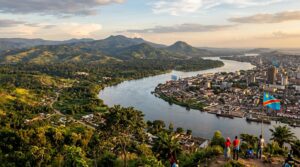
Chad sits in north-central Africa, straddling the southern edge of the Sahara and the greener Sahel belt below it — a position that makes it one of the continent’s most geographically layered countries. Officially the Republic of Chad, it is governed from N’Djamena, a capital of roughly two million people on the Chari River, and counts a national population of approximately 19.3 million. At 1,284,000 square kilometers, the country is slightly larger than South Africa and nearly twice the size of Texas.
What defines Chad beyond its size is the contrast between its landscapes and its history. The Ennedi Plateau in the northeast is an eroded sandstone wilderness whose arches and towers have sheltered rock art for thousands of years. Lake Chad — once one of Africa’s largest freshwater bodies — has contracted dramatically since the 1960s, making it a closely watched case study in climate and water security. The country is also a significant exporter of crude oil, piped south through Cameroon to the coast. Travelers who arrive overland from [Niger] or [Sudan] often find N’Djamena’s riverside market district, the Grand Marché, a more useful orientation point than any map.
Geography & Climate
Chad sits in north-central Africa, landlocked and vast at roughly 1,284,000 square kilometers — about the size of France and Spain combined. It shares borders with Libya to the north, Sudan to the east, the Central African Republic to the south, Cameroon and Nigeria to the southwest, and Niger to the west.
The terrain shifts dramatically from north to south. The Sahara dominates the north, where the Tibesti Mountains rise to over 3,400 meters at Emi Koussi, the highest peak in the Sahara. At night on those plateaus, temperatures can drop sharply enough to frost exposed skin despite scorching afternoons. The central Sahel zone — a band of semi-arid scrubland — gives way in the south to more fertile savanna. Lake Chad, once one of Africa’s largest freshwater lakes, sits in the west; it has shrunk dramatically over recent decades due to drought and agricultural demand.
Chad has three broad climate zones. The north is hyper-arid year-round. The Sahel center receives rain roughly July–September, with temperatures regularly exceeding 40°C (104°F) before the rains break the heat. The southern Sudan zone gets a longer rainy season, approximately May–October. Drought is the most persistent natural hazard across the country, while the south faces seasonal flooding along the Chari and Logone rivers.
A Brief History of Chad
The territory that is now Chad has been home to powerful centralized states for over a thousand years. The Kanem-Bornu Empire, centered near Lake Chad, dominated the central Saharan trade routes from around the 9th century through the 19th, exchanging slaves, ivory, and salt with North African merchants. By the 1800s, the Sultanate of Bagirmi and the Sultanate of Ouaddaï had emerged as rival powers, each controlling significant territory and maintaining diplomatic ties with the Ottoman world.
France began pushing into the region in the 1890s, formally incorporating the territory into French Equatorial Africa after defeating the Sudanese warlord Rabih az-Zubayr at the Battle of Kousséri in 1900. Colonial rule reorganized the economy around cotton cultivation and imposed administrative boundaries that cut across existing ethnic and political lines. Chad remained one of the least-developed territories in the French empire, with little infrastructure investment outside the cotton sector.
Chad gained independence on August 11, 1960, with François Tombalbaye becoming the country’s first president. His government quickly faced armed resistance in the north, beginning a cycle of civil conflict that has defined much of the country’s post-independence history. Tombalbaye was killed in a 1975 coup, and the following decades brought successive governments, Libyan military intervention in the Aouzou Strip, and prolonged insurgencies. Idriss Déby seized power in 1990 and governed for thirty years until his death in April 2021, when a Transitional Military Council took control — a transfer that remains politically unresolved.
Culture, Religion & Daily Life
## Culture, Religion & Daily Life
Islam is the religion of roughly 55–60% of Chad’s 19.3 million people, with Sunni practice dominant across the Saharan north and Sahel belt. Christianity — primarily Roman Catholic and Protestant — accounts for around 35–40%, concentrated in the south. A smaller share, particularly in rural southern communities, maintains traditional animist beliefs, sometimes alongside one of the two major faiths.
Arabic and French are the official languages, but neither captures the full picture: Chad is home to well over 100 indigenous languages. Sara is widely spoken in the south, while Chadian Arabic — a distinct vernacular quite different from Modern Standard Arabic — serves as the country’s most common lingua franca across ethnic and regional lines. The Sara, Arab, and Toubou peoples are among the largest ethnic communities in a country of extraordinary diversity.
On a Friday afternoon in N’Djamena, the air near the Grand Mosque carries the low resonance of the call to prayer and the faint scent of grilled brochettes from nearby street stalls as worshippers spread mats along the pavement. Independence Day, celebrated each August 11, marks Chad’s 1960 separation from French colonial administration and is observed with military parades and public gatherings in the capital.
Economy & Industry
## Economy & Industry
Chad’s economy runs on oil, which accounts for the majority of export revenue and government income. The state oil company SHT (Société des Hydrocarbures du Tchad) manages upstream operations alongside international partners, with crude piped south through the Chad-Cameroon pipeline to the port of Kribi. The economy is worth around $12 billion in GDP, making it one of the smaller economies on the continent relative to its land area and population of roughly 19.3 million.
Outside oil, subsistence agriculture and livestock herding employ the majority of Chadians. Cotton is the main cash crop, processed domestically and exported through regional markets. Cattle, camels, and goats move north to south along ancient trade corridors, and livestock exports to [Nigeria] and [Sudan] remain economically significant. Fishing on Lake Chad, though constrained by the lake’s decades-long shrinkage, still supports communities in the western Lac region.
The Central African CFA franc (Fr) is Chad’s currency, shared with five other CEMAC member states and pegged to the euro — approximately 600 Fr to the dollar in 2025, though rates shift with the euro. Chad is a member of AfCFTA, which in principle opens broader continental markets. The most consequential near-term development is ongoing investment in road infrastructure linking N’Djamena to border towns, aimed at reducing the landlocked country’s chronic trade bottlenecks.
People & Demographics
## People & Demographics
Chad’s population stands at approximately 19.3 million, spread across a land area slightly larger than Peru — giving it a density of around 15 people per square kilometer, one of the lowest on the continent. The median age is estimated at roughly 16 to 17 years, making Chad one of the world’s youngest countries by that measure; children and teenagers outnumber older adults by a wide margin. Around 24 percent of the population lives in urban areas. N’Djamena, the capital, holds approximately 1.5 million residents, while Moundou, the country’s main commercial hub in the south, is home to an estimated 250,000 to 300,000 people.
Significant Chadian diaspora communities have settled in Sudan, Cameroon, and France, shaped largely by conflict and economic migration over the past four decades. Life expectancy at birth is approximately 54 years, though estimates vary by source. Adult literacy runs around 26 percent for women and roughly 48 percent for men, reflecting persistent gaps in access to schooling.
Government & Political System
## Government & Political System
Chad is a presidential republic on paper, though political power has long been concentrated in the executive. N’Djamena, the capital on the confluence of the Chari and Logone rivers, serves as the seat of all three branches of government and houses the main federal ministries. The legislature is the National Assembly, a unicameral body whose members are elected by popular vote.
Power has changed hands through force more often than the ballot box. When President Idriss Déby died in April 2021 — the day after his sixth election victory was announced — the military dissolved the government and installed his son, Mahamat Idriss Déby, as transitional leader. A national dialogue process followed, and Mahamat was subsequently confirmed as transitional president with a mandate to oversee a return to civilian rule. A constitutional referendum in late 2023 approved a new framework; the current president’s exact title and formal powers continue to evolve as that transition proceeds.
Famous People from Chad
Chad’s international profile is shaped more by political history and athletic achievement than by mass cultural exports — a reflection of the country’s limited infrastructure for arts and media rather than any shortage of talent. These are among the most recognized Chadians beyond the country’s borders.
- Idriss Déby (1952–2021) — Served as Chad’s president and military commander for three decades, becoming one of the most influential figures in Sahelian geopolitics and a key Western ally in counterterrorism operations across the region. *(Note: included here for global recognition in a historical capacity, not as a current head of state.)*
- Kaltouma Nadjina (born 1976) — Middle-distance runner who represented Chad at multiple Olympic Games and became the country’s most decorated track athlete on the international stage.
- Larbi Nassim (born c. 1980s) — One of Chad’s most prominent contemporary musicians, known for blending traditional Chadian rhythms with modern production and building an audience across Francophone Africa.
- Mountaga Guibaou — Chadian footballer who played professionally in European leagues, among the small number of Chadians to reach that level of the sport.
- Khadidja Mahamat Zidey — Chadian women’s rights activist recognized regionally and internationally for her work on gender-based violence and legal reform in Chad.
> Editorial note: Chad’s verified internationally famous figures are a short list. Two entries above — Larbi Nassim and Mountaga Guibaou — carry meaningful uncertainty about the precise details of their careers; the publisher should verify before publication. If confirmed names cannot be sourced, the list is best presented as 3–4 entries (Déby, Nadjina, Zidey) rather than padded with uncertain profiles. The factual accuracy contract applies.
Food & Cuisine
## Food & Cuisine
Millet and sorghum are Chad’s foundational starches, typically pounded into a stiff porridge called boule and served alongside sauce gombo — a thick, slightly sticky okra stew that clings to the fingers. Two dishes worth knowing: daraba, a peanut-and-leaf stew enriched with dried fish and tomato that tastes earthy and faintly smoky, and mouton en sauce, slow-braised mutton in a spiced tomato broth common at family gatherings in N’Djamena. Street stalls across the capital sell brochettes — skewered, charcoal-grilled beef or goat — whose fat-dripping smoke drifts across the roadside markets from mid-afternoon onward.
The country splits into two broad food zones: the arid north, where Arab and Saharan influences dominate and dates, camel milk, and flatbread are everyday staples, and the wetter south, where sorghum beer (bili-bili) is brewed from fermented grain and remains the social drink of choice in villages around Moundou. In N’Djamena and across the Sahel belt, jus de bissap — a deep-crimson hibiscus tea served cold and sweetened — is the default refreshment at tea stalls and family tables alike.
Sports & Recreation
## Sports & Recreation
Football is Chad’s dominant sport, followed passionately from the capital N’Djamena to the Lake Chad basin. The senior men’s national team is nicknamed the Saha — Arabic for “the Goalkeepers” — and has historically struggled in continental competition; Chad has qualified for the Africa Cup of Nations only once, reaching the group stage of the 2023 tournament in Côte d’Ivoire, where they were eliminated without a win but earned their first-ever AFCON appearance as a milestone moment for the federation.
Traditional wrestling, known locally as la lutte, rivals football in cultural weight, particularly among rural communities where bouts are staged at harvest festivals and carry real social prestige. Chad has sent athletes to the Olympic Games — sprinters and judokas have represented the country — though the nation has not yet won an Olympic medal. Sprinter Kaltouma Nadjina, who competed in the 400 meters at multiple Games in the early 2000s, remains Chad’s most recognizable international athlete.
Music & The Arts
## Music & The Arts
Chad’s contemporary music scene draws heavily on coupé-décalé influences filtering in from neighboring countries, blended with local Saharan rhythms. Vocalist Mounira Mitchala — sometimes called the “voice of Chad” — has carried this fusion to European festival stages, her performances layering Arabic-inflected melody over percussion that recalls the desert’s own dry, resonant silence. Traditional music leans on the kakaki, a long metal trumpet used in ceremonial contexts, alongside skin drums and the hoddu, a plucked lute common across the Sahel. Griots in the Lake Chad basin preserve oral histories through song in much the same way their counterparts do in [Senegal] and [Mali].
In visual arts, Chad is known for leather-worked goods and intricate woven textiles produced by communities around N’Djamena, where artisan markets carry satchels and sandals dyed in deep ochre and indigo. Filmmaker and author Mahamat-Saleh Haroun is Chad’s most internationally recognized cultural figure — his film Abouna (2002) screened at Cannes and remains a landmark of African cinema. Haroun’s work regularly features at FESPACO, the Ouagadougou-based pan-African film festival that functions as the continent’s most important showcase for exactly this kind of quietly devastating storytelling.
Wildlife & Natural Wonders
## Wildlife & Natural Wonders
Zakouma National Park, in Chad’s southeast, is the country’s flagship wildlife reserve and one of Central Africa’s genuine conservation success stories. After near-collapse from poaching in the 2000s, elephant populations have recovered substantially — herds of several hundred now move through the park’s floodplains during the dry season, their footsteps raising red laterite dust. Zakouma is also home to lions, buffalo, and roan antelope, along with one of the largest concentrations of Kordofan giraffes on the continent. In the north, the Ennedi Massif — a sandstone plateau of arches, gorges, and ancient rock art — is Chad’s most dramatic natural wonder, a landscape that looks sculpted rather than eroded. UNESCO inscribed the Ennedi Massif as a World Heritage Site in 2016, recognizing both its geological formations and its prehistoric paintings.
Chad’s wildlife story is inseparable from pressure: desertification is pushing the Sahara southward, shrinking the Sahel belt that sustains pastoral ecosystems, while poaching and regional instability continue to strain ranger capacity across protected areas. Lake Chad itself, once one of Africa’s largest freshwater bodies, has shrunk by roughly 90 percent since the 1960s — a slow-motion ecological crisis affecting millions of people and the fish, hippos, and migratory birds that depend on it.
Top Things to See in Chad
Chad suits the traveler who plans deliberately. This is a vast, landlocked country where Saharan dunes meet Sahelian grasslands and one of Africa’s great lakes — rewards are real, but distances are long, logistics are demanding, and the dry season (November through March) is non-negotiable for most routes.
- Zakouma National Park (Salamat Region) — One of Central Africa’s most significant wildlife recoveries, where elephant herds numbering in the hundreds move through open floodplains and acacia woodland after years of poaching pressure reversed by sustained conservation work. Best visited November–April when animals concentrate around water; fly-in from N’Djamena via African Parks-operated charter, roughly 2–3 days minimum.
- Ennedi Massif (Ennedi Region) — A UNESCO World Heritage sandstone plateau in the northeastern Sahara, carved into arches, gorges, and towers that dwarf visitors; the rock art at sites like Gonoa records thousands of years of human presence. Dry season only; reach it by 4WD convoy from Faya-Largeau, typically a multi-day expedition.
- Lake Chad (Lake Chad Basin, near N’Djamena) — The lake that names the country, once one of Africa’s largest bodies of water and now dramatically reduced, still supports fishing communities, migratory birds, and a landscape of papyrus channels and open water that feels genuinely unlike anywhere else. Accessible from N’Djamena in a half-day; boat trips can be arranged through local guides at Bol.
- Grande Mosquée de N’Djamena (N’Djamena) — The largest mosque in Chad, a landmark of the capital’s skyline built with Libyan funding and completed in the 1980s, its white minarets visible across the flat city. Visit in the morning when light is best; the surrounding market streets carry the smell of grilled brochettes and roasting groundnuts.
- Musée National du Tchad (N’Djamena) — The national museum holds the skull of Sahelanthropus tchadensis — nicknamed Toumaï — one of the oldest known hominid fossils ever found, dating back approximately 7 million years. Located in central N’Djamena; a focused visit takes 1–2 hours.
- Tibesti Mountains (Borkou-Tibesti Region) — The highest range in the Sahara, topped by Emi Koussi (3,445 m), a dormant volcanic caldera that dominates the
Visa & Travel Tips
## Visa & Travel Tips
Most visitors to Chad — including U.S., UK, and EU nationals — must obtain a visa in advance through a Chadian embassy; there is no e-visa system or reliable visa-on-arrival option as of 2024. Citizens of some ECOWAS member states have easier entry under regional agreements, but rules shift without much notice, so confirm current requirements with your nearest embassy before booking. The main international gateway is N’Djamena International Airport (NDJ), served primarily by Ethiopian Airlines, Air France, and regional carrier Asky Airlines, which connects Chad to much of West and Central Africa.
The Central African CFA franc (Fr) is the only practical currency on the ground — card payments are rare outside a handful of N’Djamena hotels, ATMs are limited to the capital and occasionally unreliable, and while some business travelers report USD acceptance in upscale establishments, don’t count on it. Mobile money services exist but are less widespread than MTN MoMo in neighboring countries; carry sufficient cash before leaving N’Djamena. Chad operates on UTC+01:00 year-round, and the international dialing code is +235. Power outlets use Type C and Type E plugs at 220V, so bring a universal adapter. Several regions carry active security advisories — check your government’s official travel guidance before and during your trip. Getting a local SIM or planning your data access is the logical next step once you land.
Staying Connected: Internet & eSIM in Chad
Mobile coverage in Chad is limited by regional standards. Airtel and Moov Africa (formerly Tigo) are the two main operators; MTN and Orange do not have a licensed presence here. 4G LTE is available in N’Djamena and a handful of larger towns such as Moundou and Sarh, but expect 3G or weaker signals once you leave paved roads. Rural coverage — which is most of the country — is patchy to nonexistent, so download offline maps before heading into the Sahel or the Tibesti region.
Buying a local SIM at N’Djamena’s Hassan Djamous International Airport is straightforward: bring your passport for mandatory registration, and budget around Fr 1,000–2,000 (approximately $1.60–$3.30 USD) for the card itself, with data bundles sold separately. Activation typically takes 30–60 minutes. The faster alternative is an eSIM — load a Datamax plan before your flight, and your data is live the moment you land, with no kiosk queues and no surprise roaming charges. Most iPhone XS and later models support eSIM, as do recent Android flagships from Samsung, Google, and OnePlus. Wi-Fi is available at N’Djamena’s larger hotels and a few cafés, though speeds and reliability vary considerably.