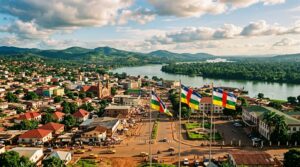
South Sudan
South Sudan at a Glance
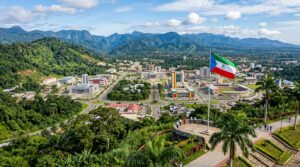
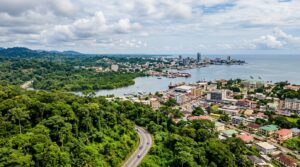
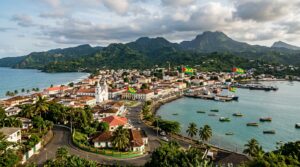
South Sudan sits in east-central Africa, landlocked and bisected by the White Nile as it pushes north toward Sudan. The country’s official name is simply South Sudan; its capital, Juba, sprawls along the Nile’s eastern bank and serves as the political and commercial center of a nation of approximately 15.8 million people.
At 619,745 km² — roughly the size of Texas — the country packs in extraordinary geographic range, from the vast Sudd wetland, one of the world’s largest freshwater swamps, to savanna corridors that host some of Africa’s most significant wildlife migrations. South Sudan is also home to the Dinka and Nuer peoples, whose cattle-herding traditions and intricate oral poetry have shaped the region’s culture for centuries, and it holds substantial oil reserves that underpin the national economy. The country became the world’s newest internationally recognized state in July 2011 after a referendum that ended decades of civil conflict with Khartoum. Travelers and researchers who look past the headlines often find that the annual migration of white-eared kob and tiang across Boma National Park rivals anything on the continent — and that story is only beginning to be told.
Geography & Climate
South Sudan sits in east-central Africa, landlocked and bordered by Sudan to the north, Ethiopia to the east, Kenya and Uganda to the south, the Democratic Republic of Congo to the southwest, and the Central African Republic to the west. At approximately 619,745 square kilometers, it is one of the larger countries on the continent — and one of the youngest, having gained independence in 2011.
The terrain is dominated by low-lying plains drained by the White Nile and its tributaries, with the vast Sudd wetland spreading across the center of the country — one of the world’s largest freshwater swamps, where papyrus and water hyacinth mat the surface so thickly that the air carries a permanent green, vegetal dampness. The Imatong Mountains rise in the far southeast, reaching around 3,187 meters at Mount Kinyeti, the country’s highest point.
South Sudan has a tropical climate with a pronounced wet season running roughly April through October, when heavy rains push temperatures into the low-to-mid 30s Celsius (around 86–95°F). The dry season, November through March, is hotter and harsher in the north, with temperatures occasionally exceeding 40°C (104°F). Flooding is a recurring and serious hazard — the Sudd expands dramatically in high-rainfall years, displacing communities across the Greater Upper Nile region.
A Brief History of South Sudan
Long before European powers drew lines across the continent, the territory of present-day South Sudan was home to a mosaic of peoples and polities. The Azande kingdom, centered in the southwestern region, was among the most organized, maintaining complex governance structures and trade networks by the eighteenth century. The Nilotic peoples — Dinka, Nuer, and Shilluk — shaped the Nile basin’s cultural and political life for centuries, with the Shilluk Kingdom along the White Nile operating a centralized monarchy that persisted well into the colonial period.
Egypt, under Ottoman influence, pushed into the region in the 1820s, followed by British and Egyptian co-administration formalized as Anglo-Egyptian Sudan in 1899. The south was governed largely separately from the Arab-majority north, a policy that deepened cultural and economic divides. After Sudanese independence in 1956, those divides fueled two prolonged civil wars — the first ending in 1972 with the Addis Ababa Agreement, the second beginning in 1983 when President Nimeiry reimposed Islamic law. John Garang led the Sudan People’s Liberation Movement (SPLM) through decades of that second conflict, which claimed an estimated two million lives.
South Sudan became the world’s newest country on July 9, 2011, following a referendum in which around 99 percent of southern voters chose independence. Salva Kiir became its first president. Stability proved elusive: civil war erupted again in 2013 between forces loyal to Kiir and those backing former vice president Riek Machar, displacing millions and triggering a severe humanitarian crisis that continues to shape the country today.
Culture, Religion & Daily Life
## Culture, Religion & Daily Life
Christianity is the most widely practiced religion in South Sudan, with a substantial majority of the population identifying as Catholic, Anglican, or Presbyterian. Traditional indigenous beliefs remain deeply woven into everyday life alongside Christian practice, particularly in rural communities. Islam is followed by a smaller share of the population, concentrated mainly in the north and among certain communities near the Sudanese border.
English is the official language, though Arabic-based South Sudanese Creole functions as a practical lingua franca in markets and border towns. South Sudan is home to more than 60 indigenous languages, with Dinka, Nuer, and Zande among the most widely spoken. The Dinka, Nuer, and Azande are three of the country’s largest ethnic communities, each with distinct oral traditions, cattle-keeping customs, and ceremonial practices that shape local identity far more than any single national narrative.
Independence Day, celebrated on July 9, marks South Sudan’s secession from Sudan in 2011 and remains the country’s most significant national holiday. In Juba’s Konyo Konyo market on an ordinary weekday morning, the air carries the sharp smell of dried fish and roasting groundnuts as traders call out prices in a fluid mix of Dinka, Juba Arabic, and English — a small, unremarkable moment that captures the country’s layered plurality.
Economy & Industry
## Economy & Industry
South Sudan’s economy is one of the most oil-dependent in the world. Crude oil accounts for roughly 90% of government revenue, with production centered in the Upper Nile and Unity states and exported primarily through a pipeline running north to Port Sudan. The country’s GDP sits at around $4–5 billion, though figures shift considerably with global oil prices and ongoing conflict disruptions. Dar Petroleum Operating Company, a consortium with Chinese and Malaysian stakes, is among the dominant operators in the fields.
Agriculture employs the majority of South Sudanese — sorghum, cassava, and groundnuts are staple crops — but chronic insecurity and flooding have kept the sector from reaching its potential. Cattle herding remains both economically and culturally significant across the Dinka and Nuer communities, with livestock representing stored wealth as much as a commercial product.
The South Sudanese pound (£) has faced severe inflationary pressure; in 2025, the exchange rate is approximately 1,300–1,500 pounds to the dollar, though rates fluctuate sharply on the parallel market. South Sudan is a member of the East African Community (EAC) and has signed onto the African Continental Free Trade Area (AfCFTA). The most closely watched forward development is the planned Lamu–Juba road corridor, which would connect South Sudan to [Kenya]’s coast and meaningfully reduce landlocked trade costs.
People & Demographics
South Sudan’s population stands at approximately 15.8 million, spread across a territory slightly smaller than Texas, giving it a density of around 25 people per square kilometer. The population skews extremely young — the median age is estimated at somewhere around 18 to 19 years, with children and adolescents making up the majority of the population and adults over 60 representing a small fraction. Urbanization remains low: fewer than one in five South Sudanese lives in a city. Juba, the capital, holds an estimated 400,000 to 500,000 residents, though figures shift considerably given ongoing displacement; Wau and Malakal are the next largest urban centers, each with populations in the low hundreds of thousands.
Significant South Sudanese diaspora communities have settled in Uganda, Kenya, Ethiopia, and Sudan, with smaller but established communities in the United States — particularly in cities like Omaha and Minneapolis. Life expectancy is approximately 55 to 58 years, among the lower figures on the continent. Literacy rates are estimated at around 35 to 40 percent, with a pronounced gap between men and women.
Government & Political System
## Government & Political System
South Sudan is a presidential republic, meaning the head of state and head of government are the same office. Salva Kiir Mayardit has held the presidency since independence in 2011, though if you are reading this after a leadership transition, confirm the current officeholder independently. The capital, Juba, serves as the seat of all three branches of government and hosts the national ministries, federal courts, and the legislature.
The national legislature is bicameral, consisting of the Transitional National Legislative Assembly and the Council of States. Both chambers operate under transitional arrangements established by the Revitalized Agreement on the Resolution of the Conflict in South Sudan (R-ARCSS), signed in 2018 after years of civil war. Power has not changed hands through a competitive popular election since independence; instead, governance has been shaped by successive peace deals and negotiated power-sharing arrangements between the ruling party and opposition factions. Scheduled elections have been repeatedly postponed.
Famous People from South Sudan
South Sudan, independent since 2011, is among the world’s youngest nations, yet it has already produced figures recognized far beyond its borders — most visibly in basketball, modeling, and the long tradition of Nilotic oral culture carried into diaspora literature and activism.
- Luol Deng (1985–) — NBA veteran who played for the Chicago Bulls, Miami Heat, and several other franchises across an 18-season career, and serves as president of the South Sudan Basketball Federation.
- Manute Bol (1962–2010) — At 7 ft 7 in (2.31 m), one of the tallest players in NBA history, and a prominent humanitarian advocate for South Sudanese refugees throughout his life.
- Alek Wek (1977–) — Sudanese-South Sudanese model who became one of the first dark-skinned African women to achieve major international runway and magazine prominence, including multiple Vogue covers in the late 1990s.
- Ger Duany (1981–) — Former Lost Boy of Sudan turned NBA player and actor, known for a role in the 2017 film What Tomorrow Brings and his memoir work documenting displacement and survival.
- Emmanuel Jal (1980–) — Former child soldier who became an internationally touring hip-hop artist; his 2008 autobiography War Child was adapted into a documentary film of the same name.
- Valentino Achak Deng (1979–) — One of the Lost Boys of Sudan whose story was told in Dave Eggers’ novel What Is the What (2006), bringing South Sudanese displacement to a global literary audience.
Food & Cuisine
## Food & Cuisine
Sorghum and millet are the backbone of South Sudanese cooking, typically ground into a stiff porridge called asida — dense, pale, and slightly sour — eaten by hand and paired with slow-cooked meat stews or leafy greens simmered with groundnut paste. Kajaik, a dried fish stew prepared with the Nile perch caught along the White Nile, is one of the most recognizable dishes; its sharp, smoky smell announces itself well before the bowl arrives. Ful medames, slow-cooked fava beans finished with oil and chili, is a morning staple borrowed from the north and eaten throughout Juba. At roadside stalls in the capital, grilled goat skewers — sold by the stick for around $0.50 (SSP 650, though exchange rates shift frequently) — are the snack most visitors encounter first.
The dominant drink is chai, a heavily spiced black tea brewed with ginger and sugar, served in small glasses at tea stalls that anchor nearly every market corner. Regional differences are real: communities in the Equatoria region near the Ugandan border incorporate more plantain and cassava into daily meals, reflecting cross-border culinary exchange with [Uganda] and [Democratic Republic of Congo], while cattle-herding Dinka communities in the north rely far more on milk, fresh and fermented, as a dietary staple.
Sports & Recreation
## Sports & Recreation
Football is South Sudan’s dominant sport, and the national men’s team — nicknamed the Bright Stars — has been building competitive experience since the country’s independence in 2011. They made their Africa Cup of Nations qualifying debut shortly after joining FIFA and CAF in 2012, and while they have yet to reach the tournament’s final stage, their qualification campaigns have grown steadily more competitive. The team plays home matches at the Juba Stadium, where the roar of the crowd on a matchday cuts through the city’s usual diesel hum.
Basketball holds genuine cultural weight, partly because of the diaspora pipeline that has produced internationally recognized talent. Thon Maker, born in South Sudan and raised in Australia, reached the NBA after being drafted by the Milwaukee Bucks in 2016 — the most prominent example of this growing tradition. At the Olympics, South Sudan made history by fielding a team at the Tokyo 2020 Games, with their men’s basketball squad qualifying for Paris 2024 and defeating powerhouses including the United States in a pre-tournament warm-up game.
Music & The Arts
## Music & The Arts
South Sudan’s contemporary music scene draws on East African influences, with artists blending Afrobeats rhythms and South Sudanese folk melodies. Emmanuel Jal — a former child soldier turned rapper and peace activist — has carried South Sudanese stories to international audiences through albums like Ceasefire and Naath, performed on stages from London to New York. Beneath that global reach, traditional music centers on the adungu, a bow harp with a warm, resonant pluck, used by the Acholi people for ceremonial songs and storytelling. Drumming ensembles and communal call-and-response singing remain central to Dinka and Nuer cultural life.
Visual arts in South Sudan are closely tied to beadwork and body adornment — Dinka women produce intricate corset-like beaded garments that encode age, status, and clan identity in color and pattern. The Juba Arts Festival has served as a gathering point for painters, poets, and musicians working to document the country’s post-independence identity. Author and scholar Francis Mading Deng, though primarily known as a diplomat, has written novels and ethnographies that give South Sudanese oral traditions a written form recognized internationally.
Wildlife & Natural Wonders
## Wildlife & Natural Wonders
South Sudan’s Boma National Park, in the country’s southeast, hosts one of the largest mammal migrations on Earth — an estimated 1.2 million white-eared kob, tiang antelope, and Mongalla gazelle sweep across the floodplains each year in a spectacle that rivals the Serengeti. Badingilo National Park, directly to the west, forms the other half of this corridor and shelters significant elephant populations alongside lions and buffalo. South Sudan is not a classic Big Five destination — rhino have been functionally absent for decades — but the sheer scale of its antelope migration is the genuine headline.
The Sudd, one of the world’s largest freshwater wetlands, sprawls across roughly 30,000 square miles of the Nile basin and supports shoebill storks, Nile lechwe, and hundreds of migratory bird species — a natural wonder in its own right. Decades of civil conflict severely disrupted conservation infrastructure, and poaching pressure on elephants remains serious. South Sudan currently has no inscribed UNESCO natural World Heritage sites, though the Boma-Badingilo ecosystem has been discussed as a future candidate.
Top Things to See in South Sudan
South Sudan suits travelers drawn to frontier adventure: vast wetlands, some of the continent’s largest wildlife migrations, and a young nation still shaping its own story. Infrastructure is limited and conditions shift — this is a destination for experienced, flexible travelers who come prepared and work with established local operators.
- Boma National Park (Jonglei State) — One of Africa’s largest protected areas, Boma hosts the white-eared kob migration, a spectacle that rivals the Serengeti in sheer animal numbers. Best visited November through March in the dry season; access is by light aircraft from Juba, typically a 90-minute flight.
- Nimule National Park (Central Equatoria) — South Sudan’s oldest park sits along the Nile near the Ugandan border, sheltering elephants, hippos, and buffalo in dense riverine forest. The drive from Juba takes around four hours on the main road; a half-day to full-day visit works well.
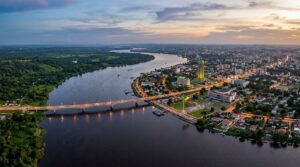
- Juba Nile Riverfront (Juba) — The stretch of the White Nile running through the capital is the city’s social spine, lined with open-air restaurants and the sound of boat engines cutting across the water at dusk. Easiest explored in the late afternoon when temperatures drop; several guesthouses and restaurants operate along the bank.
- Juba’s Konyo Konyo Market (Juba) — The largest open market in the capital, where dried fish, sorghum, and secondhand goods crowd narrow lanes and the air carries charcoal smoke and cumin. A morning visit covers the most activity; it’s walkable from the city center.
- Sudd Wetlands (Upper Nile & Jonglei States) — The Sudd is one of the world’s largest freshwater wetlands, a papyrus-choked expanse that filters the Nile and supports shoebill storks, sitatungas, and millions of waterbirds. Boat access from towns like Malakal is the standard approach; the dry season (December–March) makes navigation easier.
- Kidepo Game Reserve (Eastern Equatoria) — A remote reserve bordering [Uganda] and [Ethiopia], known for lions, giraffes, and landscapes of open savanna broken by granite outcrops. Access is by charter flight or a long overland journey; plan at least two nights.
- St. Theresa Cathedral (Juba) — Built during the colonial period and one of Juba’s most recognizable landmarks, the cathedral remains an active parish and a quiet counterpoint to the city’s bustle
Visa & Travel Tips
## Visa & Travel Tips
South Sudan requires a visa for almost all foreign nationals, with no e-visa system currently in place — travelers from the US, UK, and EU member states must apply through a South Sudanese embassy before departure, a process that can take several weeks. ECOWAS nationals face similar requirements, though arrangements shift periodically. Always confirm current entry rules directly with the nearest South Sudanese embassy or consulate before booking, as policies change with little public notice. Juba International Airport (JUB) is the sole significant international gateway, served primarily by Kenya Airways, Ethiopian Airlines, and Egypt Air.
The South Sudanese pound (£) is the official currency, but US dollars are widely preferred for larger transactions and are often the only practical option outside Juba. Card payments are effectively nonexistent, ATMs are unreliable even in the capital, and mobile money services like M-Pesa have limited reach compared to neighboring [Kenya]. Carry sufficient USD cash — small bills are especially useful. Power outlets use Type C and Type G sockets, so pack a universal adapter. South Sudan sits at UTC+03:00, and the international dialing code is +211. The UK Foreign Office, US State Department, and equivalent agencies currently advise a high degree of caution; check your government’s official travel advisory before finalizing plans. Staying connected on the ground is its own challenge — which the next section covers in full.
Staying Connected: Internet & eSIM in South Sudan
Mobile coverage in South Sudan is limited and concentrated. MTN and Zain are the two main operators; Airtel has a smaller footprint. Coverage is largely 3G in Juba and a handful of larger towns — 4G exists in parts of the capital but is inconsistent, and 5G is not available. Outside urban centers, expect patchy 2G or no signal at all, particularly in the Greater Upper Nile and Jonglei regions.
Buying a local SIM at Juba International Airport or a street vendor is straightforward: bring your passport for mandatory registration, and budget around £500–£1,500 South Sudanese pounds (approximately $0.50–$1.50 USD) for the SIM itself, with data bundles priced separately. Activation typically takes 30 minutes to a few hours. The faster alternative is an eSIM — you configure it before departure, it activates the moment you land, and there are no queues or registration desks. Most iPhone XS and later models support eSIM, as do recent Android flagships from Samsung and Google. Wi-Fi is available at mid-range and upmarket hotels in Juba, and at a small number of cafés along Airport Road, though speeds are variable.