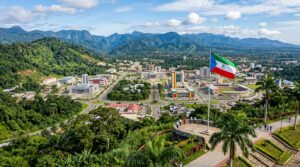
DR Congo
DR Congo at a Glance
The Democratic Republic of Congo sits in the heart of central Africa, straddling the equator and anchored by the Congo River — the world’s deepest river and the second-longest on the continent. Officially named the Democratic Republic of Congo, its capital is Kinshasa, a city of roughly 17 million people on the southwestern bank of that river. The country’s total population is approximately 112,832,000, making it the most populous Francophone nation on earth.
At 2,344,858 km², the country is roughly the size of Western Europe combined, or about one-quarter the area of the United States. It holds the Congo Basin rainforest, the second-largest tropical forest on the planet, which produces a low, green-scented humidity that travelers notice the moment they step off the plane. Beyond the forest, DR Congo is the world’s leading producer of cobalt — a mineral now central to electric-vehicle batteries — and is home to mountain gorillas in Virunga National Park, one of Africa’s oldest protected areas. Congolese rumba, recognized by UNESCO, gave rise to a guitar style that shaped popular music across the continent. Anyone planning a visit, or simply trying to understand global supply chains and Central African geopolitics, will find this country impossible to ignore.
Geography & Climate
DR Congo sits at the heart of sub-Saharan Africa, sharing borders with nine countries — the Republic of Congo to the west, Central African Republic and South Sudan to the north, Uganda, Rwanda, Burundi, and Tanzania to the east, and Zambia and Angola to the south. With a total area of 2,344,858 sq km, it is the second-largest country on the continent and the largest in sub-Saharan Africa.
The dominant terrain is the Congo Basin, a vast depression blanketed by one of the world’s largest tropical rainforests — the air inside it hangs thick and green-smelling, heavy with moisture even in the dry season. The basin is drained by the Congo River, the deepest river on Earth, which arcs across the country before turning west toward the Atlantic. Highlands rise in the east, where the Rwenzori Mountains straddle the Ugandan border and glaciers persist near the summit of Margherita Peak at around 5,109 m.
DR Congo straddles the equator, so most of the country experiences two wet seasons rather than one: roughly February–May and August–November, with drier spells between. Temperatures in Kinshasa, located near 0°, 25° E, average around 25–30°C year-round. The eastern highlands run considerably cooler. Flooding is a recurring hazard along the Congo River and its tributaries, particularly during peak rainfall months.
A Brief History of DR Congo
Long before European contact, the territory now called the Democratic Republic of Congo was home to sophisticated political structures. The Kongo Kingdom, centered near the mouth of the Congo River, governed a densely populated region with organized trade networks and a formal administrative system by the 15th century. Further inland, the Luba and Lunda empires controlled large stretches of the savanna, extracting and redistributing copper, salt, and ivory across central Africa.
Belgian colonization began in earnest in 1885, when the Berlin Conference awarded King Leopold II personal control over the territory as the so-called Congo Free State. Leopold’s regime became notorious for extreme labor coercion — enforced rubber quotas backed by mutilation and mass killing — before international pressure forced the Belgian state to absorb the colony in 1908 as the Belgian Congo. The extraction economy shifted in form but not fundamentally in character, with copper and uranium from Katanga province fueling Belgian prosperity through the mid-20th century.
Congo gained independence on June 30, 1960, with Patrice Lumumba becoming the country’s first prime minister and Joseph Kasavubu its first president. The transition was almost immediately destabilized: Katanga province declared secession, Lumumba was deposed and killed in 1961, and Mobutu Sese Seko seized full power in 1965, renaming the country Zaire. Mobutu’s 32-year dictatorship ended in 1997 when Laurent-Désiré Kabila’s rebel forces took Kinshasa. The country reverted to its current name, though conflict in the eastern provinces has continued in various forms to the present day.
Culture, Religion & Daily Life
## Culture, Religion & Daily Life
Christianity is the dominant faith in DR Congo, practiced by an estimated 95% of the population. Roman Catholicism and Protestantism are the largest denominations, with a significant presence of Kimbanguism — a homegrown Christian movement founded by Simon Kimbangu in the 1920s that remains one of the largest independent churches on the continent. Islam accounts for roughly 1–2% of the population, concentrated mainly in the east, while traditional belief systems persist alongside formal religion across many communities.
French is the official language of government and education, but four national languages carry daily life: Lingala dominates the capital Kinshasa and the northwest, Swahili is the primary tongue of the east, Kikongo anchors the southwest, and Tshiluba is widely spoken in the Kasai region. Linguists estimate DR Congo has over 200 indigenous languages in total. The Luba, Kongo, and Mongo peoples are among the largest ethnic groups in a country of extraordinary diversity.
At a typical Kinshasa market — say, the Grand Marché — vendors call prices in Lingala over the smell of smoked fish and palm oil, and buyers negotiate without urgency, a rhythm that reflects the Congolese value of mbote, the warm, unhurried greeting exchanged between strangers and neighbors alike. Independence Day on June 30 marks the country’s 1960 break from Belgian colonial rule and draws parades and public celebrations nationwide.
Economy & Industry
## Economy & Industry
DR Congo’s economy runs on extraction. The country holds an estimated 70% of the world’s coltan reserves — the mineral processed into tantalum for electronics — alongside massive deposits of cobalt, copper, and gold. Mining dominates export earnings, with the Tenke Fungurume copper-cobalt mine in Lualaba Province among the largest operations on the continent. The GDP sits at around $65 billion, a figure that understates both the informal economy and the country’s unrealized resource wealth.
Agriculture employs the majority of the population, with cassava, palm oil, and coffee among the primary outputs. Subsistence farming is widespread, but commercial agriculture along the Congo River basin has room to scale significantly. The Congolese franc (FC) trades at approximately 2,800 to the dollar in 2025, though inflation has historically made that figure volatile — check current rates before any transaction.
DR Congo is a member of both the Southern African Development Community (SADC) and the East African Community (EAC), having joined the EAC in 2022, which opened new trade corridors toward Nairobi and Dar es Salaam. The most consequential forward-looking development is the Grand Inga hydropower project: if fully built, Inga 3 alone could generate 11,000 megawatts, potentially making DR Congo a net electricity exporter to much of sub-Saharan Africa.
People & Demographics
DR Congo is home to approximately 112,832,000 people, making it the most populous Francophone country in the world and the fourth most populous on the continent. Population density averages around 50 people per square kilometer, though the country’s vast rainforest interior is sparsely settled while the west and east are far more crowded. The median age is approximately 17, reflecting one of the youngest populations anywhere — children and teenagers outnumber older adults by a wide margin.
Roughly 47 percent of Congolese live in urban areas, a share that is rising fast. Kinshasa, the capital, holds an estimated 17 million residents, making it one of Africa’s largest cities; Lubumbashi, the copper-mining hub in the southeast, follows with around 2.5 million. Significant diaspora communities have settled in Belgium, France, and South Africa, as well as in neighboring [Republic of the Congo]. Life expectancy is approximately 61 years, according to recent estimates; adult literacy runs around 80 percent, though rates differ considerably between men and women.
Government & Political System
## Government & Political System
DR Congo is a presidential republic, where the president serves as both head of state and head of government. The current president holds executive authority and appoints the prime minister, who manages day-to-day government operations. The national legislature is bicameral, consisting of the National Assembly (lower house) and the Senate (upper house), both seated in Kinshasa, the capital and administrative center of the country’s 26 provinces.
Kinshasa functions as the nerve center of federal administration, housing all three branches of government along the banks of the Congo River. Power transitions in DR Congo have been historically turbulent; the 2018 election produced the country’s first peaceful transfer of power between rival political figures since independence in 1960, though subsequent elections and their results have remained contested by opposition groups and international observers. The political system continues to navigate tensions between centralized executive authority and demands for greater provincial autonomy.
Famous People from DR Congo
DR Congo has shaped global culture well beyond its borders, producing musicians who defined African rumba, athletes who competed on the world stage, and activists whose work drew international attention to one of the continent’s most complex nations.
- Patrice Lumumba (1925–1961) — First Prime Minister of independent Congo, whose anti-colonial speeches and brief tenure made him an enduring symbol of African self-determination worldwide.
- Papa Wemba (1949–2016) — Pioneered the Congolese rumba subgenre soukous and the sapeur fashion movement, earning a following across Africa, Europe, and beyond.
- Tabu Ley Rochereau (1940–2013) — Vocalist and bandleader credited with modernizing Congolese rumba into a pan-African sound, recording over 3,000 songs across six decades.
- Denis Mukwege (born 1955) — Gynecological surgeon and founder of Panzi Hospital in Bukavu, awarded the 2018 Nobel Peace Prize for his treatment of sexual violence survivors in conflict zones.
- Dikembe Mutombo (1966–2024) — NBA All-Star center and four-time Defensive Player of the Year, one of the most recognizable African athletes in the history of American professional basketball.
- Werrason (born 1965) — Full name Noël Ngiama Makanda, the bandleader of Wenge Musica Maison Mère whose ndombolo rhythm became a dance craze across Central and West Africa in the late 1990s.
- Cécile Kayirebwa (born 1946) — Rwandan-Congolese singer raised in Kinshasa whose recordings preserved and internationalized Central African traditional music for European audiences.
Food & Cuisine
## Food & Cuisine
Fufu — a dense, stretchy dough pounded from cassava — is the backbone of Congolese cooking, served alongside moambe, a slow-cooked stew of chicken or goat simmered in palm nut sauce until the oil turns a deep amber and coats everything with a nutty, smoky richness. Saka-saka, made from pounded cassava leaves braised with garlic and palm oil, is another everyday staple, while liboke — fish or meat sealed inside banana leaves and steamed or grilled over charcoal — delivers a clean, herbaceous flavor that varies by whatever the river or market offers that morning. At roadside stalls across Kinshasa, vendors sell makemba, ripe plantains grilled directly over coals until the skin blackens and the flesh caramelizes, eaten plain or with a pinch of salt. For a drink, locally brewed Primus beer (around $1–$1.50 / roughly 2,500–4,000 Congolese francs) is the default at nearly every bar and open-air terrace.
Regional differences are real: communities along the Congo River and in the equatorial north rely heavily on freshwater fish and foraged forest greens, while the savanna provinces of Kasaï and Katanga in the south lean toward dried and smoked meats with maize porridge standing in alongside cassava.
Sports & Recreation
## Sports & Recreation
Football is the dominant sport in DR Congo, followed with an intensity that fills the air on match days with the sharp crack of vuvuzelas and the roar of packed neighborhood bars. The senior men’s national team, known as the Leopards, has a distinguished continental history: DR Congo (then Zaire) won the Africa Cup of Nations in 1968 and 1974, making them one of the few nations to claim the title twice. Striker Dieumerci Mbokani, who played across Europe’s top leagues, remains one of the country’s most recognizable modern footballers.
Basketball holds genuine cultural weight in DR Congo, partly driven by the NBA’s growing presence on the continent and the success of players such as Bismack Biyombo, who was born in Lubumbashi before reaching the NBA. At the Olympics, DR Congo has won a small number of medals — approximately two — across track and boxing disciplines, though the country’s athletes have competed at nearly every Summer Games since independence.
Music & The Arts
## Music & The Arts
Congolese rumba — listed by UNESCO as Intangible Cultural Heritage in 2021 — remains DR Congo’s most consequential musical export, built on the interlocking guitar lines that defined labels like Fiesta and Esengo in Kinshasa’s golden era. Today, artist Fally Ipupa carries that lineage globally, selling out arenas from Paris to Abidjan with albums like Formule 7 that blend rumba’s fluid guitar work with contemporary Afropop production. Beneath the rumba tradition sit older forms: the likembé, a thumb piano played across the Congo Basin, and hindewhu, the polyphonic whistle-and-voice technique of the BaBenzélé people, which composer Bernie Krause sampled for international audiences decades ago.
In visual arts, the Kinshasa school of peinture populaire — painters like Chéri Samba, whose bold, text-annotated canvases hang in the Centre Pompidou — gave the world a distinctly Congolese commentary on urban life. Filmmaker Dieudo Hamadi has brought Congolese documentary storytelling to Cannes and IDFA, with Downstream to Kinshasa earning international festival recognition and positioning DR Congo as a serious force in African cinema.
Wildlife & Natural Wonders
## Wildlife & Natural Wonders
DR Congo holds more tropical rainforest than any other African country after [Brazil loses its continental claim](placeholder), and its wildlife reflects that density. Virunga National Park, Africa’s oldest, sits in the country’s east and is the primary stronghold for the critically endangered mountain gorilla — roughly half the world’s population lives within its borders. Salonga National Park, the continent’s largest tropical rainforest reserve, shelters the bonobo, a great ape found nowhere else on Earth. DR Congo is not a classic Big Five destination, but its great apes, forest elephants, and okapi — the forest giraffe, with its zebra-striped legs — make it one of the planet’s most biologically significant countries.
The Congo River itself is the natural wonder that defines the country: the world’s deepest river, dropping through the Boyoma Falls (formerly Stanley Falls) in a series of seven cataracts near Kisangani, loud enough to hear from a kilometer away. Five of DR Congo’s natural sites carry UNESCO World Heritage status, including Virunga, Salonga, and the Okapi Wildlife Reserve — all currently listed as World Heritage in Danger due to armed conflict and poaching pressure that conservation rangers face at serious personal risk.
Top Things to See in DR Congo
DR Congo suits travelers who want serious wilderness and genuine urban edge in the same trip. The country’s draws are overwhelmingly natural — old-growth rainforest, active volcanoes, great apes — but Kinshasa adds a cultural counterweight that few African capitals can match. Logistics are real here: plan ahead, hire vetted guides, and budget time for bureaucracy.
- Virunga National Park (North Kivu) — Africa’s oldest national park and home to roughly a third of the world’s remaining mountain gorillas, plus active Nyiragongo volcano and forest elephants. Best visited in the dry seasons (June–September or December–February); gorilla permits are booked through the park authority well in advance.
- Mount Nyiragongo (North Kivu) — An active stratovolcano with one of the world’s largest and most persistent lava lakes glowing deep red at its crater rim. The standard trek takes two days with an overnight at the summit crater; depart from Goma with a licensed Virunga guide team.
- Okapi Wildlife Reserve (Ituri) — A UNESCO World Heritage Site protecting the okapi — the forest giraffe found nowhere else on Earth — along with forest elephants and chimpanzees in dense Ituri rainforest. Reached via Epulu; visits typically run 2–3 days and require coordination with the Institut Congolais pour la Conservation de la Nature (ICCN).
- Lola ya Bonobo Sanctuary (Kinshasa) — The world’s only bonobo sanctuary, run by Friends of Bonobos, rehabilitating orphaned bonobos on a forested island about 30 minutes from central Kinshasa. Open Tuesday–Sunday; entry is around $20 (approximately 55,000 Congolese francs) and the morning feeding session is the clearest viewing window.
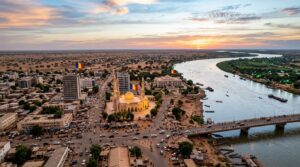
- Congo River Waterfront, Kinshasa (Kinshasa) — The stretch of riverbank facing Brazzaville across the world’s deepest river, where wooden pirogues knock against barges and the air carries diesel, grilled fish, and river mud simultaneously. The Marché des Valeurs and the adjacent beach bars around the Beach Ngobila port give the fullest picture in an afternoon.
- Académie des Beaux-Arts (Kinshasa) — Founded in 1943, this is one of Central Africa’s most important fine-arts institutions, producing painters whose work now hangs in international collections; the on-site gallery shows both student and alumni work. Drop-in visits are possible
Visa & Travel Tips
## Visa & Travel Tips
Almost all nationalities — including US, UK, and EU citizens — must obtain a visa before arriving in DR Congo; visa-on-arrival is not generally available, and while an e-visa portal has been introduced, availability and reliability vary, so applying through your nearest Congolese embassy well in advance remains the safest approach. ECOWAS nationals face different rules, but policies shift; always verify current requirements with the relevant embassy before booking. The main gateway is N’djili International Airport (FIH) in Kinshasa, served by Brussels Airlines, Ethiopian Airlines, and Kenya Airways, among others. Lubumbashi’s Luano International Airport handles regional traffic in the southeast. DR Congo operates on UTC+01:00, and the international dialling code is +243. Power outlets use Type C and Type E plugs; bring a universal adapter.
The Congolese franc (FC) is the official currency, but US dollars are widely accepted for larger transactions — carry small-denomination bills, as change in dollars is rarely available. Card acceptance is limited outside major Kinshasa hotels; ATMs exist in the capital but are unreliable, so arriving with sufficient cash is strongly advised. Mobile money through Airtel Money and M-Pesa (available via Vodacom Congo) covers everyday payments in urban areas. Check your government’s official travel advisory before departure — several eastern provinces carry elevated risk warnings. Staying connected on the ground is its own puzzle, and local SIM and eSIM options can make a significant difference to your trip.
Staying Connected: Internet & eSIM in DR Congo
Mobile coverage in DR Congo is concentrated in the main cities — Kinshasa, Lubumbashi, Goma, and Kisangani — where MTN Congo, Airtel Congo, Orange RDC, and Vodacom Congo all offer 4G LTE service. Outside these urban centers, coverage drops sharply; rural and forested areas often have 2G at best, and 5G has not yet launched in the country. Carry a backup power bank: network quality can fluctuate even in Kinshasa. Hotel and café Wi-Fi is available in mid-range and upmarket properties in the major cities, though speeds vary.
The traditional route is buying a local SIM on arrival — vendors operate inside N’djili International Airport in Kinshasa. You’ll need your passport for registration, and a starter SIM with a small data bundle typically costs around 5,000–10,000 Congolese francs (FC) (roughly $2–4 USD), with activation taking anywhere from a few minutes to a couple of hours depending on the operator. A faster alternative is an eSIM, which you activate before departure — no kiosk queues, no roaming surprises on landing. Most iPhone XS and newer models support eSIM, as do recent Android flagships from Samsung, Google, and OnePlus.