Republic of the Congo
Republic of the Congo at a Glance
The Republic of the Congo sits in west-central Africa, straddling the equator, with the Congo River forming its entire southeastern border — one of the world’s deepest and most voluminous rivers. Its official name distinguishes it from its much larger neighbor to the east, the Democratic Republic of the Congo; the capital, Brazzaville, faces Kinshasa directly across the river, making them the closest pair of capital cities on Earth. The population stands at approximately 6.1 million, spread across 342,000 km² — an area slightly larger than Germany.
The country is genuinely known for three things: its oil reserves, which have driven the economy since the 1970s; the Odzala-Kokoua National Park, one of Africa’s oldest protected areas and home to western lowland gorillas and forest elephants; and Brazzaville’s sapeurs — members of the Société des Ambianceurs et des Personnes Élégantes, a subculture of immaculately dressed men whose flamboyant tailoring has drawn documentary filmmakers from around the world. The Congo Basin rainforest covering the country’s north is the second-largest tropical forest on Earth, absorbing carbon at a scale that climate scientists track closely. Travelers who assume the two Congos are interchangeable tend to arrive unprepared for how much the quieter, smaller one rewards attention.
Geography & Climate
The Republic of the Congo sits in west-central Africa, straddling the Equator just north of its larger neighbor the Democratic Republic of the Congo, from which it is separated by the Congo River. It also shares borders with Gabon, Cameroon, the Central African Republic, Angola’s Cabinda exclave, and a short Atlantic coastline in the southwest.
Most of the country is blanketed by dense equatorial rainforest, part of the Congo Basin — the second-largest tropical forest on Earth. The terrain rises from a narrow coastal plain into the Mayombe Massif, a range of forested hills in the southwest where the air smells permanently of wet bark and decomposing leaves. Further inland, the land flattens into the vast Congo River basin, threaded by the Sangha and Likouala rivers in the north.
The climate is hot and humid year-round, with temperatures typically sitting between 72°F (22°C) and 90°F (32°C). Two wet seasons and two dry seasons alternate: the main rainy season runs roughly October–May in the south, while the north experiences a longer single wet season from March to November. The short dry season, June–August, brings slightly cooler days and lower humidity. Seasonal flooding along the Congo River’s tributaries is a recurring challenge, periodically cutting off low-lying communities and disrupting river transport.
A Brief History of Republic of the Congo
Before European contact, the territory now called the Republic of the Congo was home to the Kongo Kingdom, a centralized Bantu-speaking state that stretched across present-day northern Angola, the Democratic Republic of the Congo, and parts of Gabon. The Teke people also held significant territory along the Congo River plateau, trading copper, ivory, and enslaved people across regional networks. These were not isolated villages but organized polities with courts, trade routes, and diplomatic relationships.
France established a formal presence after explorer Pierre Savorgnan de Brazza signed a treaty with Teke King Makoko in 1880, giving France a claim to the region. The territory became part of French Equatorial Africa, a federation administered from Brazzaville — a city named after de Brazza himself. Colonial rule brought forced labor on rubber plantations and railway construction, with the Congo-Ocean Railway claiming tens of thousands of lives between 1921 and 1934.
The Republic of the Congo gained independence from France on August 15, 1960. Fulbert Youlou became the first president, though he was ousted in a popular uprising just three years later. The country cycled through Marxist single-party rule under figures like Marien Ngouabi — assassinated in 1977 — before transitioning toward multiparty democracy in the early 1990s. A brief but devastating civil war in 1997 returned Denis Sassou Nguesso to power; he has governed the country since, consolidating authority through a 2015 constitutional referendum that reset presidential term limits.
Culture, Religion & Daily Life
## Culture, Religion & Daily Life
Christianity is the dominant faith in the Republic of the Congo, practiced by an estimated 85–90% of the population across Catholic, Protestant, and Kimbanguist congregations. The Kimbanguist Church — founded in the early twentieth century in neighboring [Democratic Republic of the Congo] — has a significant following here too, blending Christian theology with distinctly Central African spiritual expression. Traditional animist beliefs remain present, often practiced alongside Christianity, while Muslims make up a small minority concentrated mainly in northern towns.
French serves as the official language of government and education, but Lingala and Kikongo are the languages most Congolese actually reach for in daily conversation. Lingala dominates in Brazzaville and along the Congo River, functioning as a true lingua franca across ethnic lines. The country is home to the Kongo, Teke, and Mboshi peoples, among several dozen other groups, each carrying distinct oral traditions and ceremonial practices. Estimates put the total number of indigenous languages at around 60.
A typical morning in Brazzaville’s Marché Total fills quickly with the smell of grilled plantain and the sound of Lingala pop drifting from a vendor’s phone speaker — commerce and conversation running together before the heat peaks. Independence Day, celebrated on August 15, marks the country’s 1960 break from French administration and remains the year’s most publicly observed national holiday.
Economy & Industry
## Economy & Industry
The Republic of the Congo runs on oil. The sector accounts for the vast majority of government revenue and export earnings, with the state-owned Société Nationale des Pétroles du Congo (SNPC) managing upstream partnerships with majors like TotalEnergies and Eni. The economy sits at around $12–14 billion GDP, though it swings sharply with global crude prices. The currency is the Central African CFA franc (Fr), pegged to the euro and trading at approximately 600 Fr to the dollar in 2025.
Beyond oil, the country holds significant timber reserves — sapele and okoumé logs move through the port of Pointe-Noire, the commercial capital — and agriculture employs a large share of the population in subsistence farming of cassava and plantains. Mining of potash deposits in the Kouilou region has drawn investor interest for years, though large-scale extraction has been slow to materialize. Fishing along the Atlantic coast adds modest but consistent export value.
The Republic of the Congo is a member of the Economic Community of Central African States (ECCAS) and a signatory to the African Continental Free Trade Area (AfCFTA). The most consequential near-term project is the expansion of Pointe-Noire’s port infrastructure, aimed at positioning the city as a deeper regional logistics hub for landlocked neighbors like [Central African Republic] and [Democratic Republic of the Congo].
People & Demographics
## People & Demographics
The Republic of the Congo has a population of approximately 6,142,180, spread across a territory slightly larger than Montana — giving it a relatively low density of around 17 people per square kilometer. The median age is estimated at roughly 19 years, reflecting a sharply young population: children and teenagers make up a substantial majority, while adults over 60 remain a small fraction. Life expectancy sits at approximately 65 years, though estimates vary by source and region.
Around 70 percent of Congolese live in urban areas, one of the higher urbanization rates in sub-Saharan Africa. Brazzaville, the capital, holds an estimated 2.3 million residents and anchors the country’s political and cultural life; Pointe-Noire, the main port and commercial hub on the Atlantic coast, follows with around 1.1 million. Literacy rates are estimated at roughly 80 percent nationally, though they skew lower among rural women. Significant diaspora communities have settled in France, Belgium, and neighboring [Democratic Republic of the Congo].
Government & Political System
## Government & Political System
The Republic of the Congo is a presidential republic, meaning the head of state and head of government are the same office. Denis Sassou Nguesso has held the presidency for the majority of the country’s post-independence history, most recently re-elected in 2021 in a vote that extended his current term; opposition groups disputed the results, while the government certified the outcome. Brazzaville, situated on the Congo River directly across from Kinshasa, serves as the political and administrative capital, housing the presidency, ministries, and both chambers of parliament.
The legislature is bicameral, consisting of the Senate (upper chamber) and the National Assembly (lower chamber). Senators are chosen through indirect election by local councils, while National Assembly members are directly elected. Constitutional amendments passed in 2015 removed presidential age limits and reset term counts, a change that drew significant domestic criticism — that sequence of events shapes how most political analysts frame the current distribution of power in the country.
Famous People from Republic of the Congo
The Republic of the Congo — often called Congo-Brazzaville to distinguish it from its larger neighbor — has produced internationally recognized figures across music, literature, and sport, with Congolese rumba and French-language fiction among its most recognized cultural exports.
- Brazzaville (Papa) Wendo Kolosoy (1925–2008) — Pioneering Congolese rumba musician whose 1948 song “Marie-Louise” is considered one of the earliest landmarks of the genre that would define Central African popular music for decades.
- Henri Lopes (1937–) — Novelist and former prime minister whose French-language fiction, including Le Pleurer-Rire, earned him repeated nominations for the Nobel Prize in Literature and a seat at the Académie française.
- Alain Mabanckou (1966–) — Award-winning novelist and poet, born in Pointe-Noire, whose novel Broken Glass won the Prix des Cinq Continents de la Francophonie and whose work is taught in universities across Europe and North America.
- Thérèse Okombi-Salissa (1963–) — Politician and public health advocate who served as Minister of Health and became one of the most prominent women in Congolese public life.
- Roga Roga (1969–) — Lead singer of Extra Musica, whose ndombolo style brought Congolese dance music to audiences across Africa and the Congolese diaspora in Europe during the 1990s and 2000s.
- Yannick Bolasie (1989–) — Professional footballer born in the Republic of the Congo who represented the Democratic Republic of the Congo internationally and played in the English Premier League for Crystal Palace and Everton.
Food & Cuisine
## Food & Cuisine
Cassava is the foundation of Congolese cooking, eaten as chikwangue — dense, fermented dough wrapped in banana leaves and steamed until it turns a pale, waxy yellow — or pounded into fufu, served alongside fish or meat stews. Saka-saka, a slow-cooked paste of cassava leaves with smoked fish and palm oil, appears on nearly every family table; moambe, a rich chicken stew built around palm nut pulp, is the dish most visitors remember longest. Grilled capitaine (Nile perch) served with fried plantains is a staple along the Congo River, the fish pulled fresh from the water and cooked over charcoal that fills the riverbank air with woodsmoke.
At roadside stalls in Brazzaville, beignets — small fried dough fritters, sometimes stuffed with black-eyed peas — sell for the equivalent of a few cents and disappear fast by mid-morning. The iconic drink is palm wine, tapped directly from raffia palms and sold in recycled plastic bottles; it ferments quickly and tastes noticeably sharper by afternoon than at dawn. In the north, closer to the forest interior, bushmeat preparations and wild mushroom sauces appear more frequently than on the southern coast, where Atlantic fish dominates.
Sports & Recreation
## Sports & Recreation
Football is the dominant sport in the Republic of the Congo, and the senior men’s national team — nicknamed the Red Devils (les Diables Rouges) — has competed at the Africa Cup of Nations multiple times, reaching the final in 1972 before losing to Mali. The team’s passionate home support at the Stade Alphonse Massamba-Débat in Brazzaville generates a wall of noise that rattles the corrugated rooftops around the ground. One of the country’s most recognized sporting exports is Thievy Bifouma, a forward who has played across European and Middle Eastern leagues and remains a consistent presence in the national squad.
Basketball has a meaningful following alongside football, partly reflecting broader Central African enthusiasm for the sport and the influence of Congolese diaspora players in European leagues. At the Olympics, the Republic of the Congo has sent athletes across several Games but has not, as of 2024, won a medal — though individual sprinters and judokas have reached the later rounds of competition.
Music & The Arts
## Music & The Arts
Rumba congolaise — the hypnotic, guitar-driven sound that emerged in Brazzaville and Kinshasa in the 1940s — remains the Republic of the Congo’s defining musical export. Contemporary artist Fally Ipupa, though Kinshasa-based, represents the broader Congo Basin sound that Brazzaville helped shape; locally, artists like Roga Roga and his Extra Musica group carried the torch of ndombolo, rumba’s faster, dance-floor offshoot, through the 2000s. Traditional music draws on the sanza (thumb piano) and ceremonial drums used by the Teke and Vili peoples, whose rhythmic call-and-response forms predate the guitar era by centuries.
In visual arts, the Republic of the Congo has a strong tradition of figurative sculpture and carved masks, particularly among the Kongo and Teke communities whose ceremonial nkisi figures now appear in major ethnographic collections worldwide. Writer Henri Lopes, a former prime minister, brought the country international literary recognition with his novel Le Pleurer-Rire, translated into multiple languages. Brazzaville’s proximity to Kinshasa means both cities share in the cultural momentum of the broader Congo Basin arts scene, whose music regularly charts across Central and West Africa.
Wildlife & Natural Wonders
## Wildlife & Natural Wonders
The Republic of the Congo is not Big Five country in the classic savanna sense — it is gorilla and forest elephant country, dense and cathedral-quiet under the Congo Basin canopy. Odzala-Kokoua National Park, one of Africa’s oldest protected areas, shelters large populations of western lowland gorillas; a family group moving through the bai — an open forest clearing — is one of the continent’s more arresting wildlife encounters. Nouabalé-Ndoki National Park, in the country’s north, protects forest elephants that have had so little contact with humans they show almost no fear response, a rarity anywhere on the continent.
Beyond the parks, the Likoula swamp system — part of the world’s second-largest tropical peatland — covers vast stretches of the north and stores carbon at a scale that makes it globally significant, even if it lacks the drama of a waterfall or crater. Bushmeat hunting and illegal logging remain the primary conservation pressures in the basin forests. The Republic of the Congo does not currently hold a natural UNESCO World Heritage site, though Odzala-Kokoua has been under consideration.
Top Things to See in Republic of the Congo
Republic of the Congo suits travelers who want serious wilderness — gorillas, forest elephants, Congo River barge rides — alongside a compact, walkable capital that faces [Democratic Republic of the Congo] across one of the world’s widest rivers. History and urban texture are here too, but nature is the main draw.
- Odzala-Kokoua National Park (Cuvette-Ouest Region) — One of Africa’s oldest and largest rainforest reserves, home to western lowland gorillas, forest elephants, and bongo antelope in dense Congo Basin jungle. Best visited June–September (dry season); most visitors fly into the park’s airstrip from Brazzaville on a 3–5 day lodge package.
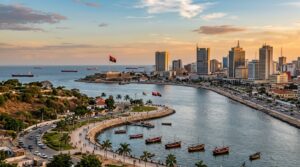
- Congo River Waterfront, Brazzaville (Brazzaville) — The broad sweep of the Congo River here is the shortest distance between two capital cities on Earth, with Kinshasa visible across the water and wooden pirogues cutting through the current all day. Walk the Corniche in the early morning when fishermen are hauling nets and the light is flat and golden.
- Basilique Sainte-Anne du Congo (Brazzaville) — A striking 1949 Catholic basilica with a terracotta-red facade, built during the French colonial period and still an active parish; its interior is cool and dim, smelling faintly of incense and old stone. Visits take under an hour; it sits in the Poto-Poto neighborhood, walkable from central Brazzaville.
- Poto-Poto School of Painting (Brazzaville) — Founded in 1951 by Pierre Lods, this is one of Central Africa’s most important art institutions, producing a recognizable style of bold, flat figures on bark cloth and canvas. The school sells work directly; budget $20–$200 (around 11,000–110,000 CFA francs) depending on size and artist.
- Lefini Faunal Reserve (Pool Region) — A transitional savanna-forest reserve roughly 150 km north of Brazzaville where bonobos, sitatungas, and hippos are present; it also serves as a rehabilitation site for orphaned gorillas through the Aspinall Foundation’s Project Congo. Accessible by road from Brazzaville in 2–3 hours; day trips are feasible.
- Pointe-Noire Beach (Pointe-Noire) — The Atlantic coast at Congo’s second city offers a long stretch of dark volcanic sand backed by bars and grilled fish stalls
Visa & Travel Tips
## Visa & Travel Tips
Most visitors to the Republic of the Congo — including US and UK nationals — must obtain a visa in advance through an embassy, as visa-on-arrival is not widely available and e-visa options remain limited. ECOWAS member nationals generally have easier entry under regional agreements, but policies shift; always confirm current requirements with the Congolese embassy in your country before booking. The main international gateway is Maya-Maya Airport in Brazzaville (BZV), served primarily by Air France, Ethiopian Airlines, and Kenya Airways, with Pointe-Noire’s Agostinho Neto Airport handling significant regional traffic.
The Central African CFA franc (Fr) is the only reliable currency here — card acceptance is rare outside upscale Brazzaville hotels, and ATMs are concentrated in the capital and Pointe-Noire, though availability can be inconsistent. Bring sufficient cash; USD is not routinely accepted in everyday transactions. MTN MoMo is the dominant mobile money platform and increasingly useful for local payments. The country sits at UTC+01:00 year-round, and the international dialing code is +242. Power outlets use Type C and E plugs at 220V, so pack an adapter. Government travel advisories recommend checking official sources before departure — the security situation in border regions warrants attention without being a reason to avoid the country outright. Getting connected once you arrive is its own puzzle, which the next section covers in full.
Staying Connected: Internet & eSIM in Republic of the Congo
Mobile coverage in Republic of the Congo is concentrated in Brazzaville and Pointe-Noire, where MTN Congo, Airtel Congo, and Airtel-backed operators offer reasonably reliable 4G. Outside those two cities — along the Route Nationale 1 or in the Congo Basin interior — signal drops to 2G or disappears entirely. No commercial 5G network is operational as of 2024. Travelers heading to Odzala-Kokoua National Park or river towns like Impfondo should download offline maps before leaving Brazzaville.
A local SIM from an MTN or Airtel kiosk at Maya-Maya Airport in Brazzaville costs around Fr 1,000–2,000 (approximately $1.50–$3.50 USD); bring your passport, as registration is mandatory under national telecom regulations. Activation typically takes 30 minutes to a few hours. The faster alternative is an eSIM: load it before your flight, and data is live the moment you land — no queue, no paper SIM to lose. Most iPhone XS and newer models support eSIM, as do recent Samsung Galaxy and Google Pixel flagships. Hotel Wi-Fi is available at mid-range and upmarket properties in Brazzaville and Pointe-Noire, and a handful of cafés in the Plateau district offer usable connections.