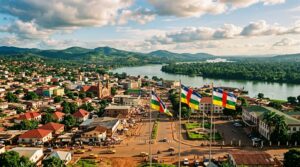
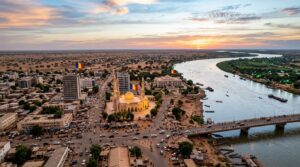
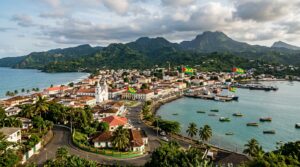
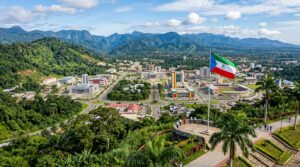
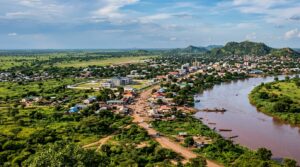
Cameroon
Cameroon at a Glance
Cameroon sits at the hinge of West and Central Africa, where the continent’s bulge begins to taper southward — a position that gives it an unusual range of ecosystems, from the Sahel scrubland in the far north to the dense rainforest of the Congo Basin in the south. The official name is Cameroon, capital Yaoundé, with a population of approximately 29.4 million people speaking more than 270 languages alongside the two official ones, French and English.
At 475,442 km², the country is slightly larger than California, and it earns its old nickname “Africa in miniature” honestly: within those borders sit active volcanoes, highland grasslands, mangrove coastlines, and one of the continent’s most significant stretches of tropical forest. It is the world’s fourth-largest producer of cocoa, a powerhouse in African football — the Indomitable Lions reached five FIFA World Cup tournaments between 1982 and 2022 — and home to the Bamileke people’s monumental royal palaces in the western highlands. Travelers who arrive expecting a straightforward transit country tend to be caught off guard by how much the landscape and culture shift within a single day’s drive.
Geography & Climate
Cameroon sits in Central-West Africa, sharing borders with Nigeria to the west, Chad and the Central African Republic to the east, and Gabon, Equatorial Guinea, and the Republic of the Congo to the south. Its southern coast opens onto the Gulf of Guinea, giving the country a narrow but significant Atlantic shoreline. That geographic position — straddling the continent’s central hinge — earns Cameroon its reputation as “Africa in miniature.”
The terrain shifts dramatically from south to north across its 475,442 square kilometers. Dense equatorial rainforest covers the south and center, thinning into the grassy Adamawa Plateau in the middle of the country. Mount Cameroon, an active stratovolcano rising to around 4,040 meters near the coastal city of Buea, is the highest peak in West and Central Africa; its upper slopes carry a permanent chill even at the equator. The north flattens into semi-arid Sahel scrubland bordering Lake Chad, whose shoreline has contracted sharply over recent decades.
Climate zones follow the terrain. The south experiences two wet seasons — roughly March–June and September–November — with humidity so thick it feels like warm cloth against the skin. The north has a single rainy season, approximately June–September, followed by a long dry season when harmattan winds carry fine reddish dust down from the Sahara. Seasonal flooding affects low-lying areas along the Benue River basin, and the slopes of Mount Cameroon receive some of the highest annual rainfall recorded anywhere in Africa.
A Brief History of Cameroon
Long before European contact, the territory now called Cameroon was home to sophisticated political structures. The Kanem-Bornu Empire, centered further north but extending its influence into the Lake Chad basin, shaped trade and governance across the region for centuries. In the south and west, the Bamileke chiefdoms and the Fulani-led Sokoto-aligned emirates of the north maintained distinct legal and cultural systems. The coastal area around the Wouri estuary was already a trading hub when Portuguese sailors arrived in the 1470s, naming the river Rio dos Camarões — “River of Prawns” — after the abundance of shrimp they found there.
Germany formalized colonial control in 1884 with the signing of a treaty at Douala, establishing Kamerun as a protectorate. After Germany’s defeat in World War I, the League of Nations divided the territory between Britain and France. French Cameroun moved toward independence under pressure from the Union des Populations du Cameroun (UPC), a nationalist movement whose leader Ruben Um Nyobè was killed by French forces in 1958. French Cameroun became independent on January 1, 1960, with Ahmadou Ahidjo becoming the country’s first president.
The British-administered Southern Cameroons voted in a 1961 plebiscite to join the new republic, forming the Federal Republic of Cameroon. Ahidjo centralized power steadily before resigning in 1982 and handing authority to Paul Biya, who has governed since. The Anglophone Crisis, which escalated after 2016, remains an unresolved conflict between the government and separatist movements in the country’s English-speaking northwest and southwest regions.
Culture, Religion & Daily Life
## Culture, Religion & Daily Life
Cameroon is sometimes called “Africa in miniature,” and its religious landscape earns that nickname: roughly 70% of the population identifies as Christian (predominantly Catholic and Protestant), around 20% as Muslim — concentrated largely in the north — and the remainder practice traditional indigenous beliefs, often alongside one of the two major faiths.
The country carries two official languages, English and French, a legacy of its split colonial administration. French dominates in eight of ten regions, while English holds in the Northwest and Southwest. Beneath both, an estimated 280 indigenous languages are spoken, including Fulfulde, which serves as a lingua franca across much of the north, and Cameroonian Pidgin English, which knits together the anglophone south. Major ethnic communities include the Bamileke, the Fulani, and the Beti peoples, each with distinct traditions spread across the country’s varied geography.
On any weekday morning in Yaoundé’s Marché Mokolo, vendors arrange pyramids of dried crayfish and bitter-leaf bundles before the first customers arrive, the air sharp with smoked fish and palm oil. National Day falls on May 20th, marking the 1972 referendum that unified the federal state; celebrations typically include military parades, school processions, and evening gatherings that stretch well past dark.
Economy & Industry
## Economy & Industry
Cameroon runs on the Central African CFA franc (Fr), which trades at approximately 600 Fr to the dollar in 2025, though rates shift with the euro, to which it is pegged. With a GDP of around $45 billion, Cameroon is one of Central Africa’s larger economies — a status earned partly through geographic luck: the country borders six nations and holds both Atlantic coastline and interior rainforest, giving it unusual sectoral range.
Oil and agriculture anchor the economy. The state-owned Société Nationale des Hydrocarbures manages petroleum extraction, which still generates significant export revenue despite declining reserves. Cocoa and coffee remain the backbone of smallholder farming — Cameroon is among the world’s top cocoa producers — and timber from the Congo Basin forest is a major, if contested, export. Fishing along the Gulf of Guinea coast feeds both local markets and regional trade, with the smell of smoked mackerel a constant presence in Douala’s Marché de Mboppi.
Cameroon is a member of the African Continental Free Trade Area (AfCFTA) and the Economic Community of Central African States (ECCAS). The most consequential infrastructure development underway is the Nachtigal hydropower dam on the Sanaga River, expected to add around 420 megawatts to the national grid — a project that could meaningfully reduce the power shortages that currently constrain manufacturing growth.
People & Demographics
Cameroon’s population stands at approximately 29.4 million, spread across a territory roughly the size of California, giving a density of around 62 people per square kilometer. The population skews decisively young — the median age is somewhere around 18 to 19 years, meaning more than half the country is under 20. Urbanization is accelerating: close to 60 percent of Cameroonians now live in cities. Yaoundé, the capital, holds around 4 million people in its greater metropolitan area, while Douala — the commercial hub on the Wouri estuary — is larger still, with estimates ranging from 4 to 5 million.
Significant Cameroon diaspora communities have settled in France, the United States, and Germany, with a notable concentration in cities like Paris and Washington, D.C. Life expectancy is approximately 60 to 62 years, according to recent estimates. Literacy runs around 77 percent nationally, though the rate is meaningfully higher among men than women and higher in urban areas than rural ones.
Government & Political System
## Government & Political System
Cameroon is a presidential republic, with executive power concentrated in the head of state. Paul Biya has held the presidency since 1982, making his tenure one of the longest of any sitting head of government in the world. The president appoints the prime minister, who manages day-to-day government operations, and retains broad authority over legislation, the military, and judicial appointments.
The legislature is bicameral, consisting of the National Assembly and the Senate, both based in Yaoundé, the administrative capital. Yaoundé houses the presidency, parliament, and most federal ministries — a compact government district set among forested hills in the country’s center. Presidential elections are held every seven-year term; the 2018 election returned Biya to office, though opposition candidates and international observers raised concerns about the conduct of the vote. The Anglophone regions of the northwest and southwest have experienced significant political tension since around 2016, a conflict that continues to shape Cameroon’s governance landscape.
Famous People from Cameroon
Cameroon has punched above its weight internationally across football, literature, and music — a country of roughly 28 million people whose artists, athletes, and thinkers have built reputations far beyond Central Africa.
- Roger Milla (b. 1952) — Cameroonian striker who became a global icon at the 1990 FIFA World Cup, where his corner-flag dance celebrations made him one of football’s most recognizable figures.
- Samuel Eto’o (b. 1981) — One of Africa’s greatest footballers, he won the UEFA Champions League twice with Barcelona and became the first player to score in two separate Champions League finals.
- Mongo Beti (1932–2001) — Novelist and essayist whose debut work Ville cruelle and later Le Pauvre Christ de Bomba established him as one of Francophone Africa’s sharpest critics of colonialism and post-independence corruption.
- Francis Ngannou (b. 1986) — Heavyweight MMA champion who held the UFC Heavyweight title from 2021 to 2023, widely regarded as the hardest puncher in combat sports history.
- Calice Becker (b. 1956) — French-Cameroonian perfumer credited with creating Dior’s Poison (1985), one of the best-selling fragrances of the twentieth century.
- Anne-Marie Nzie (1932–2016) — Singer known as the “Queen of Cameroonian music,” whose recordings of bikutsi and makossa styles earned her recognition across Francophone Africa and a national funeral attended by the Cameroonian government.
- Léonora Miano (b. 1973) — Novelist and essayist based in France whose fiction, including L’Intérieur de la nuit, explores the African diaspora experience and has won the Grand Prix de littérature de l’Académie française.
Food & Cuisine
## Food & Cuisine
Cameroon’s kitchen earns the country its nickname “Africa in miniature.” The southern and coastal regions run on plantain and cassava, while the north relies on millet and sorghum, typically shaped into a stiff paste called tô and served alongside a groundnut or baobab-leaf sauce. Ndolé — a bitter-leaf stew slow-cooked with crayfish, peanuts, and beef or shrimp — is arguably the national dish, its deep, earthy smell filling any market kitchen around Douala. Eru, popular in the southwest, pairs shredded wild spinach with waterleaf and palm oil into a dense, almost sticky stew eaten with water fufu. Poulet DG (Directeur Général) is a celebratory chicken dish fried with ripe plantains and vegetables, served at gatherings across Yaoundé.
At roadside stalls, brochettes — skewered, charcoal-grilled beef or goat seasoned with chili and onion — are the snack you’ll smell before you see them. For drinks, palm wine tapped fresh from raffia palms is the classic choice in forest-belt villages, milky-white and slightly fizzy, turning sharply alcoholic by afternoon. Northern Cameroon diverges sharply: millet beer (bilibili) and spiced meat stews reflect Sahelian influences that feel closer to [Chad] than to the coast.
Sports & Recreation
## Sports & Recreation
Football is the dominant sport in Cameroon, and the national men’s team — the Indomitable Lions — is among the most decorated in African history, having won the Africa Cup of Nations five times, including back-to-back titles in 2000 and 2002. Samuel Eto’o, born in Nkon in 1981, remains the country’s most celebrated athlete: a four-time African Player of the Year who scored in Champions League finals for Barcelona and Inter Milan, his name is still chanted at Yaoundé’s Stade Ahmadou Ahidjo on match days.
Basketball has grown steadily as a second sport, driven partly by the NBA’s visibility and the emergence of players like Joel Embiid — Cameroonian-born before he became a U.S. citizen — who has raised the game’s profile among younger Cameroonians. At the Olympics, Cameroon’s most iconic moment came in 1984 when Roger Kingdom — actually, the clearest individual track achievement belongs to sprinter Françoise Mbango Etone, who won gold in the triple jump at both the 2004 Athens and 2008 Beijing Games.
Music & The Arts
## Music & The Arts
Cameroon’s defining contemporary export is bikutsi — a percussive, polyrhythmic genre rooted in Beti women’s ceremonial music — alongside makossa, the brass-laced dance style that put the country on global maps in the 1980s. Singer Locko, based between Yaoundé and Paris, carries Cameroonian pop forward today, blending Afro-pop production with French-language lyrics that stream across West and Central Africa. Traditional ensembles still anchor village ceremonies with the mvet, a harp-zither carved from raffia palm and played by griots among the Fang people, its drone-heavy sound accompanying epic oral poetry that can last hours.
On the literary side, novelist Léonora Miano — born in Douala, long resident in France — has won the Grand Prix de littérature de l’Académie française for work excavating the African diaspora’s memory. Cameroonian craftspeople are recognized for elaborately carved wooden stools and masks from the Grassfields kingdoms, objects that now appear in permanent collections at the Musée du quai Branly in Paris. The country’s filmmakers compete regularly at FESPACO in Ouagadougou, giving Cameroonian cinema a continental platform it has used since the festival’s founding.
Wildlife & Natural Wonders
## Wildlife & Natural Wonders
Cameroon earns its nickname “Africa in miniature” through sheer ecological range: rainforest, savanna, montane grassland, and coastal mangrove all within one country’s borders. Waza National Park, in the far north, is the place to track lions and African elephants crossing the Logone floodplain during the dry season, when the grass thins and sightings become almost reliable. In the south, the Dja Faunal Reserve — a UNESCO World Heritage Site since 1987 — protects one of Africa’s largest intact rainforest blocks and harbors western lowland gorillas moving quietly through cathedral-dark undergrowth.
Cameroon is not a classic Big Five destination, but its primate diversity is exceptional: chimpanzees, drills, and several colobus species share forest with forest elephants and bongo antelope. Mount Cameroon, an active stratovolcano rising to 4,040 meters above the coastal city of Buea, is the country’s most dramatic natural landmark — on clear mornings, its summit catches cloud while the lower slopes smell of sulfur and wet lava rock. Poaching and agricultural encroachment on forest edges remain the primary conservation pressures, particularly around buffer zones bordering logging concessions.
Top Things to See in Cameroon
Cameroon rewards travelers who want variety without hopping borders. Within a single country you can hike an active volcano, walk rainforest trails alongside western lowland gorillas, swim in the Atlantic, and eat grilled fish at a Douala market stall — all in the same two-week trip.
- Mount Cameroon (Buea, South West Region) — An active stratovolcano and the highest peak in West and Central Africa at 4,040 meters, drawing serious hikers and runners who compete in the annual Race of Hope. Best attempted November through February during the dry season; a summit attempt takes two to three days with a licensed guide from Buea.
- Waza National Park (Far North Region) — The country’s most accessible savanna wildlife reserve, home to elephants, lions, giraffes, and large hippo populations along the Logone River floodplain. Visit November through May before the rains flood the access tracks; the park sits about 120 km north of Maroua.
- Limbe Wildlife Centre and Beaches (Limbe, South West Region) — A sanctuary rehabilitating chimpanzees, gorillas, and drills rescued from the bushmeat trade, set against black volcanic sand beaches on the Atlantic coast. The center is open year-round; the beach town of Limbe is a two-hour drive from Douala.
- Musée National du Cameroun (Yaoundé) — Housed in the former presidential palace, this is the country’s primary history and ethnography museum, displaying royal regalia, traditional instruments, and ceremonial masks from across Cameroon’s ten regions. Plan 90 minutes to two hours; it sits in central Yaoundé near the Palais des Congrès.
- Dja Faunal Reserve (South Region) — A UNESCO World Heritage rainforest encircled almost entirely by the Dja River, sheltering western lowland gorillas, forest elephants, and bongo antelope in one of Africa’s largest intact rainforest blocks. Access is typically through the town of Somalomo; the dry season (December–February) makes trails passable.
- Foumban Royal Palace and Sultanate (West Region) — The palace of the Bamoun sultans has been continuously occupied since the 15th century; the adjacent museum holds original manuscripts in Shu Mom, the script invented by Sultan Njoya around 1896. Foumban is roughly four hours by road from Yaoundé and can be paired with a visit to the town’s active craft market.
- Kribi Beaches and
Visa & Travel Tips
## Visa & Travel Tips
Most visitors — including US, UK, and EU nationals — must obtain a visa before arrival; Cameroon does not currently offer a standard visa-on-arrival for these passports, so apply through your nearest Cameroonian embassy well in advance. ECOWAS citizens generally enter without a visa, though requirements shift, and you should always verify current rules with the relevant embassy before booking. Douala International Airport (DLA) is the main hub for international flights, with Air France, Ethiopian Airlines, and Turkish Airlines among the largest carriers; Yaoundé Nsimalen Airport (NSI) handles a secondary share of regional traffic.
The Central African CFA franc (Fr) is the currency, and cash dominates outside Douala and Yaoundé — card acceptance is limited, and ATMs in smaller towns can be unreliable, so carry enough francs before leaving major cities. US dollars are not widely accepted at street level. MTN MoMo is the dominant mobile-money platform and is widely used for everyday transactions. Cameroon sits at UTC+01:00, and the international dialling code is +237; bring a Type C or E plug adapter. Check your government’s official travel advisory before departure, as security conditions vary significantly by region. Good connectivity starts with the right SIM — which the next section covers in detail.
Staying Connected: Internet & eSIM in Cameroon
Mobile coverage in Cameroon runs primarily through three operators: MTN Cameroon, Orange Cameroon, and Camtel. MTN and Orange hold the strongest footprints, with 4G LTE available in Yaoundé, Douala, and most regional capitals. Rural coverage drops off sharply — expect 2G or no signal in the Adamawa plateau or the Far North region. 5G has not launched commercially as of 2024.
Picking up a local SIM at Douala International Airport is straightforward: bring your passport for mandatory registration, and budget around Fr 1,000–2,000 (roughly $1.50–$3.50 USD) for the SIM itself, with data bundles starting at Fr 500 per gigabyte. Activation usually completes within the hour, sometimes faster at an MTN or Orange desk inside arrivals. For a cleaner alternative, an eSIM lets you purchase and activate a data plan before your flight lands — no kiosk queue, no roaming shock on arrival — and works on most iPhone XS and later models and recent Android flagships from Samsung, Google, and OnePlus. Hotel Wi-Fi is reliable in Douala and Yaoundé’s mid-range and above properties; café connectivity exists but is inconsistent outside those two cities.